



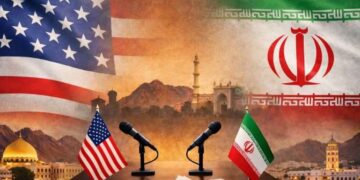
















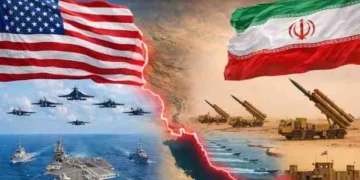


























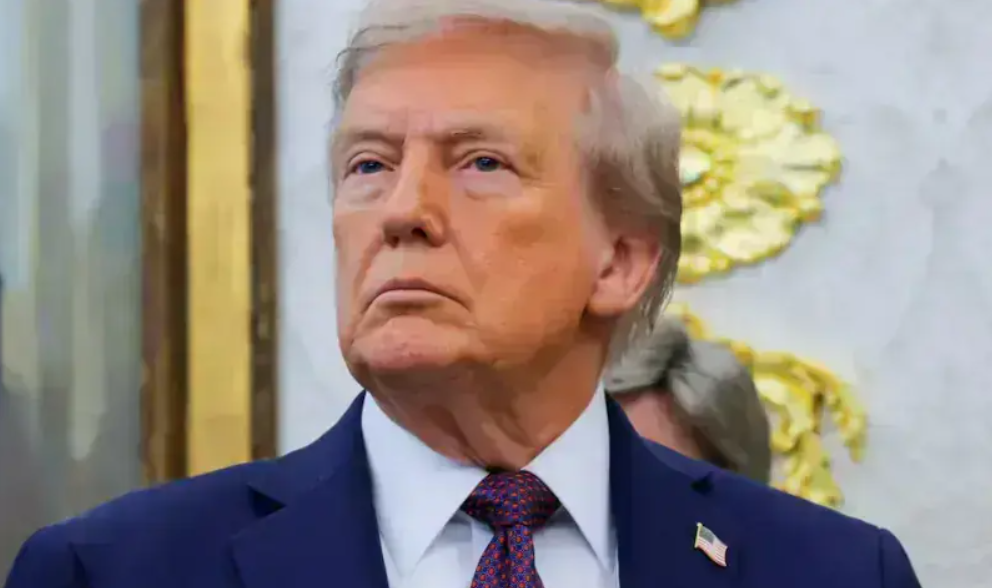
US President Donald Trump said on Monday that Washington would not seek to extend an interim agreement with Iran, arguing that Tehran was unlikely to accept the terms the United States considers necessary to end the months-long conflict.

Speaking to reporters and in an interview with Fox News, Trump called on Iran to end the conflict completely as the 60-day period associated with a June agreement expired. “They should put up the white flag of surrender,” he said.
The June 17 memorandum had called for an “immediate and permanent termination of military operations on all fronts” and established a 60-day framework for negotiations covering Iran’s nuclear programme, sanctions relief and wider security arrangements.
The agreement soon came under strain, particularly over maritime access and navigation rights in the Strait of Hormuz. Trump had already declared the arrangement effectively “over” on July 7.
Trump also rejected suggestions that his position was influenced by the upcoming US congressional elections, saying, “Midterms have nothing to do with my thinking.”
Iran, however, disputed Washington’s interpretation of the agreement and rejected the idea that the 60-day period represented a binding deadline.
Iranian Foreign Ministry spokesman Esmaeil Baghaei said the memorandum contained no such deadline and insisted Tehran would not make policy decisions under pressure. “There is no item regarding a 60-day deadline in the text of the memorandum, and the Islamic Republic of Iran never formulates its policies under pressure, ultimatums, or time constraints,” he said.
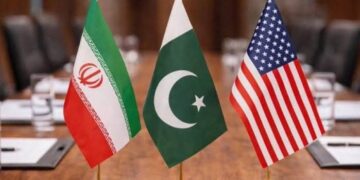
Baghaei said the agreement had merely opened a window for discussions on sanctions and nuclear issues and maintained that diplomatic efforts involving Pakistan, Qatar and several European countries were still continuing. He blamed the lack of progress on what he described as Washington’s “mindset, miscalculations and insistence” on failed policies.
Trump reiterated that preventing Iran from acquiring nuclear weapons remained Washington’s main objective, writing on Truth Social, “The number one Goal is, and always will be, that Iran cannot have, in any way, shape, or form, a Nuclear Weapon.”
The dispute has also been accompanied by conflicting claims about secret diplomatic contacts. A spokesperson for Iran’s Islamic Revolutionary Guard Corps rejected US claims that backchannel communications remained active, describing them as “merely fantasies caused by the delusions and nightmares resulting from defeat and desperation in the war”.
Tensions have also increased around the Strait of Hormuz. Trump issued a warning concerning Oman’s involvement in discussions with Iran over maritime access, telling Fox News, “If Oman gets in the way, we’ll bomb the s*** out of them.”
Oman and Iran have been working to establish arrangements for maritime passage through the strategically important waterway, which is a major route for global energy shipments.
Iran, meanwhile, warned that the collapse of diplomacy could lead to further military escalation. A senior Iranian official told Reuters that Tehran had shifted from a defensive posture to a “fully offensive” position and was prepared to escalate tensions around the Strait of Hormuz and the wider region.
The official said Iran was ready to take “difficult decisions” if negotiations failed and warned of a “timely and precise” military response to what Tehran described as a US naval blockade.
Tensions around the waterway appeared to rise further after Iranian media reported that an Emirati-owned tanker had been detained near Qeshm Island while attempting to transit the Strait of Hormuz. Iran’s semi-official Fars news agency said ships using the waterway were required to follow designated Iranian routes, pay service fees and obtain official approval.
The United Nations urged both sides to reduce tensions and return to negotiations. UN spokesperson Stephane Dujarric reiterated Secretary-General Antonio Guterres’ position that the conflict could not be resolved militarily.
“His message is the same, which he’s been delivering since the start, which is there is no military solution to this conflict,” Dujarric said, calling for renewed talks and a reduction in increasingly hostile rhetoric.
The broader regional crisis also continued to affect the Red Sea. Yemen’s Houthis claimed responsibility for missile attacks targeting a Saudi military landing ship and four escort vessels near the Red Sea port of Mokha, close to the Bab el-Mandeb Strait.
Houthi military spokesman Yahya Saree said the attacks formed part of the group’s naval blockade campaign. Yemeni government sources reported missile strikes around the strait and a government military facility, while independent reports said the commercial vessel involved was undergoing maintenance and was not operating normally.