




















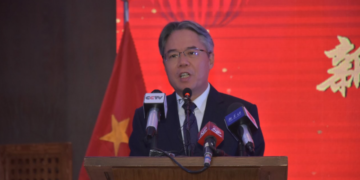









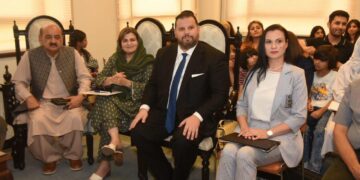


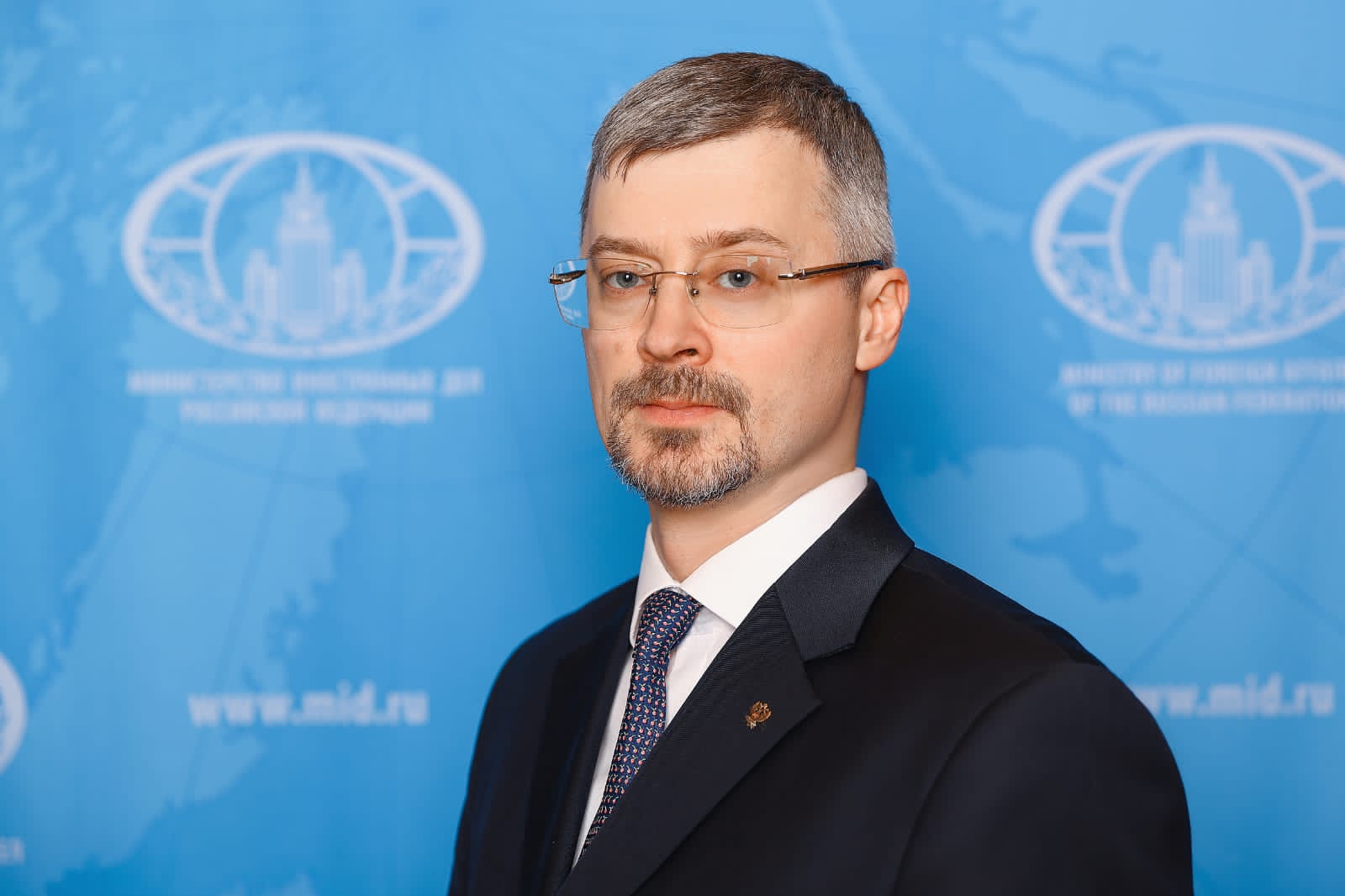
ISLAMABAD; Russian Ambassador Albert P. Khorev, in a detailed media briefing, accused Ukraine and its Western backers of deliberately undermining peace efforts while highlighting Moscow’s commitment to dialogue and lasting peace.

Khorev recalled that President Vladimir Putin reopened direct talks with Kiev in May 2025, after they had been suspended in 2022. While these discussions led to meaningful prisoner exchanges, the Ukrainian side, he alleged, refused to discuss ceasefire verification procedures. “This is part of a deliberate strategy by Kiev and its European sponsors to sabotage peace initiatives,” he said.
The ambassador cited three instances this year where Ukraine rejected or violated truce opportunities — including a 30-day halt to strikes on energy facilities, the Easter ceasefire in April (violated nearly 5,000 times), and a proposal to pause hostilities during May’s Victory Day commemorations. Despite this, Khorev noted, Ukraine continues to demand a full ceasefire, which, in his view, is only aimed at regrouping its forces with Western aid.
He pointed to the 2015 Minsk Agreements as an example, which he described as a political cover that allowed Kiev to rearm. The ambassador further accused President Volodymyr Zelensky of seeking international visibility to legitimize his expired mandate, while Russia insists on addressing the “root causes” of the conflict — including protection of Russian speakers, halting NATO expansion, and ending restrictions on the Orthodox Church.
Khorev highlighted some progress since May: over 1,000 prisoners of war exchanged, remains of thousands of Ukrainian soldiers returned, and what he called the exposure of false propaganda about the mass abduction of children. A working group, he added, is being formed to draft a ceasefire roadmap.
At the same time, Khorev condemned what he called terrorist acts by Kiev, including bomb attacks on railway bridges in Bryansk and Kursk, which killed civilians but failed to impact Russian military operations. He also criticized recent Ukrainian legislation banning Soviet-era symbols and glorifying Nazi collaborators, calling it unconstitutional and discriminatory.
The ambassador accused Kiev of using martial law to impose authoritarian controls, silence opposition, and force mobilization through “inhumane methods.” He warned that Ukraine’s campaign to erase Soviet memorials and rewrite World War II history was part of a broader Russophobic agenda.
Turning to international responses, Khorev said 119 countries — including Pakistan — supported Russia’s UN resolution against the glorification of Nazism in 2024, while accusing the UN Secretariat of bias under Western influence. He contrasted this with muted UN criticism of Israel or U.S. actions in the Middle East.
Khorev also dismissed European concerns of Russian aggression against NATO states, stressing Moscow’s openness to dialogue with Poland after drone-related allegations. He reiterated that Russia opposes deployment of Western troops in Ukraine under any flag.
Concluding, Khorev thanked Pakistan for its consistent neutrality and support for diplomatic solutions at the UN. “Russia is committed to peace, but it cannot be one-sided,” he said.