





















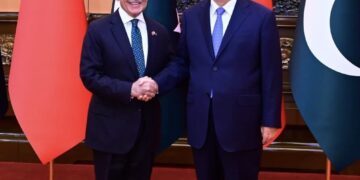









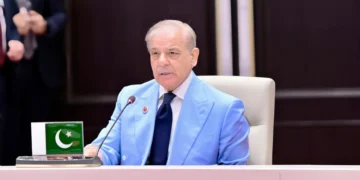
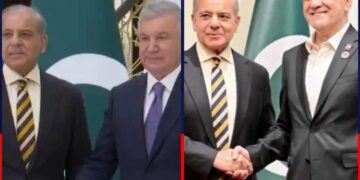
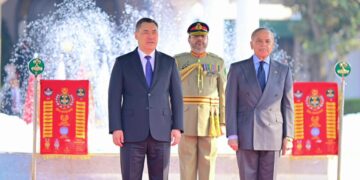
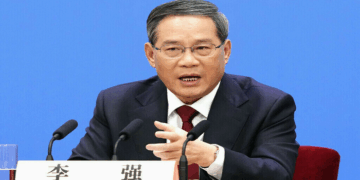



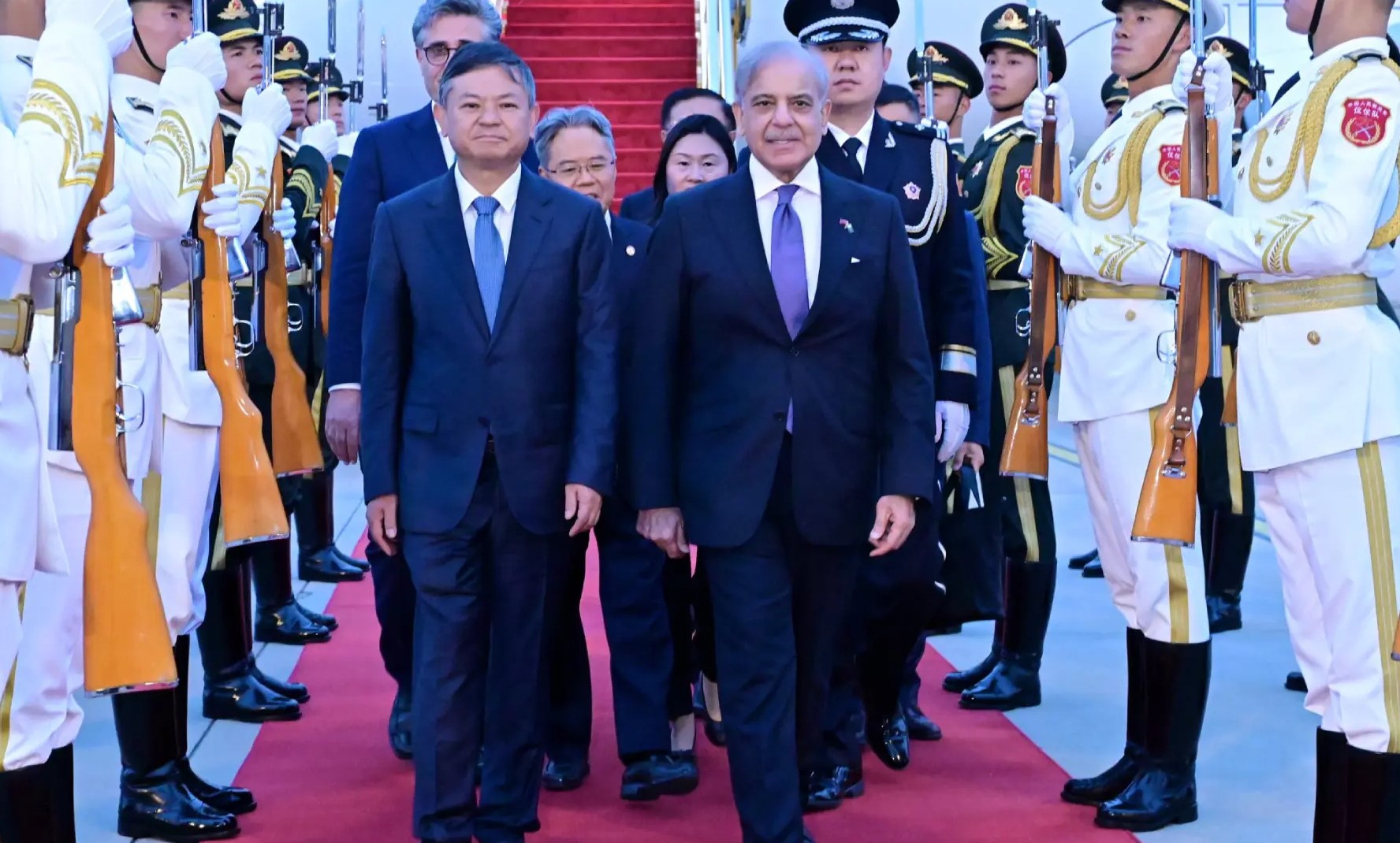
BEIJING/ISLAMABAD (MNN); Prime Minister Shehbaz Sharif arrived in Beijing on Sunday for a four-day official visit to China, where he is scheduled to hold high-level meetings with Chinese President Xi Jinping and Premier Li Qiang.

The prime minister had earlier landed in Hangzhou on Saturday, where he addressed the Pakistan-China Business-to-Business Investment Conference before travelling onward to Beijing. Upon reaching the Chinese capital, he was welcomed by China’s Minister for Environment and Ecology, Huang Runqiu.
According to a statement issued by the Prime Minister’s Office, the visit aims to further deepen the Pakistan-China All-Weather Strategic Cooperative Partnership and accelerate collaboration under the second phase of the China-Pakistan Economic Corridor. Key areas of focus include trade, investment, industry, agriculture, science and technology, and cultural exchanges between the two countries.
The visit comes as Pakistan and China mark 75 years of diplomatic relations.
During his stay in Hangzhou, Prime Minister Shehbaz Sharif chaired the opening ceremony of the third Pakistan-China B2B Investment Conference, which highlighted opportunities in charging infrastructure, battery energy storage, solar technology, and pharmaceuticals.
He also met senior provincial officials and executives from leading Chinese firms including StarCharge, CATL and Xiuzheng Pharmaceutical to discuss investment prospects and industrial cooperation.
Talks with CATL focused on advanced battery technologies, energy storage systems, and solar-linked solutions to support Pakistan’s transition toward clean energy.
The prime minister also visited the headquarters of Alibaba, where he was received by Executive Chairman Joe Tsai.
Addressing the business conference, Prime Minister Shehbaz Sharif said rising labour costs in China had created opportunities for industries to relocate production to Pakistan through joint ventures with local businesses. He said sectors such as textiles, leather, and manufacturing could particularly benefit from this cooperation, creating a win-win outcome for both countries.
He invited Chinese investors to explore opportunities in Karachi’s export zones and highlighted Pakistan’s rich mineral reserves and gemstone resources as attractive areas for investment.
Speaking about agriculture, the prime minister described Pakistan as an agrarian economy and noted that 1,000 Pakistani students had recently completed advanced agricultural training in China. He said Pakistan hoped to expand agricultural exports to China significantly, targeting an increase of around $10 billion over the next five to seven years.
He added that Pakistan would offer Chinese investors long-term land leases in special economic zones with modern infrastructure, a business-friendly environment, and one-window operations to facilitate investment.
The prime minister also said several memorandums of understanding worth billions of dollars had been signed during the visit, expressing satisfaction that nearly 30 percent had already progressed into formal agreements.