

























































Pakistan and India once again exchanged strong statements at the United Nations Security Council (UNSC), this time over the status of occupied Kashmir, with Islamabad accusing New Delhi of misleading the international forum.

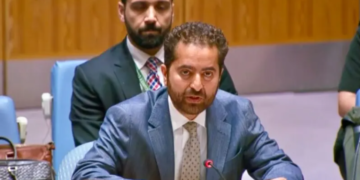
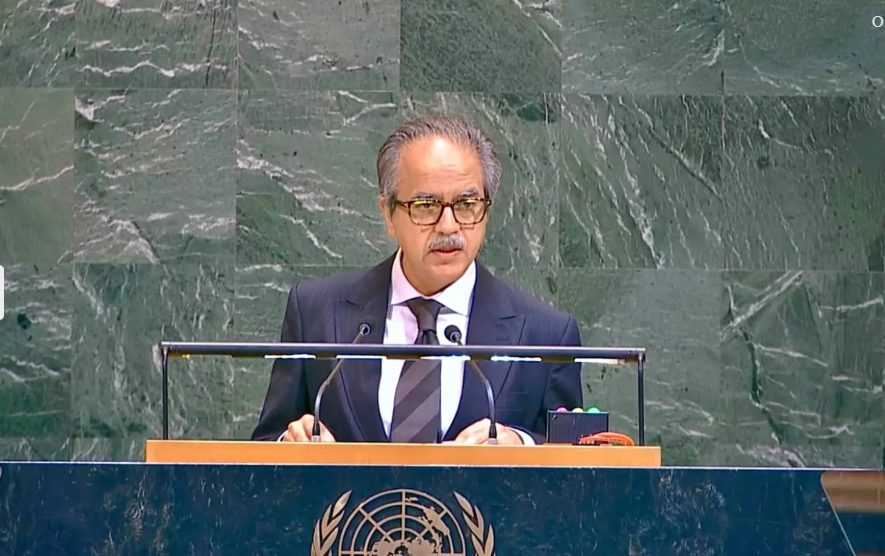
During the presentation of the UNSC’s Annual Report to the General Assembly on Friday, Pakistan’s Permanent Representative to the UN, Ambassador Asim Iftikhar Ahmad, called for a resolution of the Kashmir issue, according to an official press release. Pakistan also played a role in coordinating and drafting the introduction to the report.
In response, India’s UN envoy Parvathaneni Harish criticised Pakistan for allegedly using UN platforms to advance what he described as “divisive political interests.” He reiterated New Delhi’s position that Jammu and Kashmir “was, is and will always remain an integral and inalienable part of India.”
Pakistan’s Political Coordinator Gul Qaiser Sarwani then exercised the right of reply, stressing that Jammu and Kashmir remains a disputed territory recognised on the UN Security Council’s agenda.
He rejected India’s claim, stating that “Jammu and Kashmir never was, neither is, and nor will ever be so-called an integral part of India,” and argued that no amount of denial could change the dispute’s historical and legal status.
Sarwani also urged India to properly review the UNSC Annual Report, accusing it of ignoring established facts and attempting to mislead the Assembly.
He further reiterated that, nearly eight decades after UN resolutions calling for a plebiscite, the people of Kashmir were still awaiting their right to self-determination.
He alleged ongoing human rights violations in Indian-administered Kashmir, including restrictions on freedoms, detentions, and demographic changes, citing concerns raised by UN special procedures in October 2025.
Sarwani also accused India of failing to comply with UNSC resolutions under Article 25 of the UN Charter and made broader allegations regarding regional security issues.
He further claimed India had engaged in destabilising activities in the region, including alleged interference in Pakistan and actions related to the Indus Waters Treaty.
In his own remarks, Ambassador Ahmad said the UNSC Annual Report highlighted the continued relevance of unresolved disputes, including Kashmir and Palestine.
He said Pakistan believes lasting peace in South Asia depends on a settlement of the Kashmir dispute in line with UNSC resolutions and the wishes of the Kashmiri people.
He also noted that the issue had remained actively discussed at the UN, including closed consultations and multiple communications during the reporting period, reflecting its continued presence on the Council’s agenda.
On Palestine, he urged implementation of UNSC Resolution 2083 and referred to ongoing humanitarian concerns in Gaza and the broader occupied Palestinian territories.
Ambassador Ahmad also highlighted Pakistan’s role in drafting the UNSC Annual Report during its presidency in July 2025, saying the aim was to make it balanced, analytical, and consensus-based.
He further called for reforms in the UN Security Council, criticising veto usage and opposing the creation of new permanent seats, arguing it would undermine equitable representation.