





























































LONDON (MNN); The resignation of British Prime Minister Keir Starmer marks a dramatic end to a leadership that was once expected to restore stability and pragmatic governance to Britain after years of political turbulence.

Starmer stepped down on Monday after mounting pressure from within the ruling Labour Party, bringing to a close a premiership that began with enormous promise following Labour’s landslide victory in the 2024 general election. Despite securing one of the largest parliamentary majorities in modern British history, Starmer ultimately struggled to maintain support among voters, lawmakers, and even members of his own government.
Political observers and Labour insiders said one of the biggest challenges facing Starmer was his perceived lack of a clear ideological vision. While he focused on practical solutions and incremental reforms, critics increasingly argued that he failed to articulate a compelling long-term direction for the country.
According to party figures, the former lawyer often found himself caught between competing factions within Labour, pressure groups, and public expectations. Without a unifying political narrative, many voters viewed his leadership as indecisive, while his cautious and methodical style failed to inspire enthusiasm.
Over time, several of the government’s key policies encountered difficulties, leading to political setbacks, cabinet reshuffles, resignations, and dismissals. Senior aides reportedly struggled to communicate a clear message about how the government intended to deliver meaningful change for Britain.
As political challenges intensified, Starmer increasingly relied on the advice of his wife, Victoria Starmer. Following poor local election results in May that triggered calls for his resignation, he initially resolved to continue fighting for his position after discussions with his family.
However, after spending a weekend at the prime ministerial residence of Chequers with his wife, Starmer ultimately concluded that stepping aside was in the best interests of the party.
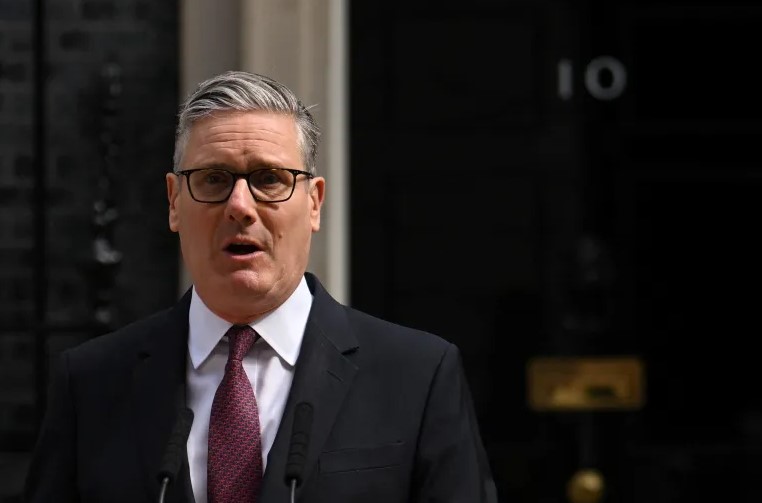
Announcing his resignation outside Downing Street, Starmer pledged to ensure a smooth and orderly transition of power to a new Labour leader. The frontrunner to replace him is widely considered to be Andy Burnham, who has emerged as a leading figure within the party.
In an emotional speech, Starmer acknowledged that many Labour lawmakers no longer believed he was the best person to lead the party into the next general election.
“The question my party is asking is whether I am the right person to take Labour into the next election,” he said. “I have heard the answer and I accept it.”
By the final months of his premiership, Starmer’s popularity had fallen sharply. Critics accused him of abandoning campaign promises and repeatedly reversing government policies. Even some of his closest allies reportedly concluded that a managed leadership transition would be less damaging than a prolonged internal contest.
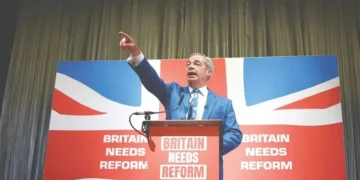
Labour members increasingly viewed Burnham as the politician best positioned to counter the growing influence of the populist Reform Party led by veteran Brexit campaigner Nigel Farage. Following strong electoral performances, Burnham gained a reputation among supporters as the candidate most capable of preventing Reform’s continued rise.
Starmer’s political journey had been remarkable. First elected to Parliament in 2015, he became Labour leader just five years later after succeeding Jeremy Corbyn. At the time, Labour was recovering from one of the worst election defeats in its history and facing internal divisions, allegations of antisemitism, and uncertainty over Brexit.
Drawing on his experience as head of Britain’s Crown Prosecution Service, Starmer focused on rebuilding Labour’s credibility, strengthening its finances, reducing factional disputes, and presenting the party as a viable governing alternative.
His strategy initially proved successful. Labour won a commanding parliamentary majority in 2024, ending years of Conservative rule. However, analysts warned that the victory masked underlying weaknesses, noting that Labour’s share of the popular vote remained relatively modest and benefited significantly from tactical voting against the Conservatives.
Political analyst John Curtice observed that the election appeared more like a defeat for the Conservatives than a decisive endorsement of Labour.
Once in government, Labour struggled to transform campaign promises into tangible achievements. Economic growth remained weaker than expected, efforts to curb illegal migration produced limited results, and ongoing challenges within the National Health Service continued to dominate public debate.
Former advisers suggested that Labour had not adequately prepared for government while in opposition. According to some insiders, policy planning was deliberately restricted during the election campaign to avoid creating controversy before voters went to the polls.
Although Starmer highlighted achievements such as improved workers’ rights, shorter healthcare waiting lists, and a more stable economic environment, many voters remained unconvinced.
His administration was also damaged by controversies involving political donations, policy reversals, and the appointment of veteran Labour figure Peter Mandelson, whose past associations generated public criticism. Questions surrounding the appointment further fuelled perceptions that Starmer lacked control over his government.
Tensions also grew within Downing Street. Several senior advisers departed, including former chief of staff Morgan McSweeney, while relations between the government and sections of the civil service became increasingly strained.
On the international stage, however, Starmer received greater recognition. He played a prominent role in supporting European efforts related to Ukraine and worked closely with French President Emmanuel Macron on diplomatic initiatives concerning the Middle East and the Strait of Hormuz.
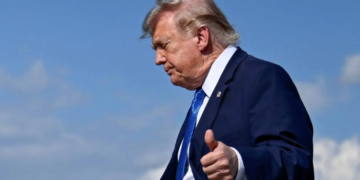
Starmer also sought to maintain positive relations with US President Donald Trump, at times praising his diplomatic initiatives and extending invitations for official visits to Britain. Nevertheless, relations later deteriorated after disagreements over policy toward Iran.
Trump recently criticised Starmer on social media, arguing that his government had failed on immigration and energy policy.
Many analysts believe Starmer’s lasting political legacy may be the transformation of Britain’s political landscape. Recent elections in England, Scotland, and Wales revealed growing public support for Reform UK and declining loyalty to the traditional two-party system.
While Labour’s membership declined, Reform UK continued to expand rapidly, attracting hundreds of thousands of supporters. Starmer had repeatedly warned that confronting Reform represented the defining political battle of his era.
In the end, however, it was a battle he was unable to win.