





























































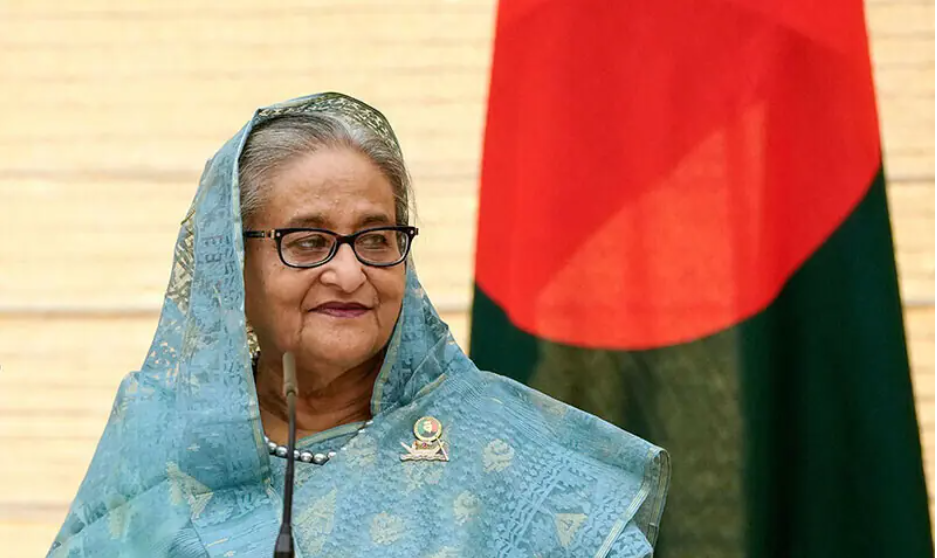
DHAKA: A commission tasked with probing a violent mutiny in which dozens of senior army officers were slaughtered 16 years ago stated on Sunday that former prime minister Sheikh Hasina had directed the killings.

During the two-day revolt in 2009, renegade members of the Bangladesh Rifles (BDR) killed 74 people including high-ranking military officers in an uprising that began in Dhaka and rapidly spread nationwide, shaking Hasina’s government only weeks after she assumed office.
Following Hasina’s removal from power last year in a student-driven revolt, the interim administration led by Muhammad Yunus established a commission to reinvestigate the events.
Hasina, now 78, has taken shelter in India and has ignored court directives instructing her to return to Bangladesh.
In the report delivered Sunday, the commission asserted that the Awami League government under Hasina had direct involvement in the mutiny.
Former lawmaker Fazle Noor Taposh was identified as the “principal coordinator,” acting under Hasina’s instructions after she allegedly gave the “green signal” for the killings, according to the government’s press office quoting commission head A.L.M. Fazlur Rahman.
“The involvement of a foreign force was strongly evident in the investigation,” the statement also said.
At a later press briefing, Rahman accused India of seeking to destabilise Bangladesh and “weaken the Bangladesh Army” in the aftermath of the massacre.
“There had been a conspiracy brewing for a long time to weaken Bangladesh’s forces,” Rahman said. India had not issued an immediate response to the allegations.
India’s backing of Hasina has strained ties between the two countries since her ouster.
Yunus welcomed the commission’s findings, saying the country had long been unaware of the real reasons behind the 2009 killings. “Through the commission report, the truth has finally been revealed,” he stated.
A previous inquiry attributed the revolt to years of frustration among soldiers who believed their demands for better pay and treatment had been neglected. But that investigation took place under Hasina’s rule, and her critics had long argued she orchestrated the mutiny to weaken the army and consolidate her authority.
Tarique Rahman says his return not in his hands
Bangladesh’s former prime minister Khaleda Zia is in “very critical” condition at a Dhaka hospital, her party said on Sunday, as her exiled son and acting party leader Tarique Rahman suggested uncertainty regarding his homecoming.
Khaleda, 80, who heads the Bangladesh Nationalist Party, was admitted to a private hospital on Nov 23 with a severe chest infection affecting her heart and lungs, according to doctors and senior party figures.
Her party has regained political strength since longtime leader Sheikh Hasina was deposed in last year’s student-led uprising.
Rahman, who has lived in London since 2008, posted on Facebook on Saturday that returning to Bangladesh was “not entirely” within his control, prompting speculation about political or legal obstacles.
The interim government led by Nobel laureate Muhammad Yunus responded by saying it had “no restrictions or objections” to Rahman’s return. “There are no obstacles in this matter,” Yunus’ press secretary Shafiqul Alam wrote in a Facebook post.
De facto Foreign Minister Touhid Hossain added on Sunday that a travel pass would be issued within a day if Rahman decides to come back.
Rahman has been cleared of all charges against him since Hasina’s fall from power in August last year, removing the legal barriers that had previously complicated his return.
The Bangladesh Nationalist Party, which boycotted the disputed elections of 2014 and 2024, has been gaining momentum since last August and is now viewed as a leading contender in the country’s evolving political landscape.