














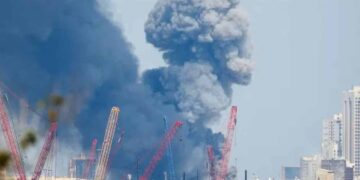









































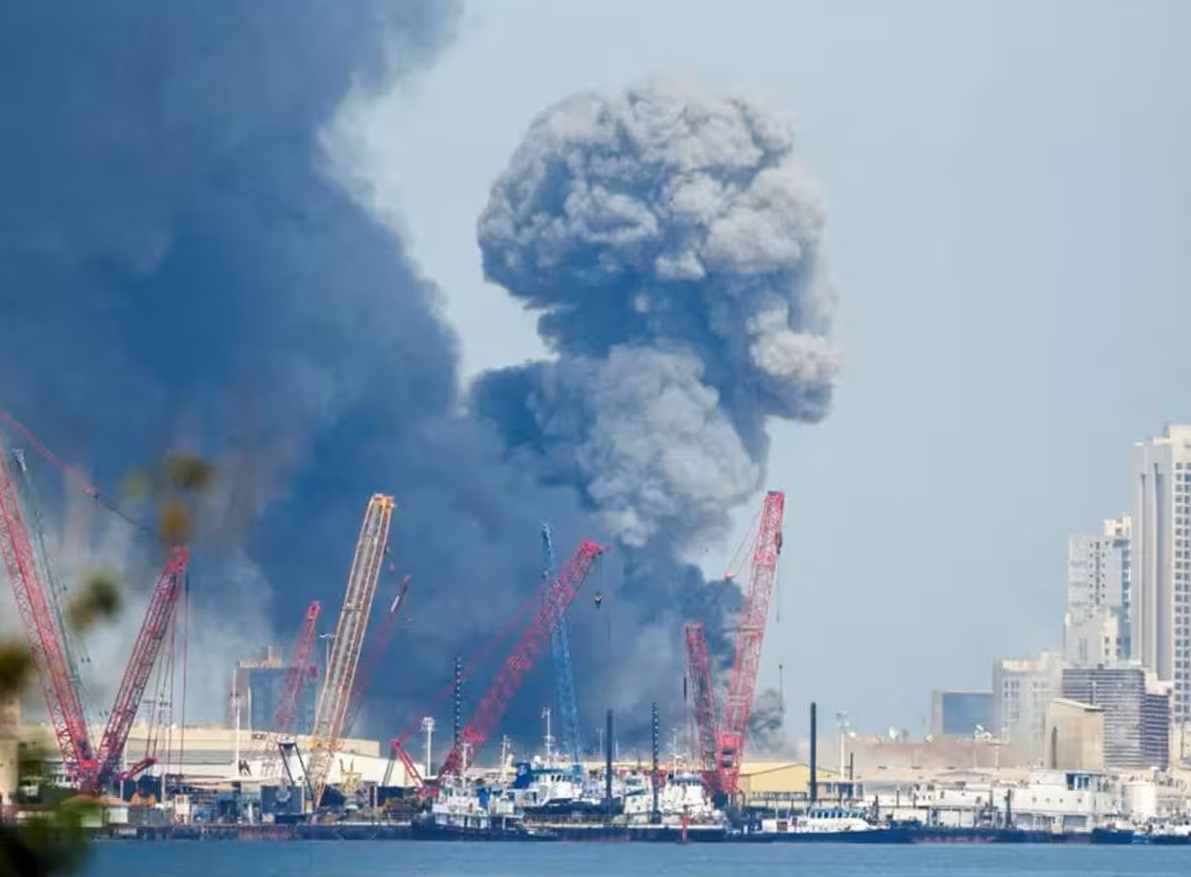
DOHA/TEHRAN (MNN); Explosions were heard across Bahrain on Sunday as the Gulf nation came under its second Iranian drone attack in three days, ending a months-long pause in strikes against Gulf countries during the ongoing Middle East war.

Air raid sirens sounded across the country, while authorities issued several emergency alerts on social media, urging residents to move to safe locations. The warnings were the first of their kind since September.
Iran’s Islamic Revolutionary Guard Corps (IRGC) claimed responsibility for a drone attack targeting a US radar system in Bahrain, which hosts American military installations, including a major naval base.
However, Bahrain’s military said its air defence systems intercepted the incoming attacks, preventing the drones from reaching their intended targets. The Foreign Ministry also confirmed that Iranian drones had been shot down.
Residents described renewed anxiety following the attacks. Hayat Ibrahim, a 65-year-old resident, told AFP that she had hoped Iranian strikes would not resume, expressing concern over the uncertainty and fear they had brought back.
Iran had also launched drones towards Bahrain on Friday, marking the first attacks on Gulf countries since September, after months of relative calm in the energy-rich region during the eight-month conflict.
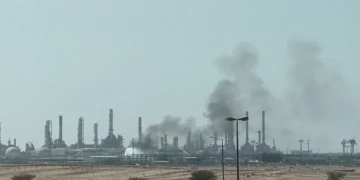
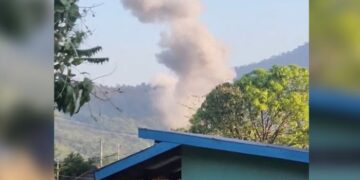
An AFP journalist reported hearing explosions around 4am local time (6am Pakistan time) on Sunday, followed by another series of blasts at approximately 6:30am.
In a message posted on X, Bahrain’s Interior Ministry urged residents to remain calm, move to the nearest safe location and follow updates through official channels.
Mohammed Abdallah, a shopkeeper in the capital Manama, also expressed concern, saying he had hoped the period of attacks and insecurity was over.
Iran Claims US Radar System Targeted
Iran’s Revolutionary Guards said their drones had targeted a US air defence radar system located at the Al-Riffa helicopter base in Bahrain.
According to a statement carried by Iranian state media, six drones belonging to the IRGC Aerospace Force were used in the operation.
The Guards warned that the Strait of Hormuz remained closed and that any further aggression by the United States would be met with a stronger response.
Bahrain strongly condemned the attacks, with its Foreign Ministry saying the kingdom rejected any attempt to turn its territory into an arena for settling scores.
The ministry held Iran fully responsible for the attacks.
During more than eight months of conflict, Iran has restricted maritime traffic through the Strait of Hormuz, a critical international oil shipping route, while targeting infrastructure including airports, seaports, energy facilities and US military assets across the region.
Since the war began on February 28, Gulf countries have faced thousands of Iranian drone and missile attacks.
Following US strikes on Iran’s Qeshm Island earlier this month, the Revolutionary Guards had announced on Friday that they targeted a US early-warning radar system in Bahrain.
The US military’s Central Command (CENTCOM) said it intercepted and shot down two Iranian drones during Friday’s attack, reporting no casualties or damage.
CENTCOM, which oversees American military operations across the region, had said last month that it helped Gulf countries export 1.5 billion barrels of oil through the Strait of Hormuz since the summer.
Meanwhile, a US official said President Donald Trump planned to discuss the conflict during a trilateral meeting with his Chinese and Russian counterparts later this week.
The Iran war has also become a significant political challenge for Trump, whose Republican Party suffered setbacks in the midterm elections, partly attributed to public dissatisfaction over the conflict.
Several months of diplomatic efforts have so far failed to produce a resolution to the war, which began with surprise US-Israeli strikes that killed Iran’s Supreme Leader Ayatollah Ali Khamenei.