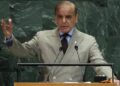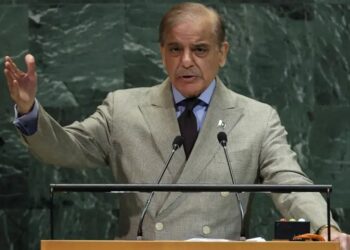





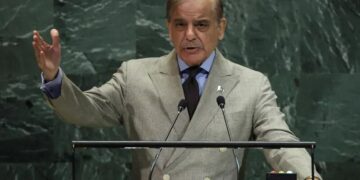







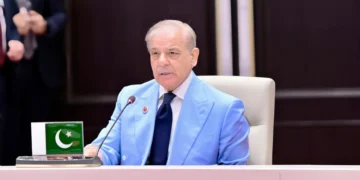



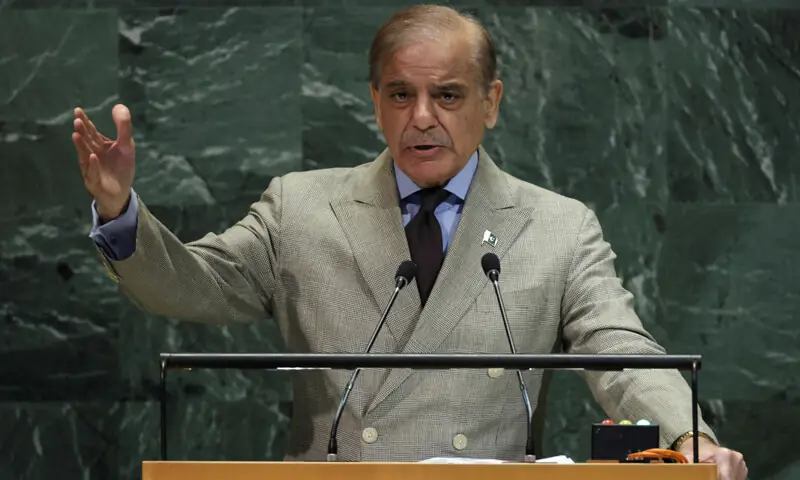
NEW YORK (MNN); Prime Minister Muhammad Shehbaz Sharif has told the 81st session of the United Nations General Assembly that Pakistan’s armed forces successfully defended the country during last year’s confrontation with India, while warning that any attempt to stop, impede or divert Pakistan’s share of the Indus waters would be regarded as an “act of war.”

In a wide-ranging address on Friday, the prime minister also called for a just and fair settlement of the Jammu and Kashmir dispute, reiterated Pakistan’s support for an independent Palestinian state, urged Afghanistan to take verifiable action against terrorist groups operating from its territory, and stressed the need to keep the Strait of Hormuz and Bab al-Mandab open for international commerce.
Pakistan-India conflict and Indus Waters Treaty
Referring to the India-Pakistan conflict of May last year, Prime Minister Shehbaz said Pakistan had exercised its right to self-defence under Article 51 of the UN Charter after what he described as an Indian attack.
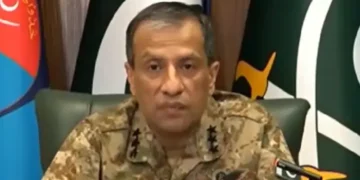
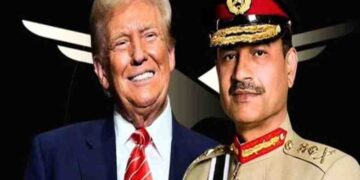
He said Pakistan’s armed forces responded under the leadership of Chief of Army Staff and Chief of Defence Forces Field Marshal Syed Asim Munir.
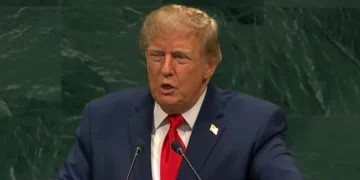
The prime minister also credited US President Donald Trump’s intervention with helping prevent the conflict from escalating into a wider confrontation between the two nuclear-armed neighbours, saying that millions of lives in South Asia were at stake.
Shehbaz stressed that South Asia must never again be pushed towards an all-out war and said lasting regional peace required a “just and fair” resolution of the Kashmir dispute.
Turning to the Indus Waters Treaty, the prime minister described water as the “lifeblood” of Pakistan and the wider region.
He said India’s unilateral decision to hold the treaty in abeyance had “no legal basis whatsoever”, adding that Pakistan’s position that the treaty remained valid, binding and fully operative had been vindicated.
“Water must never be weaponised. Rivers should nourish nations, not divide them,” he said.
The prime minister warned that any attempt to stop, impede or divert Pakistan’s share of the river waters would be treated by Islamabad as an act of war.
Kashmir: Pakistan reiterates support for self-determination
Shehbaz Sharif said Kashmir remained central to Pakistan’s foreign-policy concerns and called for a peaceful and just settlement of the dispute.
He said the Kashmiri people had waited for decades for the United Nations to fulfil what Pakistan considers its commitment to a free and impartial plebiscite.
The prime minister alleged that generations of Kashmiris had faced occupation, arbitrary detention, extrajudicial killings, enforced disappearances, sexual violence and collective punishment.
He also accused India of attempting to alter the legal and demographic character of Indian Illegally Occupied Jammu and Kashmir.
Shehbaz assured the Kashmiri people that Pakistan would continue providing diplomatic, political and moral support for what it describes as their inalienable right to self-determination.
“Kashmir has been, and always will be, Pakistan’s jugular vein,” he said.
Pakistan had announced ahead of the UNGA address that Kashmir and Palestine would be among the principal issues highlighted by the prime minister.
Palestine and Gaza
The prime minister strongly condemned Israel’s military actions in Gaza and the West Bank, highlighting the suffering of Palestinian civilians, particularly women, children and elderly people.
He referred to the killing of Palestinian children, including Hind Rajab and Wafaa Akeela, as examples of the human cost of the conflict.
Shehbaz questioned whether children born in Gaza were entitled to any less of a future, security or opportunity to pursue their dreams than children elsewhere in the world.
He said the deaths of Palestinian children and other civilians would remain a serious indictment of what Pakistan views as the international community’s failure to act effectively.
Pakistan, he said, supports an independent, sovereign, viable and contiguous Palestinian state based on the pre-1967 borders, with Al-Quds Al-Sharif as its capital.
He also condemned Israeli military action affecting Lebanon and Syria and called for an immediate end to the violence.
The prime minister reiterated Pakistan’s support for Palestinian self-determination and statehood during his meeting with UN Secretary-General António Guterres on the sidelines of the General Assembly.
Hormuz and Bab al-Mandab must remain open
Turning to the wider Middle East crisis, Shehbaz Sharif stressed the strategic importance of the Strait of Hormuz and Bab al-Mandab to the global economy.
“The Strait of Hormuz and Bab al-Mandab are arteries of the global economy; they must remain open — connecting nations, not becoming choke points of confrontation,” he said.
“These waters must carry the promise of prosperity, not the perils of war.”
The prime minister’s remarks came amid heightened regional tensions and concerns over international shipping, energy supplies and global trade.
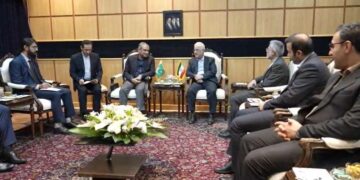
He has repeatedly called for restraint, de-escalation and sustained diplomacy to resolve the regional crisis. In his meeting with Iranian President Masoud Pezeshkian on September 24, Shehbaz also stressed the need for diplomatic engagement and implementation of the Islamabad Memorandum of Understanding.
Saudi Arabia and Makkah defence agreement
Prime Minister Shehbaz condemned attacks by the Houthis affecting Saudi Arabia’s holy cities, describing any such attack as a “red line.”
He said Pakistan stood in complete solidarity with the Saudi people and stressed that the sanctity of the holy cities must be respected.
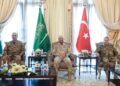
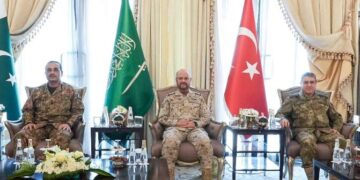
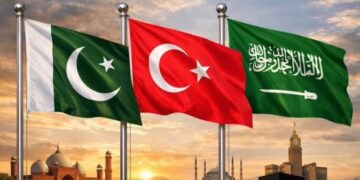
Referring to the recently concluded Makkah defence pact between Pakistan, Saudi Arabia and Türkiye, Shehbaz said the agreement was not directed against any country.
“This alliance is not directed against any country. It is a collective commitment for defence, stability, and peace in the region, and nothing more,” he said.
Terrorism and Afghan territory
The prime minister described terrorism as one of the most serious threats to international peace and security and highlighted Pakistan’s human and economic losses in its fight against terrorism.
He said Pakistan had lost nearly 100,000 lives and suffered economic losses exceeding $150 billion during its decades-long struggle against terrorism.
Shehbaz said Afghan territory continued to be used by the outlawed Tehreek-i-Taliban Pakistan (TTP), which Pakistan refers to as Fitna al-Khawarij, and the Balochistan-based Baloch Liberation Army (BLA), referred to by Pakistan as Fitna al-Hindustan, for attacks against Pakistan.
He urged the Afghan authorities to fulfil their international obligations and take concrete and verifiable measures to prevent their territory from being used for attacks against Pakistan or any other country.
At the same time, he called for the fundamental rights of Afghans, particularly women and girls, to be protected.
The issue of terrorism emanating from Afghan territory was also discussed by Shehbaz with UN Secretary-General António Guterres, who, according to Pakistan’s government, appreciated Pakistan’s sacrifices and contribution to international peace and security.
Islamophobia and religious hatred
The prime minister also voiced concern over the rise of Islamophobia, citing hate speech, discrimination, attacks on mosques and incidents involving desecration of the Holy Quran.
He criticised what he described as the use of religion to promote hatred and communal violence in India and referred to restrictions on religious freedom and the demolition of a historic mosque in Saharanpur.
“Religious hatred must have no place in the world,” he said.
He called for international action against Islamophobia and all forms of religious discrimination.
Climate change
Climate change was another major issue raised by the prime minister.
Shehbaz said Pakistan contributes less than one per cent of global greenhouse-gas emissions, yet remains highly vulnerable to the effects of climate change and has repeatedly suffered devastating floods and other climate-related disasters.
He urged developed countries to honour their climate-finance commitments, provide resources for loss and damage, and support developing countries in adaptation and resilience-building.
Pakistan’s diplomatic message
The prime minister’s UNGA address presented Pakistan’s position on a broad range of regional and global issues, including the India-Pakistan conflict, the Indus Waters Treaty, Kashmir, Palestine, the Middle East crisis, terrorism, Islamophobia and climate change.
His wider diplomatic engagements in New York have emphasised dialogue, diplomacy and peaceful resolution of disputes. In his meeting with UN Secretary-General Guterres, Shehbaz reaffirmed Pakistan’s commitment to multilateralism and the UN Charter, while Guterres appreciated Pakistan’s role in promoting regional peace and its sacrifices in countering terrorism.
Pakistan’s Foreign Office had earlier said the prime minister would use the UNGA platform to highlight the situations in Indian Illegally Occupied Jammu and Kashmir and Palestine, alongside Pakistan’s priorities on counterterrorism, climate change, Islamophobia, global economic challenges and UN reform.
UPDATED
NEW YORK (MNN); Prime Minister Muhammad Shehbaz Sharif has called for the Strait of Hormuz and Bab al-Mandab to remain open, while using his address at the 81st United Nations General Assembly to draw international attention to the Palestinian cause and the longstanding dispute over Jammu and Kashmir.
Addressing the UN General Assembly in New York on Friday, the prime minister stressed the importance of dialogue, diplomacy and peaceful resolution of conflicts, saying strategic waterways should serve international commerce and connectivity rather than become centres of confrontation.
Shehbaz described the Strait of Hormuz and Bab al-Mandab as vital arteries of the global economy, stressing that they must remain open and should connect nations rather than become “choke points of confrontation.” He said these waterways should carry the promise of prosperity rather than the dangers of war.
His remarks came amid continuing regional tensions and concerns over the impact of conflict on international shipping, energy supplies and global trade.
Palestine: Support for self-determination and statehood
The prime minister strongly reiterated Pakistan’s support for the Palestinian people and their right to self-determination and statehood.
Pakistan’s position, outlined ahead of the UNGA, was that the international community should address the longstanding occupation and denial of self-determination affecting the Palestinian people. The government had identified Palestine as one of the principal issues that Shehbaz would raise before the world body.
On the sidelines of the General Assembly, Shehbaz also reaffirmed the same position during his meeting with UN Secretary-General António Guterres. According to the Prime Minister’s Office, he reiterated Pakistan’s support for the Palestinian people’s right to self-determination and statehood.
The prime minister has called for a just and lasting resolution of the Palestine issue through international diplomacy and in accordance with relevant international principles.
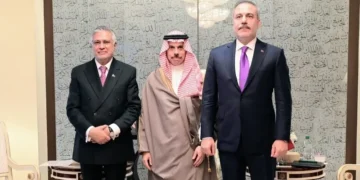
Pakistan has also participated in high-level discussions during the UNGA week concerning Palestine, including meetings linked to implementation of the two-state solution. Deputy Prime Minister and Foreign Minister Ishaq Dar was scheduled to attend such meetings as part of Pakistan’s diplomatic programme.
Jammu and Kashmir: Pakistan reiterates right to self-determination
Shehbaz Sharif also drew international attention to the Jammu and Kashmir dispute, continuing Pakistan’s longstanding position that the people of the territory should be allowed to exercise their right to self-determination.
Before the prime minister’s address, Pakistan’s Permanent Representative to the United Nations, Ambassador Asim Iftikhar Ahmad, said Kashmir and Palestine would be highlighted in Shehbaz’s UNGA speech. Pakistan’s government said the prime minister would draw attention to what it describes as the prolonged occupation of Jammu and Kashmir and the denial of the right to self-determination.
Pakistan has consistently maintained that the Kashmir dispute should be resolved in accordance with relevant United Nations Security Council resolutions and through a process that addresses the aspirations of the Kashmiri people.
Foreign Minister Ishaq Dar also attended an OIC Contact Group meeting on Jammu and Kashmir during the UNGA week, where Pakistan reiterated its support for what it calls the Kashmiris’ right to self-determination.
Call for diplomacy and regional peace
A central theme of Shehbaz Sharif’s UN engagements was the need for diplomacy to prevent further escalation in the Middle East.
In his meeting with UN Secretary-General António Guterres, the prime minister discussed major regional and international developments, including the Middle East crisis. He stressed dialogue and diplomacy as the means of resolving regional tensions and reiterated Pakistan’s commitment to peace and stability.
The prime minister has also highlighted Pakistan’s diplomatic and mediation efforts aimed at reducing tensions in the region.
During his meeting with Iranian President Masoud Pezeshkian on September 24, Shehbaz stressed restraint, de-escalation and sustained diplomatic engagement, while the two leaders discussed the evolving regional situation and the implementation of the Islamabad Memorandum of Understanding.
Wider international agenda
Beyond Palestine and Kashmir, the prime minister’s UNGA agenda has included sustainable development, climate change, counterterrorism, Islamophobia, global economic challenges, UN reform and issues confronting the Global South.
Pakistan has also used the UNGA platform to highlight its role in regional diplomacy and its contribution to international peace and security.
The combined message from Shehbaz Sharif’s UN engagements has been a call for diplomacy, respect for international law, peaceful settlement of disputes and greater international cooperation, alongside Pakistan’s established positions on Palestine and Jammu and Kashmir.