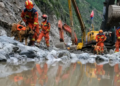
























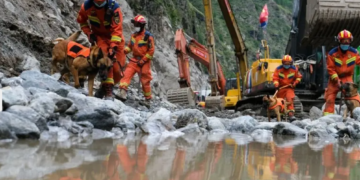



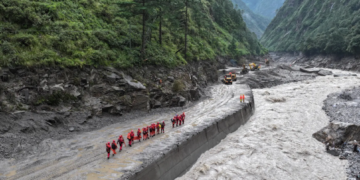








































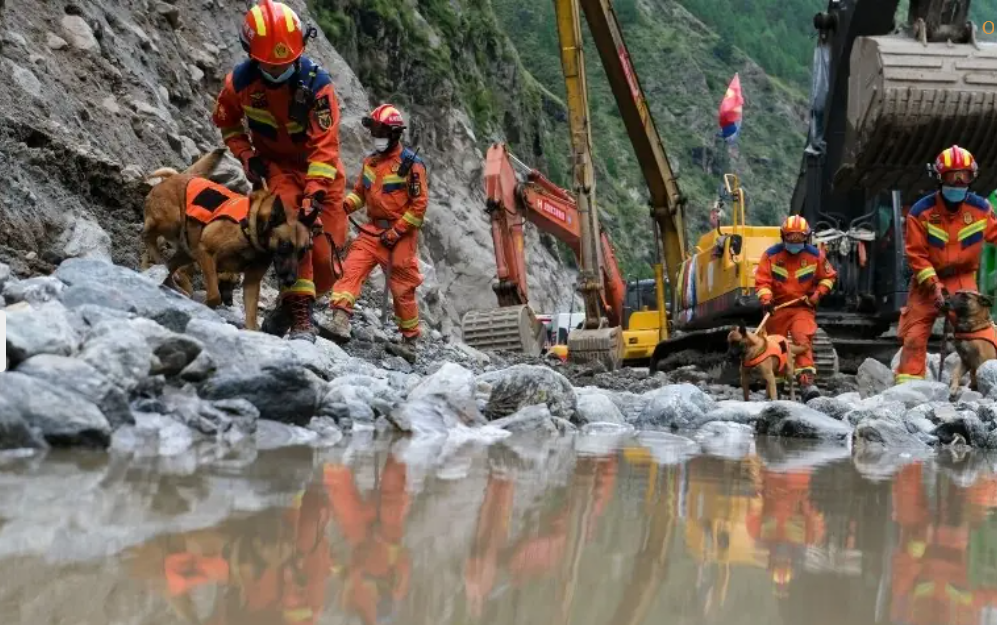
Nepalese rescue teams, assisted by Chinese and Indian experts, worked through the night to reach hundreds of people believed to be trapped inside hydropower project tunnels following last week’s devastating floods.

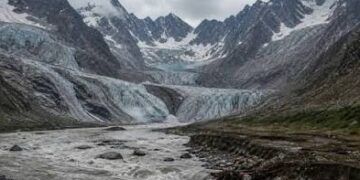
The massive flow of ice, rocks, mud and debris struck the Nepal-Tibet border on Wednesday and was blamed on a glacier collapse. The disaster has killed more than 900 people, while thousands remain missing.
Nepali authorities said rescuers were focusing on workers believed to be trapped inside around six hydropower project tunnels that were blocked by mud and rocks. Heavy machinery was used to clear debris and create access points to the tunnels.
Nepal’s disaster management authority reported that 933 people were missing from hydropower projects in the affected region. The Red Cross estimated that more than 90,000 people had been affected by the disaster.
As of Monday, Nepali authorities reported 903 deaths and 4,247 missing people. Across the border in China’s Gyirong County, 16 people were reported dead and 546 missing.
“A large amount of debris has been deposited, and that is posing us a big challenge to open the tunnels,” Nepal Army spokesperson Raja Ram Basnet told Reuters. “Our main focus is on opening the tunnels.”
Prime Minister Balendra Shah described the floods as an unprecedented and devastating natural disaster, saying that assessing the full extent of the damage remained difficult.
Despite challenging weather, difficult terrain and continuing risks, we are moving forward with determination to save the lives of our citizens, he said in a Facebook post, adding that nearly 21,000 security personnel were involved in rescue efforts alongside civilian workers and volunteers.
China has also intensified its search and relief operations. Beijing said 261 foreign nationals from 23 countries remained unaccounted for in Tibet near a major border crossing with Nepal.
Chinese state media reported that more than 2,100 rescue workers had been deployed and at least 220 million yuan allocated for relief operations. Rescue teams have also been using life-detection equipment and delivering supplies to affected areas.
Risks of Further Flooding and Landslides
Rescue operations have repeatedly been suspended because of bad weather and fears that a lake formed by debris along the Nepal-China border could cause further flooding as it overflows into Nepal’s rivers.
Authorities are also monitoring a large crater created near the glacier-collapse site. The crater had expanded to around 174,000 square metres by Saturday and contained an estimated 2.5 million cubic metres of water.
Officials warned that a breach could trigger a chain reaction involving other downstream lakes. Chinese authorities have also identified eight locations considered at high risk of further landslides and geological disasters.
The disaster has been linked by Chinese state media to glacier instability associated with long-term global warming, highlighting growing concerns over climate-related hazards in the Himalayan region.
Two Nepali officials told Reuters that China had shared limited information on glacier risks and water levels after a meeting earlier this year aimed at improving cooperation. They warned that insufficient data sharing could make it harder for Nepal to prepare for future disasters.