




























































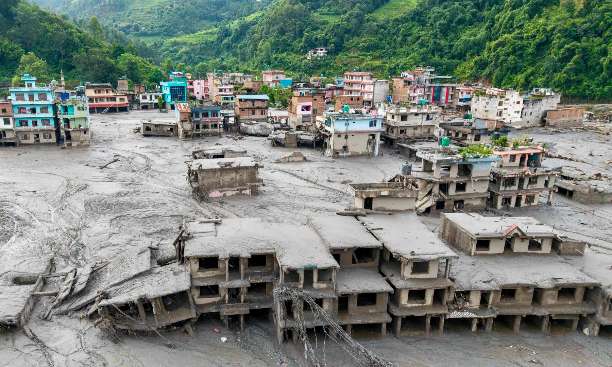
KATHMANDU (MNN); Catastrophic floods and mudslides along the Nepal-Tibet border have killed at least 362 people, while hundreds of others, including foreign tourists, remain missing following one of the region’s worst natural disasters in recent years.

Nepal Police said that, as of Thursday evening, the death toll in Nepal had reached 359. Chinese state media earlier reported at least three deaths across the border in Tibet, taking the overall confirmed death toll to at least 362.
The disaster struck on Wednesday when a massive flow of water, mud and debris swept through settlements, towns and villages along the Bhote Koshi and Trishuli river systems.
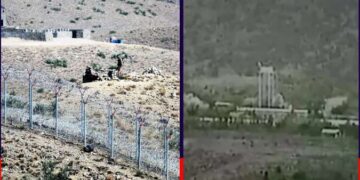
Surveillance footage from the Chinese side of the border showed a huge wall of mud and debris crashing into multi-storey buildings, while vehicles and buses were swept away within seconds as people ran to save their lives.
Officials said many foreign tourists were among those still unaccounted for. According to Nepal’s disaster authorities, hundreds of people had lost contact with rescuers, including Nepali citizens and visitors from several countries.
Among the missing were tourists from India, the United States, Australia, Britain, Canada and several other nations. Authorities later reported that around 100 missing Indian visitors and 25 Chinese workers had been located.
Chinese authorities said that hundreds of people, including foreign nationals, also remained missing on the Tibetan side of the border.
Nepalese Prime Minister Balendra Shah travelled to the flood-hit district of Nuwakot to assess the devastation and oversee relief efforts.
Survivors described scenes of widespread destruction, with homes, settlements, vehicles and market areas washed away by the powerful surge of water and mud.
Environmental experts compared the disaster to an “inland tsunami”, with the debris flow reportedly travelling nearly 170 kilometres through the Bhote Koshi valley into central Nepal.
The worst devastation was initially reported in Rasuwa district, but fatalities were later reported across seven districts as floodwaters moved southwards towards Chitwan.
The Nepali Army launched extensive rescue and evacuation operations, using helicopters to airlift survivors and warning residents living near rivers and other vulnerable areas to move to safer locations.
Across the border, Chinese authorities deployed hundreds of emergency workers, vehicles, sniffer dogs and boats to search for survivors.
International organisations, including the International Federation of Red Cross and Red Crescent Societies, the United Nations and other humanitarian agencies, began dispatching emergency supplies and personnel to assist the affected population.
The United States announced emergency assistance of $500,000 and said it was deploying a disaster response adviser.
Experts initially struggled to determine the cause of the catastrophe. However, the US Geological Survey later concluded that the event was triggered by a glacial collapse and massive debris flow, rather than an earthquake.
The incident was initially believed to have been a magnitude 4.4 earthquake, but further seismic and satellite analysis found no evidence of an earthquake. Instead, the collapse of glacial material caused seismic activity and triggered the devastating downstream floods.
Experts have warned that a blockage upstream along the Nepal-China border could lead to a second flood, prompting authorities to remain on high alert.
The disaster has also disrupted major tourism and pilgrimage routes, including areas leading towards popular trekking destinations and Mount Kailash, a sacred site for Buddhists and Hindus.
The tragedy has prompted international expressions of solidarity. Chinese President Xi Jinping called for all possible efforts to locate and rescue those still missing, while UN Secretary-General Antonio Guterres said UN teams and partners were mobilising support for affected communities.
The Dalai Lama also expressed grief over the disaster and offered condolences to the families of those who lost their lives.