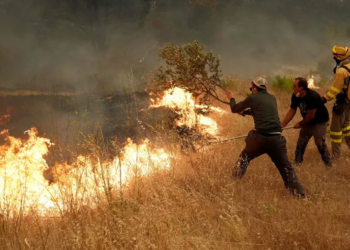












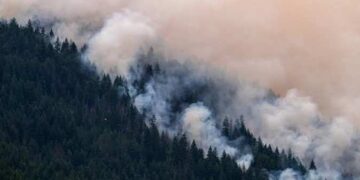












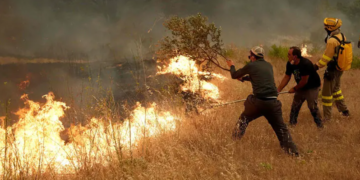













































CAP FERRET: More than 100,000 people were forced to evacuate their homes on Friday as fast-moving wildfires tore through parts of France and Spain, prompting both countries to seek assistance from the European Union.

In France, nearly 60,000 people were ordered to leave the upscale Cap Ferret peninsula, south of Bordeaux, where holidaymakers escaped by boat while others used the peninsula’s only accessible road to flee advancing flames.
Authorities also evacuated another 23,000 people from homes and campsites in the Landes region further south.
In Spain, over 19,000 residents were either evacuated or instructed to remain indoors as multiple wildfires raged across the Madrid region.
Officials said two of the three major fires west of the capital had merged into a single blaze, posing a growing threat to nearby suburban communities.
“We are living through a dramatic situation, not only in various Spanish provinces but also in regions of neighbouring countries,” Prime Minister Pedro Sanchez said, as smoke from the fires spread across Madrid.
Fires fuelled by heat and drought
Several parts of Europe have endured two heatwaves since May, while prolonged drought linked to human-induced climate change has significantly increased the risk of wildfires this year, according to a study released this week by the World Weather Attribution group.
The ongoing wildfire season has already claimed the lives of three firefighters in France and Italy.
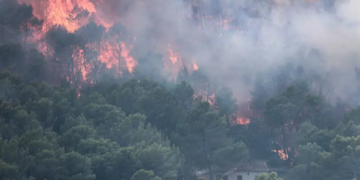
French authorities intensified evacuation efforts as firefighters struggled to contain the rapidly advancing blaze on Cap Ferret.
Regional fire chief Marc Vermeulen said that, at its peak, the fire was consuming between 800 and 1,000 hectares (2,000–2,500 acres) of forest every hour.
French officials said more than 50 homes had been destroyed and dozens more damaged, leaving many evacuees uncertain about the fate of their properties.
Emergency shelters were established in schools and sports halls to accommodate residents and tourists displaced by the fires.
Among them was 90-year-old Maria Lalanne from Lege Cap Ferret, who was staying in a gymnasium after evacuating without her glasses or hearing aid.
“I have heart disease, high blood pressure and problems with my eyes,” she said. “I don’t know how long all this will last. I don’t know how my house is, whether it has burned.”
EU sends firefighting support
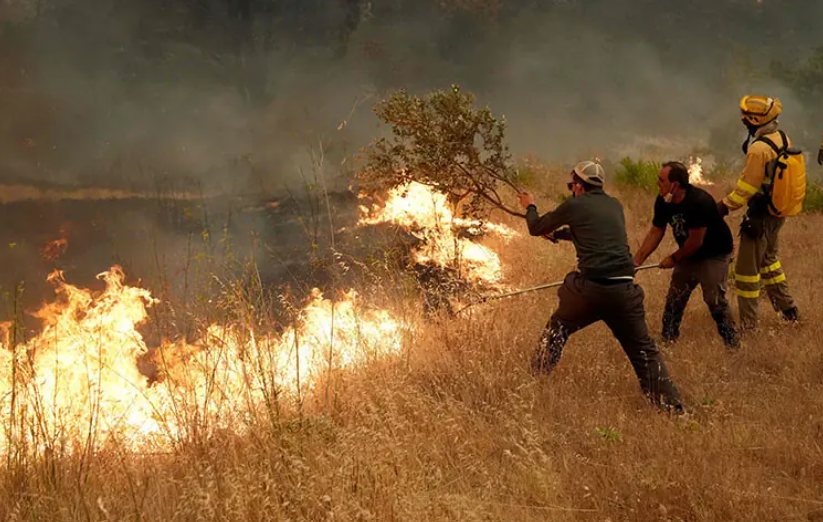
France deployed additional emergency personnel from across the country, with around 1,000 firefighters, gendarmes, and specialist troops working to contain the fires.
Following requests from both countries, the European Commission announced it would send four water-bombing aircraft to Spain and three to France to assist firefighting efforts.
Spanish officials described the fires around Madrid as the worst in the region’s history.
More than 430 elderly and disabled residents were evacuated from five care homes, with police officers wearing face masks helping wheelchair users board buses.
The merged wildfires west of Madrid continued advancing toward the town of Navas del Rey, located around 50 kilometres from the Spanish capital.
“The smoke was incredibly thick,” Jose Cobos, who fled his home southwest of Madrid with his wife and three dogs, told a television network. “You couldn’t breathe.”