












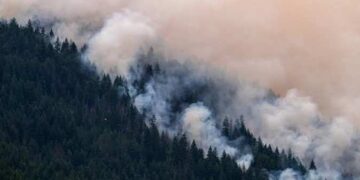

















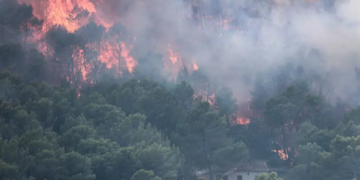



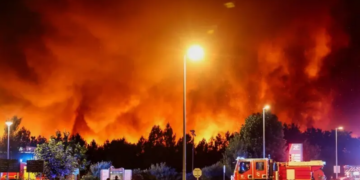







































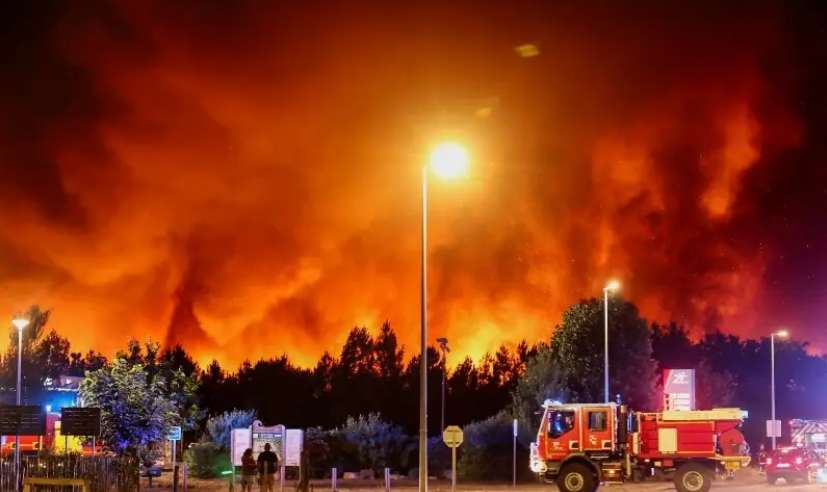
MADRID: Firefighters continued battling major wildfires across Spain and France on Wednesday as scorching temperatures gripped southern Europe, with authorities warning that the risk of further fires remains extremely high.

While Spain’s largest wildfire of the year showed signs of easing, allowing some evacuated residents to return home, France continued to battle deadly blazes after two firefighters were killed in the southwestern Gironde region.
French authorities urged the public to avoid using barbecues in areas affected by the heatwave, noting that nine out of 10 wildfires are caused by human activity, whether accidental or deliberate.
Meanwhile, the Western Balkans experienced a shift from intense heat to severe storms, with hail and strong winds injuring several people in North Macedonia and eastern Kosovo.
Europe remains the fastest-warming continent, and scientists say climate change driven by human activity is increasing the frequency and severity of heatwaves, droughts and wildfires while also contributing to sudden and destructive storms.
The region has already experienced three consecutive heatwaves this year, with extreme temperatures blamed for thousands of excess deaths between May and June.
According to the Reuters Climate Monitor, the average high temperature across Western Europe was forecast at 26.6 degrees Celsius on July 22 — around three degrees above the historical average for the period between 1961 and 1990.
Spain battles largest wildfire of the year
Spain’s most severe wildfire this year has scorched approximately 32,000 hectares in the central province of Guadalajara.
The blaze began stabilising on Tuesday after forcing evacuations in 34 municipalities and confinement orders in 14 others.
Regional fire service INFOCAM said residents of five villages had been permitted to return home, although restrictions remain in place elsewhere. Prime Minister Pedro Sanchez was expected to visit the affected area on Wednesday.
Spain’s national weather agency, AEMET, warned that wildfire danger remained “very high or extreme” across most of mainland Spain and the Balearic Islands and could worsen in the coming days.
The agency urged the public to “exercise extreme caution” as high temperatures combine with dry thunderstorms and Saharan dust.
AEMET spokesperson Ruben del Campo said the current heatwave was expected to peak on Wednesday, with temperatures ranging between 39°C and 42°C across large parts of the country.
Although some regions may see slightly cooler conditions on Thursday, forecasters warned that dry westerly winds could push temperatures to between 42°C and 44°C in parts of the Ebro and Guadalquivir valleys, inland Valencia, Murcia and eastern Andalusia.
A significant drop in temperatures is expected from Friday, with many central and western regions returning to average or below-average conditions by Saturday.
However, forecasters cautioned that another spell of intense heat could develop early next week.
France continues firefighting efforts
In France, cooler weather and lighter winds improved conditions for firefighters tackling a wildfire in the southeastern Var region that has burned around 2,500 hectares, damaged dozens of homes and displaced about 400 people.
Water-dropping helicopters resumed operations on Wednesday morning as crews continued efforts to contain the fire.
“The situation has been very difficult. Some 1,100 firefighters fought all night,” Commander William Vogl, a spokesperson for the Var fire service, told RMC radio.
He said the blaze remained uncontrolled but added that weather conditions were expected to become more favourable.
Var prefect Simon Babre announced a ban on barbecues and urged municipalities to cancel planned summer fireworks displays to reduce fire risks.
Another wildfire was also burning in the southeastern Hautes-Alpes region.
Heat and storms affect other parts of Europe
In Greece, Athens and several eastern and mainland regions remained under extreme heat for a third consecutive day, with temperatures expected to exceed 41°C.
Authorities banned outdoor work during the hottest part of the day and advised employers to allow vulnerable employees to work remotely where possible.
In North Macedonia, a powerful storm overnight left 11 people hospitalised, including three with serious injuries, after strong winds uprooted trees, damaged buildings and disrupted electricity supplies.
Roads were blocked, while several communities were left without power and water.
Kosovo’s meteorological agency also warned of additional storms later this week, cautioning that lightning, flooding, power outages and damage to infrastructure remained possible.
Local media showed hailstorms, torrential rain and residents covering vehicles with blankets in an attempt to limit storm damage.