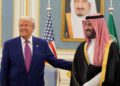











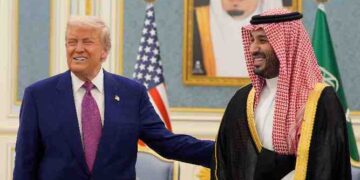
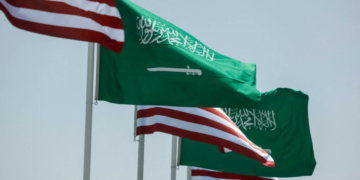









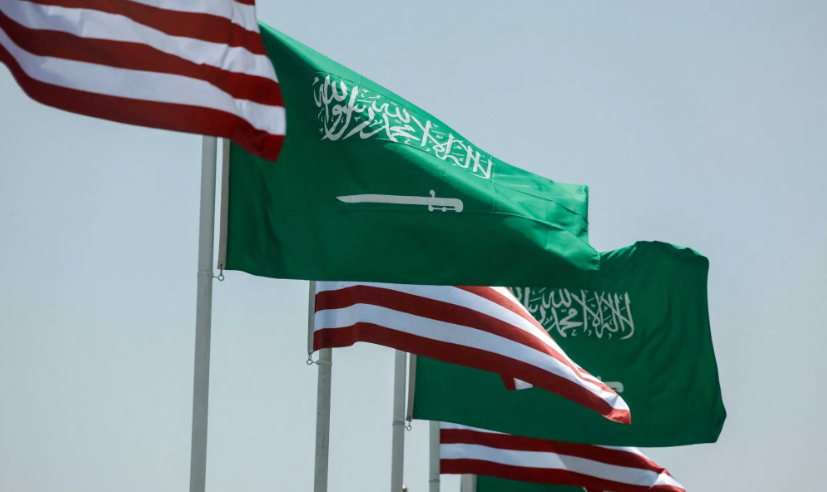
WASHINGTON: The United States and Saudi Arabia on Wednesday signed a landmark agreement to launch a civilian nuclear programme in the kingdom, with Washington emphasising that the deal contains safeguards aimed at preventing nuclear weapons proliferation.

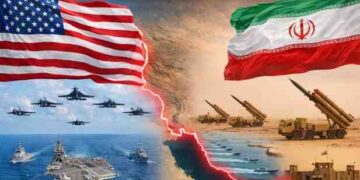
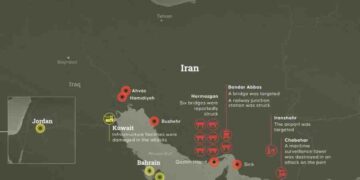
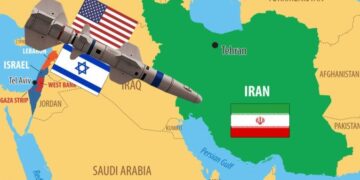
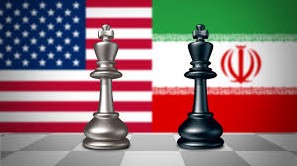
The agreement comes as the administration of US President Donald Trump remains engaged in conflict with Iran, where concerns over Tehran’s nuclear programme continue to shape tensions despite stalled peace negotiations.
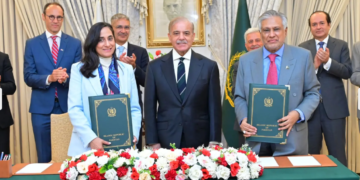
US Energy Secretary Chris Wright and Saudi Energy Minister Prince Abdulaziz bin Salman signed two agreements covering “peaceful nuclear cooperation” and “bilateral safeguards”, according to the US Department of Energy.
The full text of the agreements was not immediately released.
“Together, these two agreements lay the legal foundation for a decades-long, multi-billion-dollar partnership that advances several priority economic and strategic objectives, including nuclear non-proliferation,” the department said in a statement.
According to a Wall Street Journal report, one provision could allow US companies to construct a uranium enrichment facility in Saudi Arabia. However, the Energy Department neither confirmed nor commented on the report, and the official statement made no reference to such a clause.
The agreement will now be submitted to the US Congress for review, although it is widely expected to pass given the Republican majority in both chambers.
In previous years, lawmakers from both major US parties, as well as Israeli officials, have expressed concerns that Saudi Arabia could eventually use uranium enrichment capabilities to pursue nuclear weapons.
Saudi Arabia has consistently maintained that it has the right to develop a civilian nuclear programme, similar to Iran’s longstanding position.
Washington has also sought to incorporate civilian nuclear cooperation into broader regional diplomacy, including efforts to encourage Saudi Arabia to normalise relations with Israel alongside a US-Saudi defence agreement.
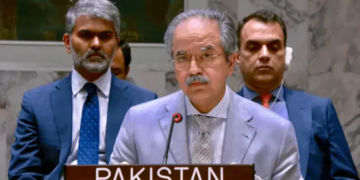
Pakistan and Saudi Arabia signed a mutual defence pact in September 2025.
Concerns over nuclear proliferation
The United States previously concluded a civilian nuclear cooperation agreement with the United Arab Emirates in 2009. Unlike the proposed Saudi arrangement, the UAE does not enrich uranium domestically.
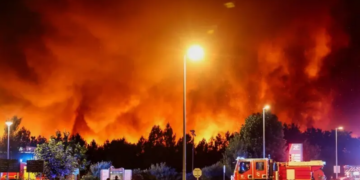
In May, a drone strike caused a fire near a generator at the UAE’s Barakah nuclear power plant, the Arab world’s only operational nuclear energy facility.
Analysts have long warned that any Iranian move toward developing nuclear weapons could trigger a broader arms race across the Gulf region.
Responding to such concerns, Wright defended the agreement, saying it meets strict international standards.
“Rest assured, these agreements uphold the highest standards of nuclear safety and non-proliferation, while relying on the world’s best nuclear technology and scientists, designed right here in the United States,” he said in a statement.
The agreement was signed under Section 123 of the US Atomic Energy Act, the legal framework governing US civilian nuclear cooperation with foreign states.
Washington currently maintains nuclear cooperation agreements with more than 50 countries, although the scope of those partnerships differs.
Experts noted that negotiations over the Saudi agreement had been underway for years, but some continued to question the possibility of uranium enrichment within the kingdom.
“It would be a mistake to allow Saudi Arabia the capability for enrichment,” said Matthew Kroenig of the Atlantic Council before the agreement was formally announced.
“Washington is right to strengthen its relationship with Riyadh, but it should not do so at the expense of its effective nuclear weapons non-proliferation standards.”
Jennifer T. Gordon, director of the Atlantic Council’s Nuclear Energy Policy Initiative, described the deal as a strategic success for Washington.
“Saudi Arabia has made it clear that it will purchase nuclear energy technologies and begin a civil nuclear program; the only question has been whether the kingdom would choose to work with the US and its allies, or whether it would turn to Russia or China,” she said.