

















































DUBAI: Tensions in the Middle East escalated on Thursday after Yemen’s Houthi movement claimed responsibility for attacks on two Saudi oil tankers in the Red Sea, while the United States conducted a 12th consecutive night of military strikes inside Iran.

Saudi state news agency SPA confirmed that one of the targeted vessels caught fire during the incident.
Quoting an official from the General Transport Authority, SPA reported that the tanker Encelia sustained damage to its bow, resulting in a fire while sailing through the Red Sea. The agency said all crew members were safe but did not identify the attacker.
Saudi authorities secured the vessel and its crew and implemented measures to prevent environmental damage, describing the incident as a breach of international law.
In a statement, the Houthis said they had targeted the Encelia and Layla, claiming both ships had violated a naval blockade imposed by the group on Saudi Arabia in the Red Sea. They said the operation involved ballistic missiles, cruise missiles and drones.
Earlier, a maritime security source said the Encelia issued a distress call over VHF radio after reporting that it had been struck by a missile while operating near Saudi Arabia’s Jizan port in the Red Sea, leaving the vessel on fire.
British maritime risk management company Vanguard also reported that the Saudi-flagged Encelia was hit by an unidentified projectile on its starboard side about 130 kilometres southwest of Al Shuqaiq at around 2000 GMT.
The United Kingdom Maritime Trade Operations (UKMTO) agency separately confirmed receiving reports of an incident in the same area, stating that the master of a tanker reported being struck by an unknown projectile that caused a fire onboard. The crew managed to battle the blaze, while no casualties or environmental damage were reported.
Although UKMTO did not identify the vessel, the reported location and details closely matched Vanguard’s account.
Vanguard added that while the Houthis had claimed responsibility for the attack and also asserted they had struck a second tanker, Layla, the second incident had not been independently confirmed.
The Houthis also claimed they forced around 10 ships to turn back during the operation.
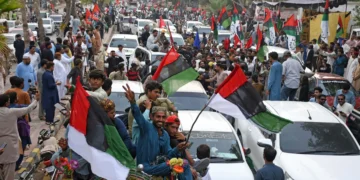
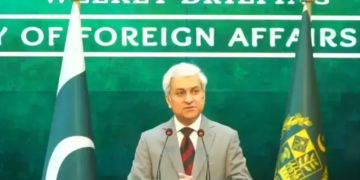
On Wednesday, Pakistan strongly condemned the Houthis’ continued threats against Saudi Arabia and commercial shipping in the Red Sea, warning that it reserved the right to take all necessary self-defence measures if its maritime interests were targeted in any hostile act.
The statement was considered Pakistan’s strongest response so far to Houthi threats and one of the most forceful by any non-Arab country.
The Bab al-Mandeb Strait, linking the Red Sea to the Gulf of Aden, is a vital maritime route for Pakistan’s trade and energy imports. While a significant portion of the country’s oil supplies passes through the corridor, no Pakistani vessels have been reported as targeted.
US strikes continue inside Iran
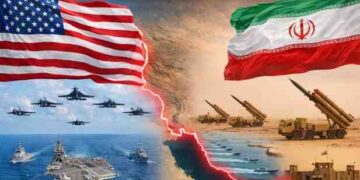
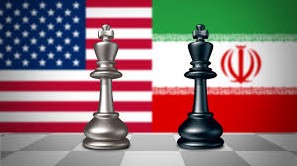
Separately, the US military carried out another wave of attacks across Iran on Thursday, extending its campaign to a 12th consecutive night under orders from President Donald Trump.
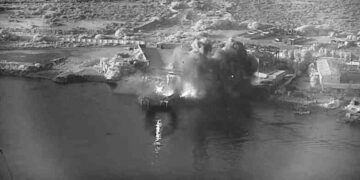
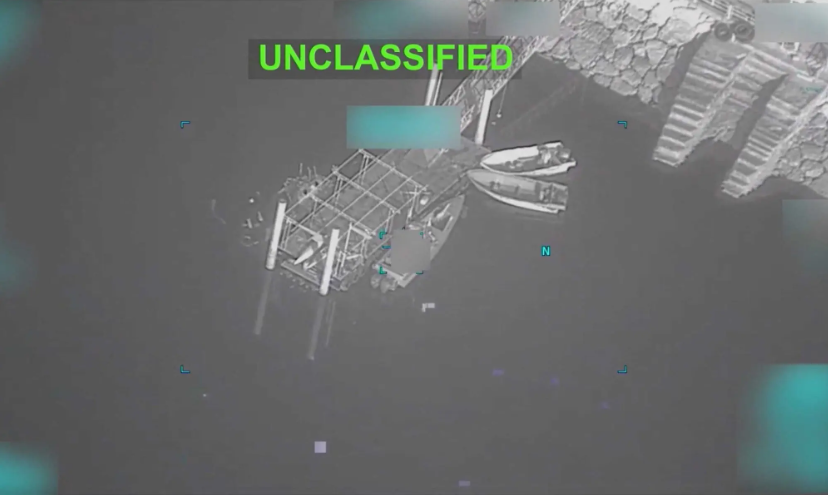
“US forces struck Iranian military targets including maritime capabilities, missile and drone storage facilities, coastal surveillance sites, and air defense assets. The strikes further degrade Iran’s ability to attack civilian mariners and commercial vessels,” the US Central Command (Centcom) said.
“This month, American forces have targeted dozens of Iranian military sites on land while resuming a blockade against Iran at sea. As of today, Centcom has redirected nine commercial vessels and disabled one to prevent ships from entering or departing Iranian ports,” it said.
The latest developments came a day after Trump warned that the United States would destroy an Iranian bridge or power plant whenever Iran fired on vessels in the Strait of Hormuz.
Iran’s joint military command responded by warning that any attacks on its infrastructure would prompt retaliatory strikes against regional oil, gas, electricity and economic facilities, while also threatening to halt the export of “even a single drop of oil,” according to Iranian state media.
Shortly afterward, Iran’s Revolutionary Guards reported an explosion along what they described as a mined route south of the Strait of Hormuz. They said one of three oil tankers caught fire while the remaining two turned back.
The Guards claimed the strategic waterway was under Iranian control and “completely closed,” adding that no tanker would be allowed to enter or leave without Tehran’s approval.
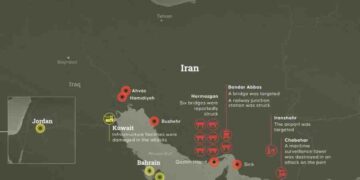
Since the collapse of a June ceasefire, US forces have carried out 12 consecutive days of strikes across southern, western and central Iran, saying the campaign aims to further weaken Tehran’s ability to threaten international shipping.
Iranian media also reported that US forces struck a military target in Bushehr twice on Thursday near Iran’s only operational commercial nuclear power plant, marking the third attack in the area within two days.
State television said two people were killed and 11 others injured in what a provincial official described as a US missile strike on the Shalamcheh border crossing with Iraq.