










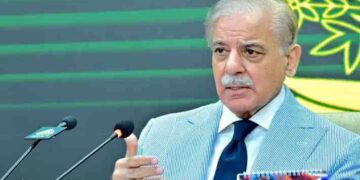








































Prime Minister Shehbaz Sharif on Thursday said Pakistan’s civil and military leadership had reached a “mutual and singular decision” to completely eradicate terrorism following a series of deadly attacks in Balochistan.

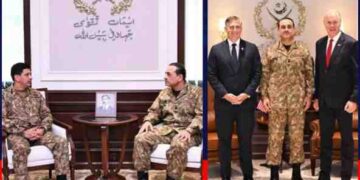
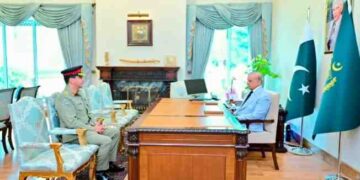
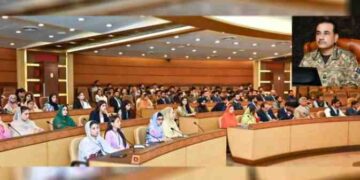
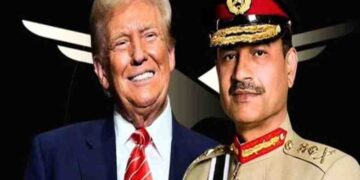
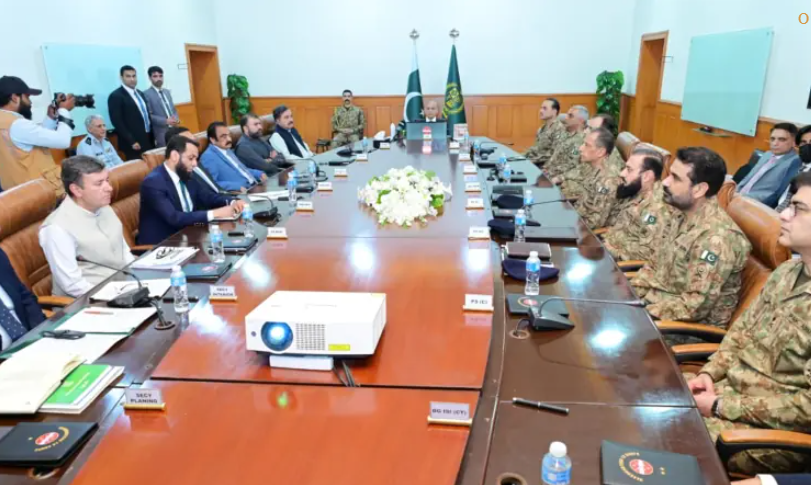
He made the remarks while chairing a meeting of the Provincial Apex Committee on the National Action Plan in Quetta, which was attended by Chief of Defence Forces (CDF) and Chief of Army Staff Field Marshal Asim Munir.
Addressing the meeting, PM Shehbaz said, “One thing is decided: it is a mutual and singular decision of the civil and military leadership that we must end terrorism collectively.”
The prime minister said the leadership had gathered in Balochistan after “very serious incidents took place in the past four days”, resulting in the deaths of police personnel, soldiers and civilians.
He said 54 terrorists had been killed during retaliatory actions and subsequent operations, stressing that the fight against terrorism would continue.
“This war [against terrorism] will continue until the last fasaadi (vicious) terrorist in Pakistan is eliminated,” he said.
Reiterating allegations against India, PM Shehbaz claimed that Pakistan’s eastern neighbour was supporting terrorist activities. “There is no doubt that our eastern neighbour is fully involved in this fitna (evil) in all aspects,” he said.
“They are providing money to these terrorists and their groups, as well as providing weapons. These terrorists in Afghanistan collectively conduct attacks in Balochistan and KP,” he added.
The prime minister also referred to what he described as “khariji hands” involved in the attacks, saying he would not discuss the matter further during the meeting.
He said Fitna Al Khawarij (FAK) had “heinous objectives” aimed at damaging Pakistan’s international reputation, including its diplomatic achievements and the four-day conflict of May last year.
The government uses the term “Fitna al Khawarij” (FAK) for the banned Tehreek-i-Taliban Pakistan (TTP) and its affiliated groups.
PM Shehbaz said Pakistan’s progress and growing international standing had become a source of concern for its enemies, who were attempting to create instability.
“I want to announce this decision today — on behalf of myself, Field Marshal Syed Asim Munir and the Balochistan government — that we will not step back from eliminating this fitna day and night and will eliminate it by utilising all resources, and Pakistan will become a cradle of progress and prosperity,” he said.
The prime minister praised the sacrifices of armed forces personnel, law enforcement agencies and civilians, saying the entire nation stood with them.
He expressed confidence that these sacrifices would eventually lead to the elimination of terrorism and concluded his remarks by praying for the martyrs.
The meeting was attended by Balochistan Governor Jaffar Khan Mandokhail, Chief Minister Sarfraz Bugti and senior officials from law enforcement agencies.
PM Shehbaz arrived in Quetta earlier in the day for a brief visit focused on reviewing the province’s security situation. He was received by the governor, chief minister and senior civil and military officials.
Economic Affairs Minister Ahad Khan Cheema, Information Minister Attaullah Tarar and PM’s Adviser on Political Affairs Rana Sanaullah were also part of the delegation.
The visit came a day after the military announced that at least 42 people, including security personnel, police officials and civilians, had been killed in terrorist attacks and subsequent operations in Balochistan since July 5.
According to military figures, four civilians, 27 police officers and 11 security personnel lost their lives during the attacks and operations, while 54 terrorists were killed.
The Inter-Services Public Relations (ISPR) said the province had witnessed three major incidents in recent days, including an armed attack near Quetta on July 5, an assault on a police post in Ziarat on July 6 and an ambush on an army convoy in Bela on Wednesday.
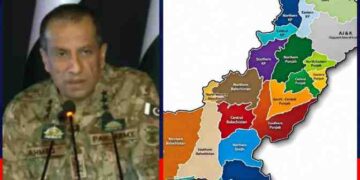
ISPR Director General Lt Gen Ahmed Sharif Chaudhry warned terrorists and their facilitators that security forces would continue operations against them and would show no leniency.
He also accused India and “those forces with India” of supporting the attacks, alleging that they sought to undermine Pakistan’s stability, prosperity and international standing.