
















































DAMASCUS/ISLAMABAD (MNN); A newly signed United States-mediated framework agreement between Israel and Lebanon has triggered sharp political divisions across the region, with Hezbollah strongly rejecting the deal, while several international leaders have welcomed it as a significant step toward reducing tensions along the volatile Israel-Lebanon border.

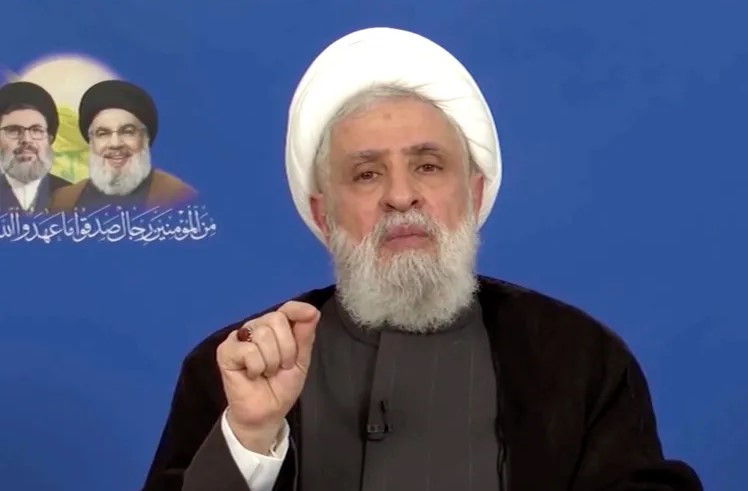
Hezbollah Secretary-General Naim Qassem condemned the agreement, describing it as a “humiliating surrender” that compromises Lebanon’s sovereignty. In a strongly worded statement, Qassem declared the accord “null and void,” accusing the Lebanese government of legitimising Israeli occupation by accepting the framework.
According to Qassem, the agreement contradicts Lebanon’s national interests and ignores previous understandings reached through Iranian-American mediation. He argued that any future security arrangement should instead be based on earlier commitments that guaranteed Lebanon’s territorial integrity and sovereignty.
The Hezbollah chief also praised Iran’s role in securing the previous ceasefire in Lebanon, calling Tehran’s support “a gift of honour, dignity and strength.” He maintained that Iran had provided Lebanon with a strong diplomatic position capable of protecting the country’s sovereignty.
Meanwhile, Lebanese Parliament Speaker Nabih Berri expressed deep concern over the agreement, warning that it could create internal divisions within Lebanon. In a brief message to the Lebanese people, Berri cautioned against what he described as “fitna” or national discord, urging citizens not to allow political differences over the agreement to threaten the country’s unity.
The framework agreement, brokered by the United States after months of diplomatic efforts, aims to reduce hostilities between Israel and Lebanon following months of cross-border exchanges of fire. However, Hezbollah, which has fought several wars with Israel over the past decades, was not directly involved in the negotiations leading to the accord.
Despite the agreement, tensions on the ground remain high. The Israeli military confirmed carrying out an airstrike in the Nabatieh region of southern Lebanon, claiming it targeted suspected Hezbollah members who allegedly posed a threat to Israeli forces. The strike marked the first reported Israeli military operation since Washington announced the framework agreement.
Israeli Defence Minister Israel Katz stated that Israeli forces have been instructed to prepare for an extended deployment inside what Israel describes as a security zone extending up to 10 kilometres into southern Lebanon. He said Israeli troops would remain in the area until Hezbollah is fully disarmed across Lebanon, stressing that no withdrawal would take place unless Israel’s security concerns are addressed.
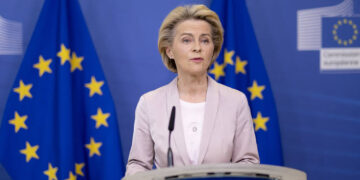
International reaction to the agreement has largely been positive. European Commission President Ursula von der Leyen welcomed the accord as a critical opportunity to prevent further escalation in the Middle East. She thanked the United States for its mediation efforts and stressed that the next important steps include strengthening Lebanese sovereignty and ensuring that all non-state armed groups are disarmed.
Von der Leyen also announced that the European Union remains committed to supporting Lebanon through humanitarian assistance, with additional financial aid allocated for displaced civilians affected by recent hostilities.
Germany also welcomed the agreement. Foreign Minister Johann Wadephul described it as a hopeful opportunity to end years of instability along the Israeli-Lebanese border. He urged Lebanon to establish the state’s exclusive authority over the use of force while calling on Israel to provide security guarantees and encouraging all parties, including Hezbollah, to act responsibly.
Italy likewise expressed support for the framework. Foreign Minister Antonio Tajani said the agreement represented an important diplomatic breakthrough and confirmed that Rome is prepared to provide diplomatic assistance and potentially contribute to any future international peacekeeping mission under the mandate of the United Nations Interim Force in Lebanon (UNIFIL). Tajani said discussions with Italy’s embassy in Beirut suggested that initial reactions inside Lebanon had been encouraging, but stressed that the agreement must now be translated into practical implementation.
Lebanese Foreign Minister Youssef Raggi revealed that he had received a congratulatory telephone call from Jordanian Foreign Minister Ayman Safadi, who expressed hope that the agreement would help restore Lebanon’s sovereignty, strengthen state institutions and promote long-term regional stability. Raggi thanked Jordan for its continued support and described the agreement as a victory for diplomacy and the authority of the Lebanese state.
Although many regional and international actors have welcomed the accord, analysts warn that its success will largely depend on implementation, particularly concerning Hezbollah’s future role, Israeli military deployment, and security guarantees for both sides. With political divisions remaining deep and military activity continuing despite the agreement, observers say the coming weeks will determine whether the framework can pave the way for lasting peace or become another failed diplomatic initiative in the region.