










































































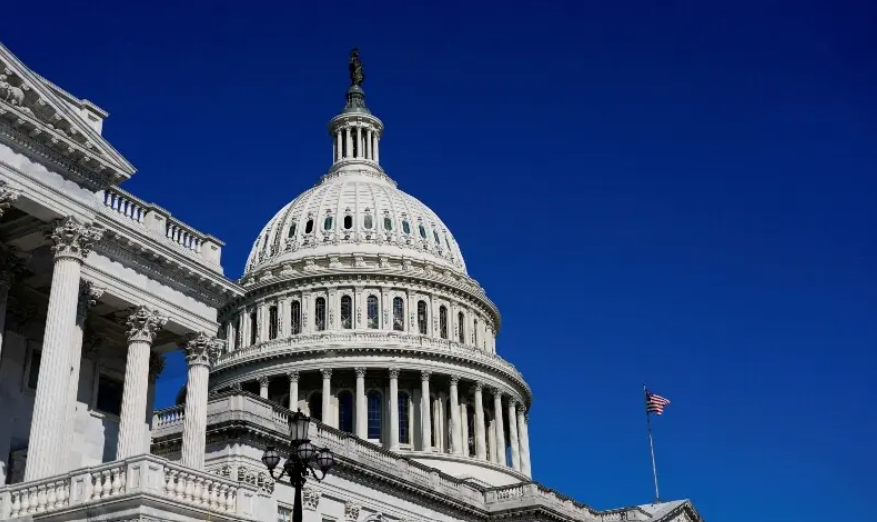
WASHINGTON: The US Senate on Tuesday approved a largely symbolic resolution urging an end to President Donald Trump’s military conflict with Iran, marking another congressional challenge to the administration as it works toward a long-term agreement with Tehran.

The resolution, which had already been passed by the House of Representatives, was approved in the Senate by a vote of 50-48. It calls on President Trump to withdraw US forces from hostilities with Iran unless Congress formally authorises military action.
As a concurrent resolution, the measure does not require the president’s signature and its legal authority remains disputed. However, its passage places both chambers of Congress on record as opposing the conflict that began following US and Israeli strikes on Iran in late February.
The conflict has disrupted global energy markets and expanded into a broader regional confrontation involving Lebanon and several Gulf states.
The vote comes amid a 60-day diplomatic effort by the Trump administration to convert a preliminary memorandum of understanding with Iran into a comprehensive agreement addressing Tehran’s nuclear programme, sanctions relief and the future status of the Strait of Hormuz.
Senate Democratic leader Chuck Schumer pushed for the vote after several Republicans expressed concerns about both the conflict and the administration’s approach to ending it.
“Republicans can complain about Trump’s war, his secrecy, and his disastrous deal with Iran all they want behind closed doors, but the only way to ensure this war ends once and for all is for Republicans to act,” Schumer said in a speech before the vote.
The measure previously passed the Republican-controlled House with support from all Democrats and four Republicans, representing a rare instance of bipartisan opposition to Trump on national security and military policy.
Democrats argue that the president exceeded his constitutional authority by initiating military operations against Iran without congressional approval.
Before the House vote, House Speaker Mike Johnson defended the administration’s position, warning that restricting the president’s powers during sensitive negotiations would be a “very dangerous prospect.”
However, Democrats and a number of Republican lawmakers maintain that military operations continued beyond the legal timeframe and point to Trump’s repeated warnings of possible future strikes as justification for congressional intervention.
Although the resolution is unlikely to have a direct impact on administration policy, it reflects growing concern within Congress over presidential war powers and the direction of US policy toward Iran as diplomatic negotiations continue.