










































































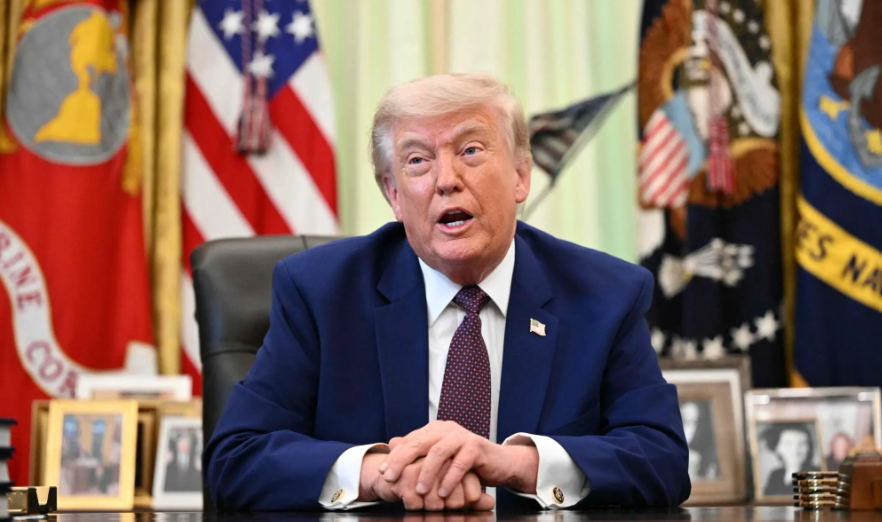
The Republican-controlled US House of Representatives voted on Wednesday to approve a resolution aimed at limiting President Donald Trump’s ability to continue military operations against Iran, highlighting growing concern among some members of his own party over the conflict.

The measure passed by a narrow margin of 215-208, with four Republicans joining Democrats in support. The resolution directs Trump to withdraw US forces from Iran unless Congress formally declares war or authorises military action.
The vote marks the first time since the conflict began three months ago that the Republican-led House has approved legislation intended to pressure the administration to scale back military involvement in Iran.
Largely Symbolic but Politically Significant
Although the resolution represents a notable rebuke to the president, its immediate impact is limited. To take effect, it would also need approval from the Senate, and constitutional questions remain over whether Congress can compel a president to end military operations through a war powers resolution.
Nevertheless, the vote reflects increasing discomfort among some Republicans regarding Trump’s management of the conflict and demonstrates a rare bipartisan effort to reassert congressional authority over decisions related to war.
Three earlier war powers resolutions had failed in the House, though each was defeated by progressively smaller margins. Republican leadership had also delayed a vote on the current measure last month when support appeared strong enough for passage.
A similar proposal in the Senate advanced through a procedural vote last month after seven unsuccessful attempts, although no final vote has yet been scheduled.
The four Republicans who backed the resolution were Representatives Tom Barrett, Warren Davidson, Brian Fitzpatrick and Thomas Massie. No Democrats opposed the measure, while seven lawmakers did not vote.
Growing Republican Resistance to Trump
The vote is the latest sign of resistance from within Trump’s party after months of largely unified Republican support for his agenda.
On the same day, the House also approved a procedural step allowing consideration of the Ukraine Support Act, which would provide additional security assistance to Ukraine in its war against Russia. The legislation reached the House floor after gathering the required 218 signatures through a discharge petition.
Six Republicans and one independent lawmaker who typically aligns with Republicans voted in favour of advancing the Ukraine measure.
Republicans have also recently criticised Trump’s proposal to establish a “weaponisation” fund intended to compensate political allies who claim they were unfairly targeted by government agencies.
Additionally, lawmakers raised concerns over Trump’s selection of loyalist Bill Pulte as acting director of national intelligence, citing his lack of national security experience.
Debate Over Presidential War Powers
Democrats have argued that Trump should seek congressional approval before continuing military operations against Iran, pointing to constitutional provisions that grant Congress—not the president—the authority to declare war.
They have also expressed concern that the administration may be leading the country into a prolonged conflict without a clearly defined strategy. Rising costs for fuel, food and other essentials since US-Israeli strikes on Iran began on February 28 have further fuelled criticism.
Representative Gregory Meeks, who introduced the resolution and serves as the ranking member of the House Foreign Affairs Committee, said the outcome demonstrated growing opposition to the conflict.
“The passage of this WPR today signals a significant turning point: more and more Republicans are listening to their constituents who do not want another open-ended war in the Middle East,” he said.
House Foreign Affairs Committee Democrats echoed that message on social media, stating: “This is a loud and unambiguous message to Donald Trump on behalf of the American people: it’s time to end his deeply unpopular and illegal war of choice in Iran.”
Administration Defends Military Campaign
Economic concerns have become a central issue for Democrats ahead of November’s midterm elections, which will determine whether Republicans retain control of Congress.
Recent economic data has shown producer prices rising sharply, with higher costs for goods and services linked in part to disruptions associated with the conflict.
The Trump administration continues to defend the military campaign, arguing that action against Iran is necessary to protect US national security interests and prevent Tehran from acquiring a nuclear weapon.
Meanwhile, Republican opponents of the war powers resolutions have dismissed the efforts as political manoeuvring by Democrats aimed at undermining the administration and gaining political advantage ahead of the elections.