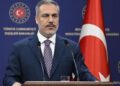































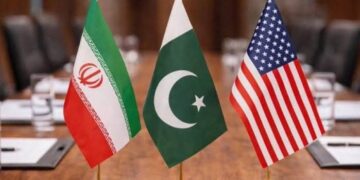
















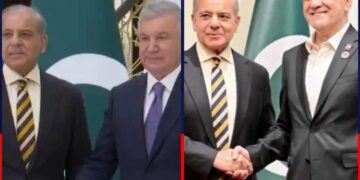



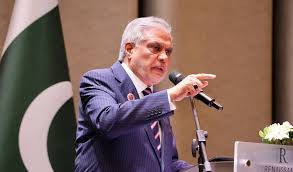








Pakistan’s Foreign Office (FO) has firmly denied reports suggesting that Deputy Prime Minister and Foreign Minister Ishaq Dar shared information about Iran’s nuclear programme during a recent meeting with US Secretary of State Marco Rubio.

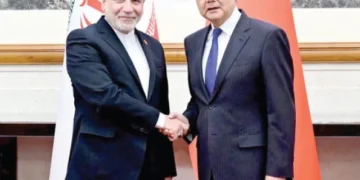
Dar met Rubio on May 29 during a short visit to Washington, where discussions focused on bilateral relations and regional security. Following the meeting, Rubio had commended Pakistan’s role in promoting peace efforts in the Middle East.
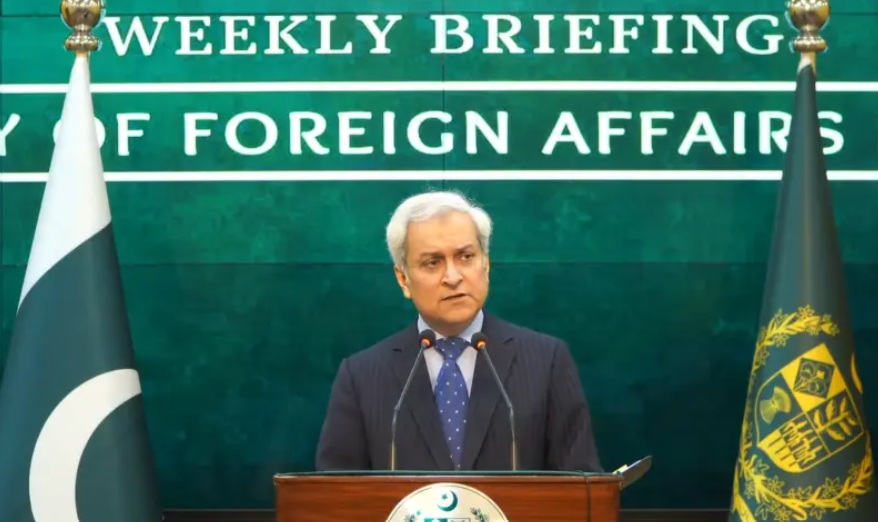
Addressing a weekly media briefing on Thursday, FO spokesperson Tahir Andrabi dismissed claims that Dar had provided any information regarding Iran’s nuclear activities.
“No such information was shared,” Andrabi stated, rejecting reports of the deputy prime minister “exchanging any kind of information about Iran’s nuclear programme”.
Claims Originated from Former CIA Analyst
The clarification follows remarks by former CIA analyst Larry Johnson, who cited an unnamed source claiming that Dar conveyed information to Rubio about Iran’s intentions to safeguard its independence. According to Johnson, the alleged conversation had “alarmed” the US secretary of state.
Rubio himself denied the reports during a congressional hearing on Wednesday. When questioned by US Congressman Scott Perry about whether Dar had delivered a message that Iran was “prepared to demonstrate a nuclear weapon should the current escalation continue”, Rubio said, “I have not seen that reporting and I am not aware of any such message.”
After Perry raised the issue again, Rubio reiterated that no such message had been communicated.
“I would be surprised if that message had been relayed. I would be aware of it if it was,” he added.
Regional Tensions Continue Despite Diplomatic Efforts
The conflict between the United States and Iran remains locked in a fragile ceasefire reached in April, following unprecedented direct negotiations hosted by Pakistan.
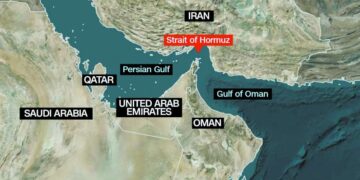
Although large-scale daily attacks have largely subsided, sporadic clashes continue. Earlier this week, the US and Iran exchanged strikes on military targets. US attacks near the Strait of Hormuz were followed by an Iranian missile strike on Wednesday that reportedly damaged Kuwait’s airport and caused casualties.
Iran has continued targeting locations across the Gulf region, where several US military bases are located.
Meanwhile, escalating violence between Israel and Hezbollah in Lebanon has complicated peace efforts. Growing tensions reportedly prompted US President Donald Trump to urge Israeli Prime Minister Benjamin Netanyahu to halt military operations.
Despite these challenges, diplomatic engagement continues as Washington seeks a broader agreement that could ease competing US-Iranian restrictions around the Strait of Hormuz, a critical route for global energy supplies.
FO Condemns India’s Planned Chenab-Beas Water Diversion Project
During the same briefing, the FO also criticised India’s proposed river-linking project that aims to divert water from the Chenab River to the Beas River, calling it a “grave violation” of the Indus Waters Treaty (IWT) and international law.
The project, known as the “Link-3 Project”, is expected to begin on August 1 in Himachal Pradesh. According to Indian reports, it seeks to transfer approximately 1.9 million acre-feet of water annually from the Chenab basin to the Beas system.
Andrabi said Pakistan had reviewed both media reports and official tender documents related to the project.
“Such an inter-basin diversion of water of the Chenab into the Beas system constitutes a grave violation of not just the IWT but also of the laws of treaty, particularly the Vienna Convention on the Law of Treaties, as well as the broader framework of international water law, including the principles reflected in the 1977 UN convention on watercourses,” he stated.
Concerns Over Salal Dam Operations
The FO spokesperson also expressed concern over India’s planned “silt flushing” operations at the Salal Dam in occupied Kashmir’s Reasi district.
“This is a deeply concerning development. It would provide water control capability that is not permissible under either the Indus Waters Treaty or the 1978 Salal agreement,” Andrabi said.
He further noted that India had neither formally notified Pakistan of the projects nor sought consultations regarding them.
According to Andrabi, the projects demonstrate that India seeks to “weaponise water”, posing risks to Pakistan’s economy, regional stability, and broader international peace and security.
Pakistan Warns It Will Protect Its Water Rights
While reaffirming Pakistan’s commitment to dialogue and responsible engagement, Andrabi warned that any action threatening the country’s water resources would be unacceptable.
“However, any illegal action, any illegal measure to endanger Pakistan’s water, food and economic security, as well as the survival and well-being of its 250 million people, is unacceptable,” he said.
He added that such measures amount to “further destabilisation of South Asia, with potential grave consequences” for the region.
Reiterating Pakistan’s rights under the treaty, Andrabi noted, “Under IWT, Pakistan is entitled to receive the unrestricted use of the water of the western rivers, and this is in lieu of the rights of the eastern rivers that were given to India.”
The spokesperson stressed that Pakistan “retains all options necessary for safeguarding rights and entitlements under the treaty and to protect its vital national interests”, adding, “Let me emphasise, we retain all options in this regard.”
The FO also called on the international community to urge India to end any form of water coercion, abandon projects aimed at reducing or diverting water allocated to Pakistan, and fully implement the Indus Waters Treaty.