






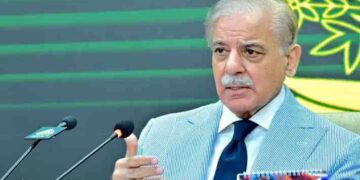




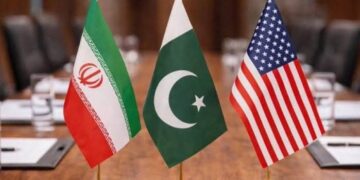











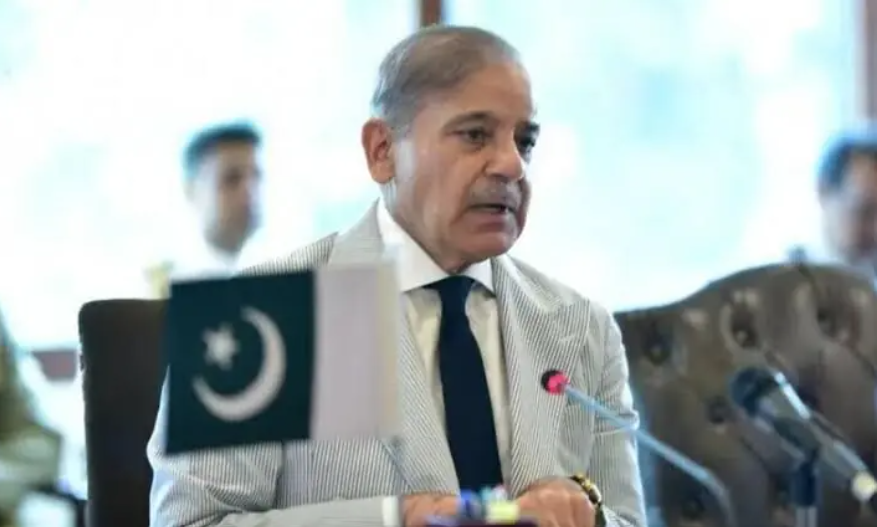
ISLAMABAD: Prime Minister Shehbaz Sharif on Wednesday expressed optimism about the ongoing peace process between the United States and Iran, hoping that negotiations would lead to a durable resolution of the conflict that escalated following the US-Israeli strikes on Iran on February 28.

In separate telephone conversations with Qatari Emir Sheikh Tamim bin Hamad Al Thani and Tabuk Governor Prince Fahd Bin Sultan Bin Abdulaziz Al Saud, the premier discussed regional developments, with the US-Iran dialogue featuring prominently in both exchanges.
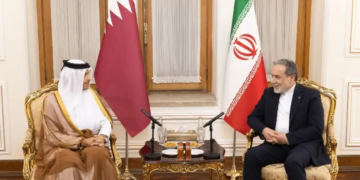
According to a statement issued by the Prime Minister’s Office, the Qatari ruler appreciated Pakistan’s diplomatic efforts that helped facilitate the signing of the Islamabad Memorandum of Understanding (MoU) between Washington and Tehran and reaffirmed Qatar’s support for Pakistan’s peace initiatives.
The two leaders expressed satisfaction over the first round of technical-level talks held in Burgenstock, Switzerland, and agreed that the positive momentum should be maintained to ensure the success of the negotiations.
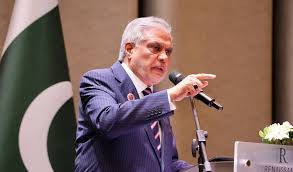
They also stressed the importance of protecting the dialogue process from those seeking to undermine it. A day earlier, Deputy Prime Minister Ishaq Dar had stated that Israel had “nearly derailed” the negotiations through its military actions in Lebanon.
Prime Minister Shehbaz renewed his invitation to the Qatari emir to visit Pakistan, while Sheikh Tamim conveyed his willingness to undertake a visit later this year to discuss bilateral cooperation and regional affairs.
In a separate conversation with Tabuk Governor Prince Fahd, the Saudi official praised Pakistan’s diplomatic role in helping establish understanding between the United States and Iran. The prime minister reiterated that Pakistan’s efforts were aimed at promoting regional peace and stability with the support of friendly countries, including Saudi Arabia.
Although negotiations between Washington and Tehran are expected to resume next week, neither the date nor venue has been officially confirmed. Meanwhile, both sides continue to issue differing statements on several key issues.
US President Donald Trump claimed that Iran had assured him that ships passing through the Strait of Hormuz would not be charged transit fees. However, he did not clarify whether that commitment would remain in effect after the current 60-day negotiation period.
Speaking to reporters after a meeting with Republican senators, Trump said, “Iran is agreeing to everything I want, and they have to. Otherwise, we just go back and do what we have to do.”
His remarks came a day after Iranian and Omani officials reportedly discussed the possibility of introducing transit charges in the strategically important waterway. The Strait of Hormuz, through which nearly one-fifth of global oil and liquefied natural gas supplies pass, was closed by Iran following attacks by the United States and Israel before being reopened under last week’s ceasefire and peace framework agreement.
Separately, Qatar’s Prime Minister Sheikh Mohammed bin Abdulrahman Al Thani travelled to Oman on Wednesday to begin consultations involving Gulf states, Iraq and Iran on the future management of the Strait of Hormuz.
According to diplomatic sources cited by AFP, the discussions are separate from the ongoing US-Iran negotiations. Gulf countries are expected to advocate unrestricted navigation and oppose transit fees, while Iran is likely to seek environmental and security-related service charges for vessels using the waterway.
Pakistan, which has played a mediation role alongside Qatar in the US-Iran talks, is also expected to participate in discussions concerning Hormuz.
Diplomatic sources further indicated that another summit could take place in Saudi Arabia aimed at improving relations between Iran and Gulf countries, potentially involving other regional states as well.
Another major point of contention remains Iran’s nuclear programme. While President Trump claimed Tehran had “fully and completely agreed” to allow United Nations inspectors back into the country, Iranian officials rejected the assertion.
The debate intensified after International Atomic Energy Agency (IAEA) Director General Rafael Grossi announced that inspections would resume under the interim peace agreement.
“The inspections will indeed take place,” Grossi said, adding that discussions on dates, procedures and locations would begin soon.
Iranian Deputy Foreign Minister Kazem Gharibabadi responded by stating that there were currently no plans to grant inspectors access to nuclear facilities damaged during recent attacks. He maintained that such steps would only be considered as part of a final agreement with Washington and after meaningful sanctions relief.
“Paragraph 8 of this memorandum of understanding states explicitly that nuclear activities that are going to be carried out with regards to nuclear material, facilities, will be supervised by the IAEA, in bold letters,” Mr Grossi said. “Obviously, to do that, we will have to inspect… So this is going to happen. Of course, if they (Iran) want to comply with the agreement. If they don’t want (to), it’s another matter.”
In response, Gharibabadi wrote on X that “Media noise cannot be used to impose facts on the ground,” signalling that inspection arrangements remained linked to progress on sanctions negotiations.
Meanwhile, Iran characterised the peace agreement as a strategic victory. Iranian parliament speaker and senior negotiator Bagher Ghalibaf described the deal as “a declaration of America’s defeat” and emphasised that regional security should be ensured by countries of the region themselves.
“We see the future of the region not in confrontation but in interaction and not in elimination but in coexistence,” Mr Ghalibaf said.
“The Islamabad understanding was not the result of pressure and coercion, but rather the result of the resistance and authority of the brave Iranian nation,” he added.
President Trump, however, offered a contrasting assessment, claiming that the United States held the upper hand in the conflict.
“The war is going very well. As you know, we’re winning by a lot. Iran is making very big concessions. We’ll see what happens — but it has been very, very, very powerful,” he told reporters.
Despite those remarks, Trump also expressed disappointment over the lack of support from some NATO members during the conflict. During a meeting with NATO Secretary General Mark Rutte, he said the alliance had failed to back the US military campaign against Iran.
“We were let down. We didn’t need help on this at all. We demolished (Iran) literally in the first week but it would have been nice if they would have said, ‘We’d like to help,’” he added.