








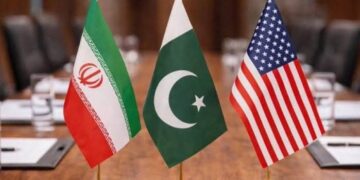






ISLAMABAD: Pakistan on Wednesday expressed optimism about the ongoing technical talks between Iran and the United States, saying that broader trade and economic cooperation with Tehran would depend on the easing of international sanctions imposed on Iran.

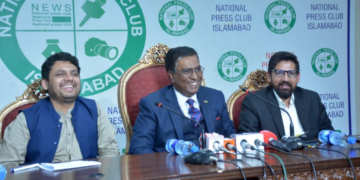
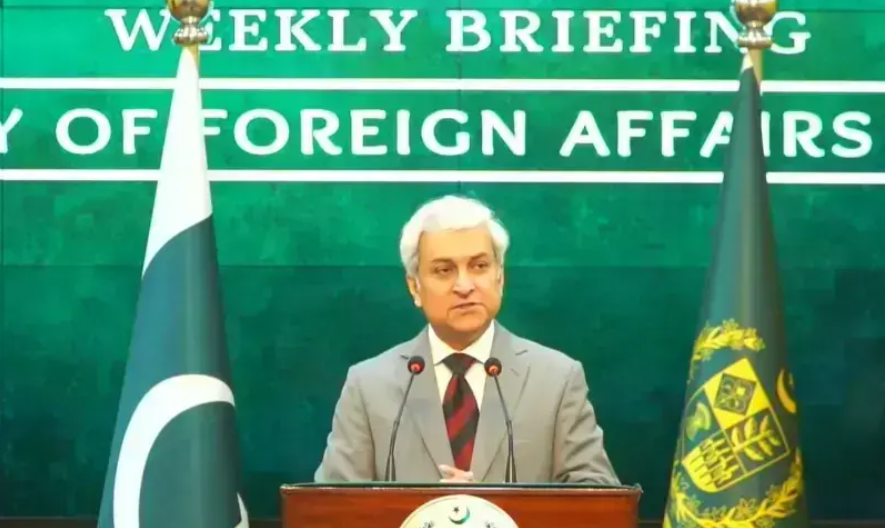
Speaking at the weekly Foreign Office briefing, spokesperson Tahir Hussain Andrabi said the process towards sanctions relief had already begun through negotiations held in Buergenstock, Switzerland. He described the talks as a positive development and expressed hope that they would yield constructive outcomes.
Responding to a question, Andrabi said technical-level discussions between Iran and the US had been temporarily paused and were expected to resume next Tuesday with the participation of a Pakistani delegation. He noted that the continuation of dialogue itself was encouraging.
“It is a very positive development that both parties are engaged in talks and remain at the negotiating table,” he remarked.
Addressing concerns about the Strait of Hormuz, the spokesperson said tensions were expected to decrease as diplomatic efforts advanced, although a full return to normal operations could take time due to operational considerations.
On the issue of control over the Strait of Hormuz, Andrabi said Pakistan supported initiatives led by the Gulf Cooperation Council and believed in regional solutions to regional challenges. He also emphasised respect for the sovereignty and territorial integrity of all states in the region.
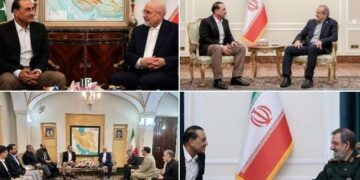
Referring to Iranian President Masoud Pezeshkian’s recent visit to Pakistan, Andrabi said both countries discussed expanding trade, investment and economic cooperation. He added that progress on bilateral economic projects would move forward alongside the lifting of sanctions on Iran.
“The overall progress of economic projects and opening up of trade with Iran will take place simultaneously with the lifting of sanctions by the United States,” he said.
Regarding reports of a proposed $300 billion financing package for Iran, Andrabi said the matter was likely to be discussed during the ongoing technical talks in Switzerland.
On Afghanistan, the spokesperson stated that Pakistan had fulfilled most of its commitments related to bilateral engagement, but later developments had complicated diplomatic efforts. He reiterated Islamabad’s position that Afghan territory must not be used for terrorist activities against Pakistan.
“If diplomacy is to move forward, the starting point should be a clear assurance from Afghanistan that its soil will not be used for terrorism against Pakistan,” he said.
Andrabi acknowledged China’s role in facilitating understanding between Pakistan and Afghanistan and said Islamabad would continue working closely with Beijing to promote regional peace and cooperation.
“Our engagement on Afghanistan continues, and the simple solution is for the Afghan side to uphold its commitments under international law,” he added.
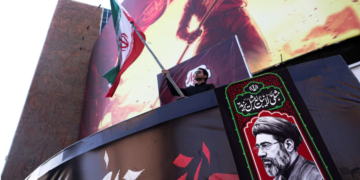
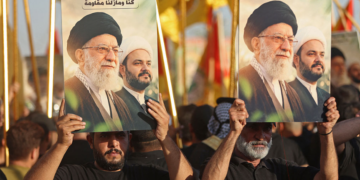
Asked about Pakistan’s representation at the funeral of the late Iranian supreme leader Ali Khamenei, the spokesperson said no final decision had been made regarding who would attend on behalf of Pakistan.
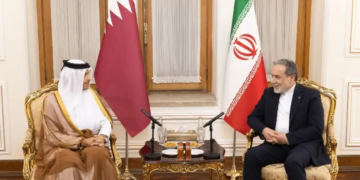
Providing details about the implementation of the Islamabad Memorandum of Understanding between the US and Iran, Andrabi said Pakistan and Qatar hosted the first high-level committee meeting in Switzerland on June 21, attended by senior officials from Pakistan, the US, Iran and Qatar.
According to the spokesperson, participants agreed on a roadmap aimed at reaching a final agreement within 60 days. The plan includes political oversight and technical working groups, direct communication channels to prevent incidents in the Strait of Hormuz, and a de-confliction mechanism involving Lebanon.
A follow-up technical meeting was held on June 22, with Pakistan and Qatar continuing their mediation efforts.
The Foreign Office welcomed international recognition of Pakistan’s role in supporting dialogue, peace and de-escalation, and appreciated the responsible conduct of Pakistani media in maintaining confidentiality during the mediation process.
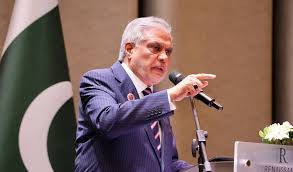
Andrabi also highlighted Deputy Prime Minister Ishaq Dar’s participation in the fourth R-4 Foreign Ministers’ Meeting in Cairo on June 21 with counterparts from Egypt, Saudi Arabia and Turkiye. The meeting reviewed progress on the Islamabad MoU and broader regional security issues.
Dar additionally held diplomatic engagements with foreign ministers from Switzerland, Turkiye, Egypt, Saudi Arabia, China, Japan, Italy, Canada, Bahrain, Azerbaijan, Iran and Uzbekistan.
Regarding the hijacking of the oil tanker MT Honour 25 off the coast of Somalia, carrying 10 Pakistani crew members among those held hostage, Andrabi said Pakistan was pursuing diplomatic and humanitarian efforts with Somali authorities and international partners to secure their safe release.
On Palestine, he noted that Pakistan joined eight Islamic-Arab countries in condemning escalating violence against Palestinians in the occupied West Bank and attacks on mosques near Ramallah.
The spokesperson further announced that Pakistan had facilitated the repatriation of 30 Iranian nationals, including rescued fishermen and crew members detained after maritime incidents, in coordination with Iranian, US and UK authorities.