
































































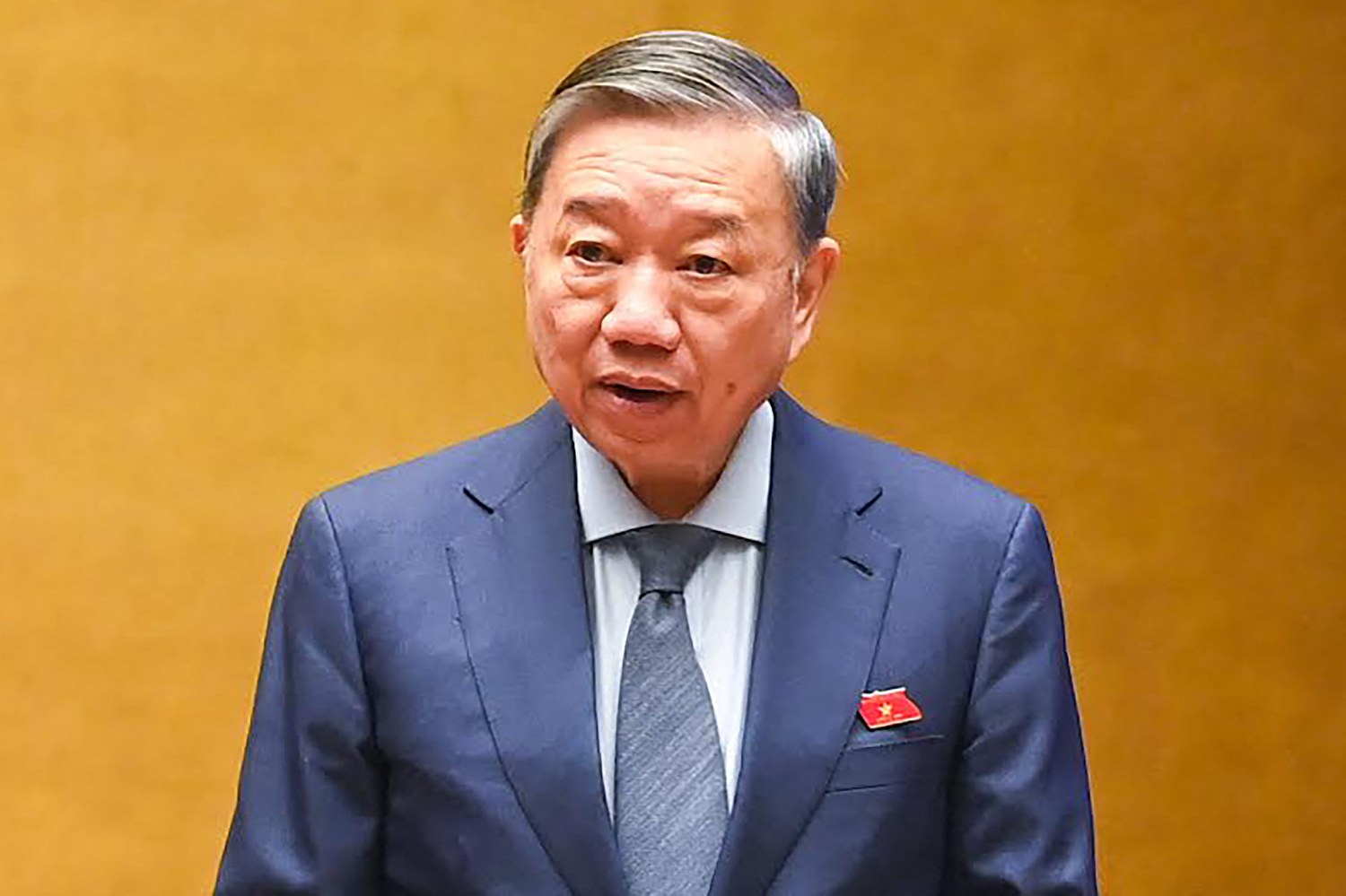
HANOI: To Lam has been elected as Vietnam’s state president while continuing as Communist Party chief, consolidating unprecedented authority and becoming the country’s most powerful leader in decades.

The unanimous vote by the National Assembly marks a significant break from Vietnam’s long-standing collective leadership model, placing decision-making power in a single figure. Analysts say this could speed up policy implementation but also raises concerns about increasing authoritarianism. Lam, a former public security chief, now holds a dual mandate for the next five years after securing a second term as party leader earlier this year. In a parallel move, lawmakers also appointed Le Minh Hung as the new prime minister.
A former central bank governor, Hung is expected to bring economic expertise to the government’s top tier. Following his appointment, Lam pledged to pursue a new growth strategy driven by science, technology, innovation, and digital transformation. He emphasized stability, rapid economic expansion, and improving living standards as key priorities. Experts remain divided on the implications of his power consolidation. While some warn of a shift toward greater authoritarianism, others argue it could enable faster and more effective policymaking in the one-party state.
Lam has previously pushed for economic reforms aimed at boosting competitiveness and achieving double-digit growth, moving beyond reliance on low-cost manufacturing. Though viewed as pro-business, his support for large domestic firms and rapid expansion policies has raised concerns about favoritism, corruption risks, and potential economic bubbles. On the global stage, Lam is expected to maintain Vietnam’s balanced foreign policy approach—often referred to as “Bamboo Diplomacy”—seeking to navigate relations between major powers without major shifts.
Meanwhile, Hung replaces Pham Minh Chinh, who oversaw a period of strong economic growth. Despite a relatively low public profile, Hung has pledged to deliver sustainable development and meet ambitious growth targets of at least 10% annually through 2030.
The leadership reshuffle signals a new political era in Vietnam, with power more centralized than at any time in recent history.