









































































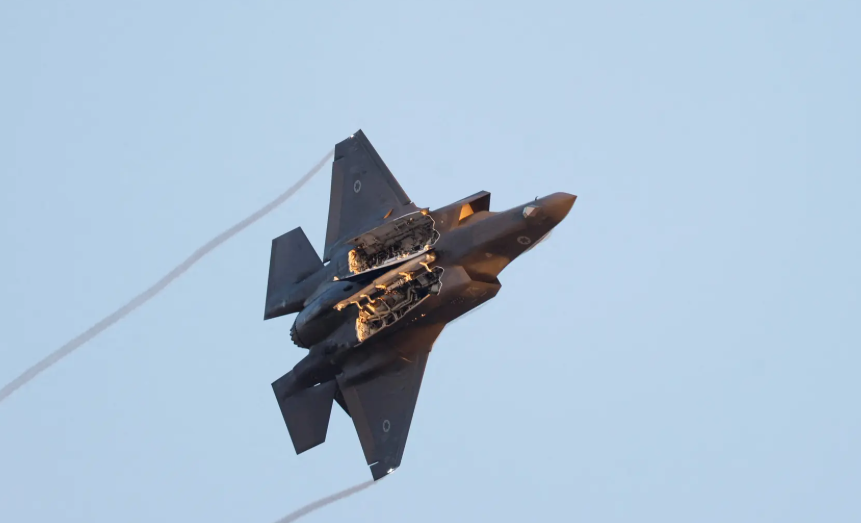
Israel has granted final approval for a major defence deal to acquire two new combat squadrons of advanced fighter jets, including F-35s and F-15IAs, from Lockheed Martin and Boeing, according to the defence ministry on Sunday.

The agreement, cleared by Israel’s Ministerial Committee on Procurement, marks an initial phase of a broader 350 billion shekel ($119 billion) plan aimed at strengthening the country’s military capabilities and preparing for what officials describe as a challenging decade ahead for national security.
Prime Minister Benjamin Netanyahu stated that a significant portion of the expanded defence budget will focus on domestic production of munitions to reduce reliance on foreign suppliers. He also highlighted plans to develop “groundbreaking” aircraft within Israel.
The defence ministry noted that the addition of these squadrons will play a central role in the military’s long-term strategy, helping counter regional threats and maintain Israel’s air superiority.
Director General Amir Baram emphasised the importance of forward planning, saying, “Alongside immediate wartime procurement needs, we have a responsibility to act now to secure the Israeli Defence Forces’ military edge ten years from now and beyond.”
He added that the recent US-Israel conflict with Iran underscored the importance of their alliance and the role of advanced air power, stating, “The recent US-Israeli war on Iran ‘reinforced just how critical the US-Israel strategic relationship is, and how essential advanced air power remains.’”
As part of the agreement, Israel will procure a fourth F-35 squadron from Lockheed Martin and a second squadron of F-15IA jets from Boeing.
Netanyahu reaffirmed the country’s military stance, saying, “Israel is stronger than ever, and Israel must always be much stronger than our enemies,” and added, “These aircraft strengthen Israel’s overwhelming air superiority.”
Previously, in December, Boeing secured an $8.6 billion contract from Israel that includes 25 F-15IA aircraft, with an option to purchase an additional 25 units.
Baram noted that the next phase involves finalising agreements with US authorities and military partners.
The developments come after the US and Israel carried out airstrikes on Iran on February 28, with a ceasefire in place since April 8. Meanwhile, the US Navy continues its blockade of Iranian ports.
Defence Minister Israel Katz said the recent conflict demonstrated the effectiveness of air power in national defence.
He stated, “The lessons of that campaign require us to keep pressing forward on force buildup, to ensure air superiority for decades to come.”
Katz also highlighted that the new aircraft will introduce advanced capabilities, including autonomous flight technologies, upgraded defence systems, and expanded operations in space, aimed at maintaining Israel’s military edge.
“Our mission is clear: to ensure the IDF has the tools, capabilities, and strength to operate anywhere, at any time,” Katz said. “We will continue to invest, to grow stronger, and to stay ahead of our enemies – to keep Israel secure today and in the future.”