















































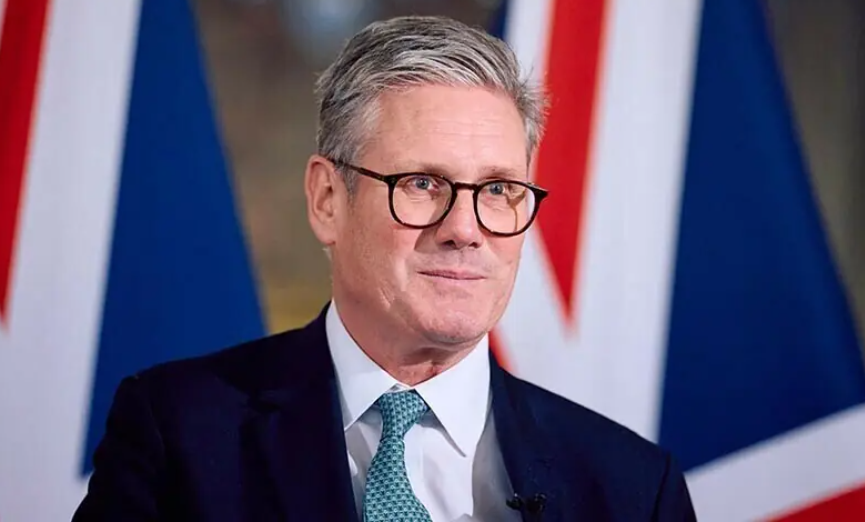
LONDON: Keir Starmer on Tuesday rejected mounting calls for his resignation, telling ministers he would continue “getting on with governing” despite growing unrest within the ruling Labour Party following heavy losses in recent local elections.

During a cabinet meeting, Starmer acknowledged responsibility for one of Labour’s worst local election performances but stressed that no formal leadership challenge had been initiated against him. Four cabinet ministers publicly backed the prime minister after the meeting.
The pressure on Starmer comes less than two years after he entered office following Labour’s landslide victory in the 2024 general election. His premiership has since faced repeated controversies, policy reversals and declining support within the party.
Referring to the growing political turmoil, Starmer warned that recent developments had created uncertainty with economic consequences.
“The past 48 hours have been destabilising for government, and that has a real economic cost for our country and for families,” he told ministers, according to Downing Street.
“The Labour Party has a process for challenging a leader and that has not been triggered,” he added.
“The country expects us to get on with governing. That is what I am doing and what we must do as a cabinet.”
Following the meeting, senior minister Pat McFadden said no cabinet member had challenged Starmer and that several ministers expressed support for his leadership.
However, dissatisfaction within the wider Labour Party continued to grow. A junior minister resigned on Tuesday, while several ministerial aides also stepped down. More than 80 Labour lawmakers have reportedly urged Starmer to announce a timeline for his departure to allow for an orderly leadership transition.
Starmer’s political troubles mark a dramatic shift from his rise to Labour leadership in 2020, when he was viewed as a moderate figure capable of restoring stability after the party’s worst national election result since 1935 under former leader Jeremy Corbyn.
In the 2024 general election, Starmer led Labour to one of its biggest parliamentary majorities in modern British history by promising stability after years of political turmoil under the Conservative Party.
Now, he faces increasing uncertainty over his political future.
On Monday, Starmer again insisted he would remain in office, arguing that stepping aside would risk repeating the instability Britain has experienced since the 2016 Brexit referendum.
Financial markets have also reacted nervously to speculation surrounding Starmer’s future and that of Finance Minister Rachel Reeves, amid fears that a replacement from Labour’s left wing could increase government borrowing and spending.
One Labour lawmaker told Reuters anonymously, “I can’t see how he gets through the day.”
Under Labour Party rules, removing a sitting prime minister is more difficult than under the Conservatives. At least 81 Labour lawmakers must unite behind a single challenger to formally trigger a leadership contest.
Among the potential successors being discussed is Health Minister Wes Streeting, whose supporters believe he would be a stronger communicator than Starmer.
Other possible contenders include Greater Manchester Mayor Andy Burnham and former Deputy Prime Minister Angela Rayner, although both face political and practical challenges in mounting leadership bids.