



































































AFP: Artificial intelligence–powered dashboards that track global conflicts in real time are rapidly gaining popularity, offering users interactive maps filled with data about military activity, political developments and breaking news.

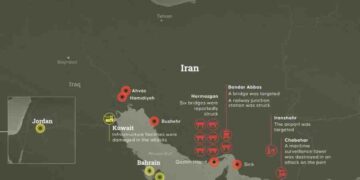
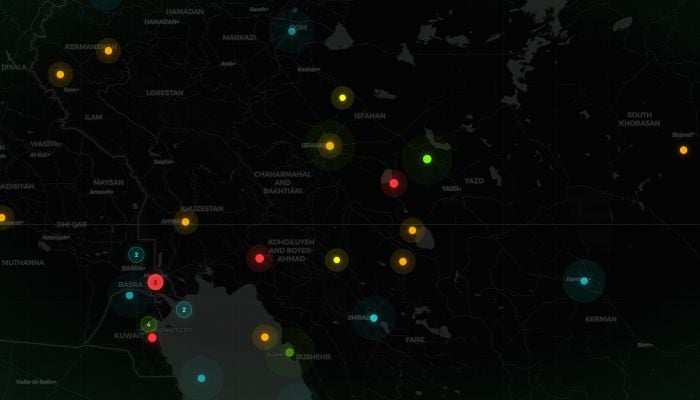
One such platform, World Monitor, displays global events on a detailed map showing military movements, protests, internet outages, earthquakes and other incidents. At one moment on Friday, more than 3,200 users were watching the dashboard as it showed naval ships near Cyprus, military aircraft heading toward the Gulf and reports of a possible drone strike in Dubai. The platform was created by Elie Habib, the CEO of Middle Eastern music streaming company Anghami, who built the tool in January. Since its launch, the site has attracted more than 4.4 million visits.
Habib said he designed the platform to better understand global events, describing it as a kind of “Bloomberg Terminal for geopolitics.” Despite the surge in traffic during the ongoing Middle East conflict, he said he has avoided placing advertisements on the site because he does not want to profit from war.
World Monitor gathers information from more than 450 data sources, including live webcams from strategic locations and AI-selected headlines from major news outlets. The dashboard allows users to track events such as protests, GPS disruptions and earthquakes in real time.Habib explained that his next goal is to improve the system so it can better filter meaningful signals from the overwhelming amount of global data.
The platform was developed quickly using AI coding tools. Habib said building the system traditionally could have taken up to a year, but AI allowed him to complete the project in a single weekend. Its open-source design has also enabled programmers to contribute improvements.
Experts say these AI dashboards provide useful visualizations but should not be treated as fully reliable sources of information. Wei Sun, principal analyst for artificial intelligence at Counterpoint Research, said the tools are not merely visual displays but also cannot be considered “truth engines.” She warned that AI systems can still produce incorrect conclusions when interpreting large amounts of data. However, analysts believe the growing interest in these dashboards reflects a broader psychological need.
During crises, people often seek faster summaries of complex global developments and a sense of control when news is fragmented.Some dashboards also include chatrooms where users can discuss unfolding events, making them particularly engaging during conflicts or political crises.
Experts say traditional news organizations such as AFP and Reuters are unlikely to be replaced by these tools. Instead, the rise of AI dashboards may increase the value of established news outlets as trusted sources that verify and explain the information appearing on such platforms.