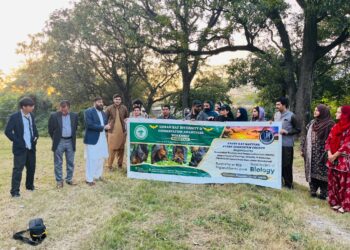



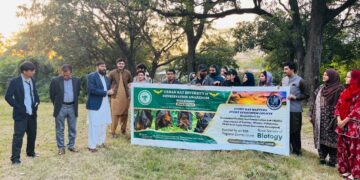










































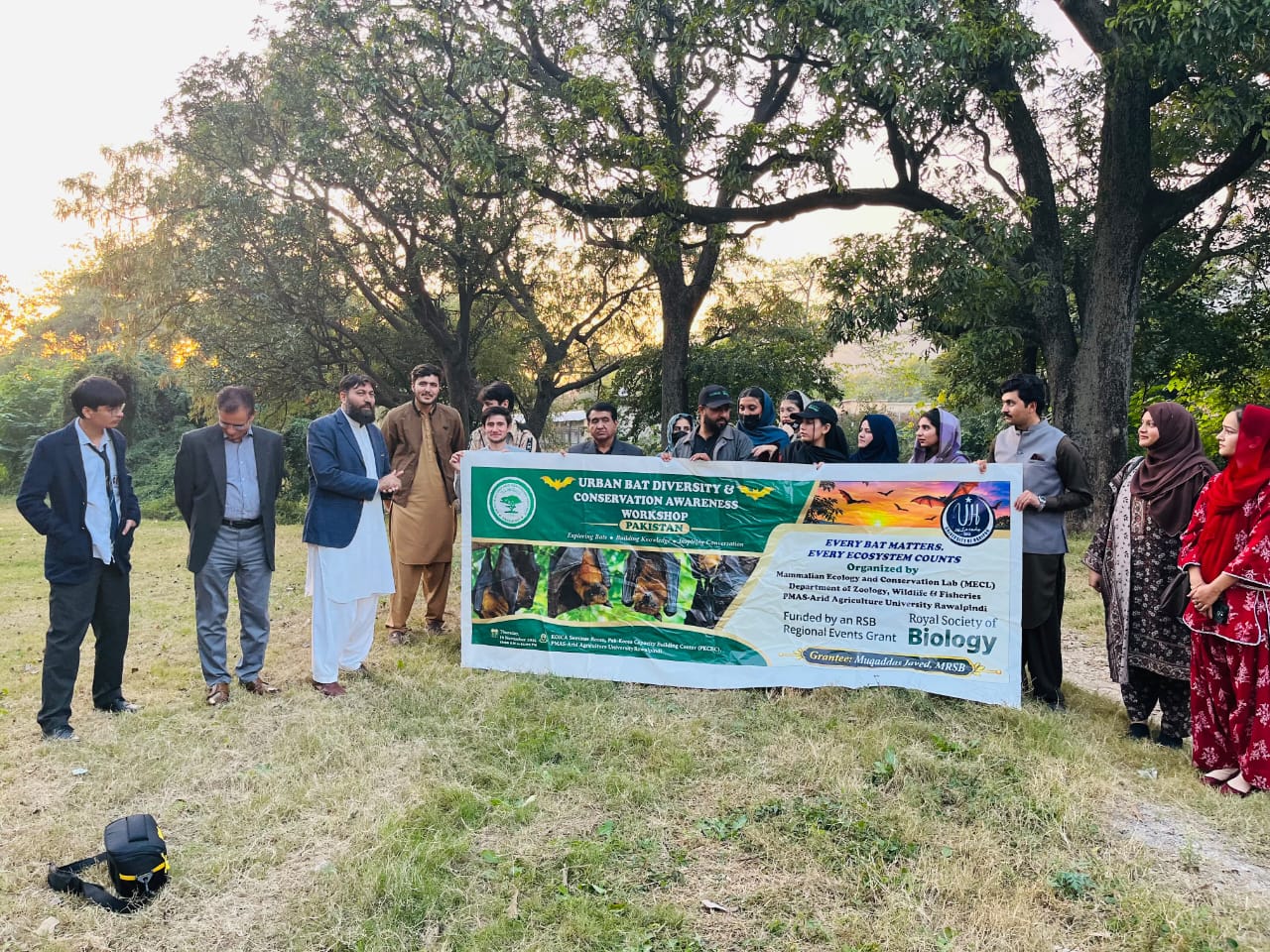
The Department of Zoology, Wildlife and Fisheries, Faculty of Sciences, Pir Mehr Ali Shah Arid Agriculture University Rawalpindi (PMAS-AAUR), organized a one-day workshop on urban bat diversity and conservation to raise awareness about the ecological importance of bats and strengthen research capacity among postgraduate students.

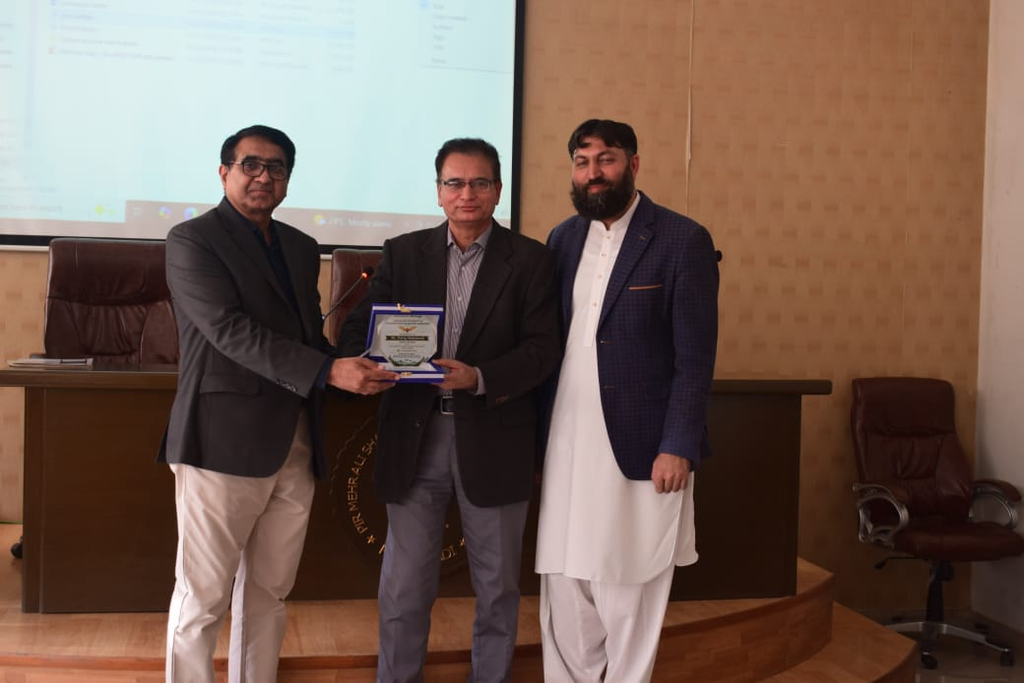
Held on November 19 at the university’s KOICA Building, the workshop focused on sharing scientific knowledge and providing practical training in bat identification, ecology, research methods and conservation, an area that remains relatively neglected in Pakistan.
Dr. Muhammad Saleem from the Department of Forestry and Wildlife Management, University of Haripur, served as the resource person and delivered a comprehensive lecture on bat species, their ecology and ongoing research in Pakistan.
He also conducted a practical demonstration on body measurements of bat specimens, enabling participants to gain hands-on experience with scientific research techniques.
Dr. Muhammad Sajid Nadeem, Chairman of the Department of Zoology, Wildlife and Fisheries, highlighted the ecological significance of bats and discussed key challenges facing their conservation in Pakistan.
Dean Faculty of Sciences Prof. Dr. Rahmatullah Qureshi, faculty members and postgraduate students from the departments of Zoology and Biology attended the workshop.
The event was organized and executed by the department’s Mammalian Ecology and Conservation Lab (MECL), with financial support from the Royal Society of Biology, United Kingdom, secured by lab member Ms. Muqaddas Javed. She also briefed participants on the objectives and significance of the workshop.
The proceedings began with the recitation of verses from the Holy Quran. Syed Arif Hussain introduced the workshop’s objectives, while Dr. Tariq Mahmood welcomed the participants.
Following the technical sessions, participants visited a bat colony at a study site in the Islamabad area, where they received hands-on training in using mist nets for capturing bats and learning field techniques for collecting data on different bat species.
The practical session provided students with valuable exposure to wildlife research methods and highlighted the importance of scientific monitoring and conservation of bat populations in urban environments.
The organizers expressed gratitude to the Vice Chancellor of PMAS-AAUR for approving the event and the Director of the KOICA Building for providing the venue.
The workshop reflected the university’s commitment to promoting scientific research, environmental education and biodiversity conservation through academic collaboration and practical learning.
Dr. Tariq Mahmood, Associate Professor, Department of Zoology, Wildlife and Fisheries, PMAS-AAUR, welcomed the participants and highlighted the importance of promoting research and awareness about biodiversity and wildlife conservation. He emphasized the need to strengthen academic and practical understanding among students to support the protection of neglected wildlife species, particularly bats, in Pakistan.