




















































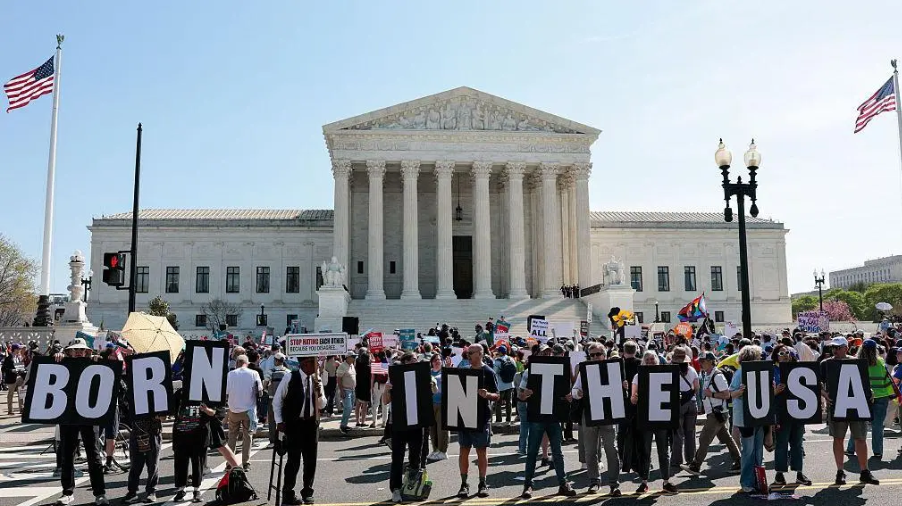
The US Supreme Court on Tuesday rejected President Donald Trump’s attempt to limit birthright citizenship, ruling that children born in the United States remain entitled to citizenship regardless of their parents’ immigration status.

In a 6-3 decision, the court upheld a lower court ruling that blocked Trump’s executive order, which sought to deny automatic citizenship to children born in the US if neither parent was an American citizen or lawful permanent resident.
Chief Justice John Roberts, writing for the majority, said the order violated the Citizenship Clause of the 14th Amendment to the US Constitution.
Referring to the landmark 1898 United States v. Wong Kim Ark case, Roberts said the court had consistently interpreted the Constitution as guaranteeing citizenship to children born on US soil.
“We see no reason to depart from that view today.”
He also rejected the administration’s interpretation of the amendment, writing that there was “scant evidence” supporting its position.
“Citizenship, then and now, was the right to have rights—to freely participate in our political community. The Framers of the Fourteenth Amendment extended that promise to ‘every free-born person in this land,’” Roberts wrote. “We keep that promise today.”
The majority opinion was joined by Roberts, Justice Amy Coney Barrett and the court’s three liberal justices — Sonia Sotomayor, Elena Kagan and Ketanji Brown Jackson.
Justice Brett Kavanaugh agreed with the outcome but argued the case should have been decided under federal law rather than the Constitution. He said Congress could still legislate restrictions on birthright citizenship in the future if it chose to do so.
The dissenting justices — Clarence Thomas, Samuel Alito and Neil Gorsuch — disagreed with the majority’s constitutional interpretation.
Thomas argued that the Citizenship Clause was originally intended to apply to formerly enslaved Black Americans rather than the children of temporary foreign visitors.
Justice Jackson rejected that interpretation, saying Thomas had departed from his longstanding view of a “colorblind” Constitution.
In a separate dissent, Justice Alito described the judgment as “one of the most important decisions in the history of the Court” but argued that the majority had made a “serious mistake”.
He said the ruling would “confer citizenship on virtually everyone who happens to be born in this country, including the children of ‘birth tourists,’ women who come here solely for the purpose of giving birth to a child and then promptly return home.”
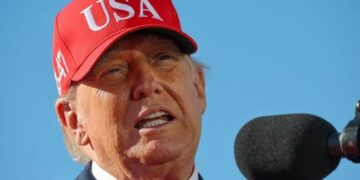
Following the decision, Trump criticised the ruling on his Truth Social platform, calling it “too bad for our Country, but we can easily make it up in Congress.”
He later urged lawmakers to pass legislation ending birthright citizenship, pledging his “complete and total support.”
Civil rights and immigrant advocacy groups welcomed the verdict.
The American Civil Liberties Union, which challenged the executive order, said the ruling reaffirmed constitutional protections.
“A president cannot change the Constitution by executive fiat.”
Immigrant rights advocates also praised the judgment, calling birthright citizenship one of the country’s strongest safeguards against statelessness.
Meanwhile, organisations supporting tighter immigration controls criticised the ruling, arguing it would encourage illegal immigration and calling for Congress to pursue legislative changes.
The ruling marked one of the most significant defeats for Trump’s immigration agenda since returning to office. Although the Supreme Court’s conservative majority has backed several of his immigration policies in recent months, it has also ruled against him on issues including tariffs and the dismissal of senior federal officials.
Tuesday’s decision came on the final day of the Supreme Court’s current term, which began in October. The court also upheld state laws banning transgender athletes from competing on female sports teams and struck down limits on coordinated campaign spending between political parties and candidates.