



































CARACAS: At least 32 people were killed and more than 700 injured after two powerful earthquakes struck Venezuela, causing widespread destruction, damaging infrastructure and prompting emergency rescue operations across the country.

Interim President Delcy Rodriguez confirmed the casualty figures on Thursday, saying authorities were still gathering information from La Guaira, one of the areas most severely affected by the disaster.
“At this time, we have received reports of 32 deaths” and “more than 700 injured,” Rodriguez said in a national address, adding that complete information from the hardest-hit region was not yet available.
Earlier, the government declared a state of emergency after the twin earthquakes caused buildings to collapse, damaged public infrastructure and forced the closure of Venezuela’s main airport.
According to the United States Geological Survey (USGS), a magnitude 7.2 earthquake struck approximately 160 kilometres west of Caracas and was followed less than a minute later by a stronger magnitude 7.5 tremor.
The USGS warned that the disaster was likely to result in extensive damage and significant casualties. It described the 7.5-magnitude quake as the strongest recorded in Venezuela in more than a century.
The last earthquake of greater magnitude occurred on October 29, 1900, when a 7.7-magnitude offshore earthquake caused severe damage to buildings and homes across the country.
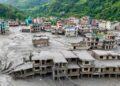
Local authorities reported collapsed buildings, widespread structural damage and ongoing rescue efforts in several regions.
Interior Minister Diosdado Cabello said emergency services had been fully mobilised.
“We have buildings, homes and houses which have collapsed and we are taking care of things with everything we have available in terms of security, civil assistance,” he said.
“The fire department, police all have been activated.”
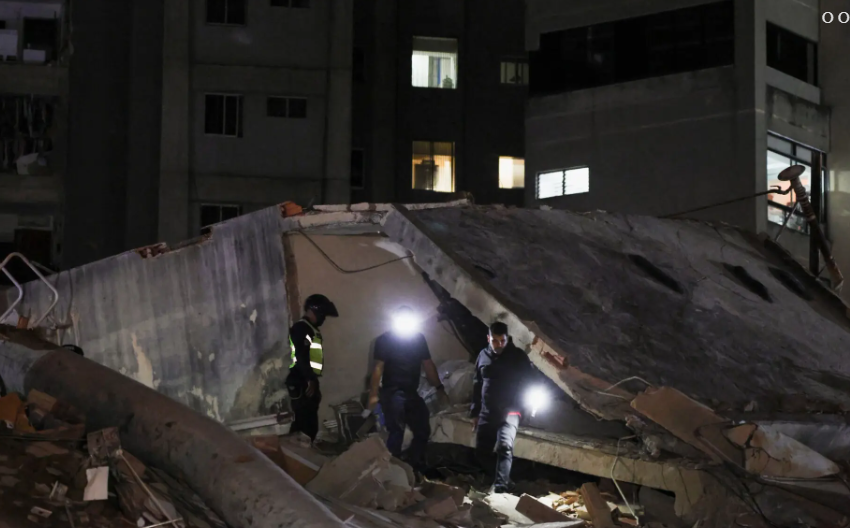
As darkness fell, rescue workers searched through the debris of collapsed structures in Caracas while anxious relatives gathered at disaster sites seeking information about missing loved ones.
In the eastern Caracas municipality of Chacao, Mayor Gustavo Duque said two buildings had collapsed, leaving at least 16 people injured. He also confirmed fatalities but did not provide an exact number.
“We’re going to do everything we can to rescue the most people possible,” he said.
The earthquakes struck during a public holiday commemorating a key military victory in Venezuela’s independence struggle, meaning many residents were at home when the shaking began.
Residents described scenes of panic as buildings swayed and people rushed into the streets.
“As soon as it started, we began hearing people screaming,” said Astrid Ramirez, a 41-year-old publicist from western Caracas.
“Everyone was running down the stairs.”
Coro Martinez, 56, from eastern Caracas, said the experience was unlike anything she had witnessed before.
“There was a very loud crash. Things fell in the house, jugs inside the refrigerator. I’ve never experienced anything like it,” she said.
Maria Romero, an 80-year-old resident of southern Caracas, described the earthquake as more severe than the deadly 1967 quake that struck the capital.
“This earthquake was horrible, even worse than the one in 1967,” she said.
Another resident recalled receiving an earthquake warning on her mobile phone moments before the strongest shaking began.
“It was a normal afternoon, and suddenly my phone sounded an earthquake alert,” she said. “As I picked it up and started listening to what it was saying, I first felt light shaking. Then, in less than two seconds, everything started moving.”
Hospitals across Caracas activated emergency response plans and prepared for an influx of injured patients. At Hospital de Clinicas, staff were instructed to extend shifts to assist with treatment efforts.
Video footage from the facility showed damage inside the building, including fallen ceiling panels and debris scattered across hallways.
Authorities also received reports of damage at Venezuela’s principal airport and collapsed buildings in La Guaira, although independent verification of some footage remained pending.
Several municipalities in Caracas suspended classes and public events through Monday while engineers and emergency teams assessed structural damage.
The United States Embassy in Caracas said it was closely monitoring the situation and advised citizens to seek shelter and avoid damaged areas.
US President Donald Trump offered assistance following the disaster.
“The two major earthquakes that just hit the great people of Venezuela are both massive in scale and have left a devastating number of deaths,” he said.
“The U.S.A. stands ready, willing, and able to help! I have instructed all agencies of our government to get ready to move quickly. We will be there for our new and great friends. Early reports are not good.”
Following the earthquakes, the US Tsunami Warning System briefly issued tsunami alerts for Puerto Rico and the US and British Virgin Islands, while warning of potential hazardous waves affecting Aruba, Curacao and Bonaire. The warning was withdrawn approximately one hour later.
Venezuela is located in a seismically active region where the Caribbean and South American tectonic plates meet, making the country vulnerable to major earthquakes.
One of the deadliest earthquakes in the country’s history occurred in 1812, when an estimated 30,000 people were killed following widespread destruction in Caracas and Merida.