




















































KUWAIT CITY/ISLAMABAD (MNN); US Secretary of State Marco Rubio is using his three-day tour of Gulf countries not only to reassure regional allies about their security concerns but also to discourage them from supporting a proposed toll mechanism for vessels passing through the Strait of Hormuz, diplomatic sources said.

According to sources familiar with the developments, several Gulf oil-producing states have, in principle, shown willingness to discuss a framework under which commercial vessels using the strategically vital waterway could pay transit charges to Iran and Oman.
Sources said discussions between Iran and Oman on the final modalities of such an arrangement are continuing, and Rubio’s visit is widely being viewed as an effort by Washington to persuade Gulf states against endorsing or participating in any toll collection system.
Diplomatic sources further revealed that some Gulf governments have conveyed to the United States that decisions regarding navigation through the Strait of Hormuz ultimately affect their national interests, as the majority of their oil exports are transported through the narrow maritime corridor.
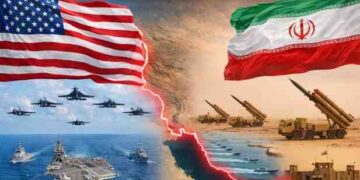
Rubio arrived in Abu Dhabi on Tuesday night for a regional tour aimed at addressing concerns among Gulf allies over the recently announced US-Iran understanding designed to end four months of conflict in the region.
Speaking during his visit to Kuwait, Rubio stressed that Washington would not pursue any policy that compromises the security of its longstanding regional partners.
“We are not going to do anything that undermines the security of our allies in the region,” Rubio told reporters.
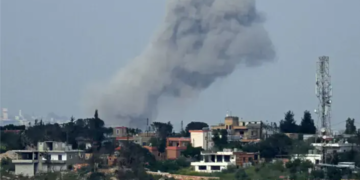
During the recent conflict, Iran effectively asserted control over the Strait of Hormuz, causing major disruptions to global oil and gas shipments and triggering volatility in international energy markets.
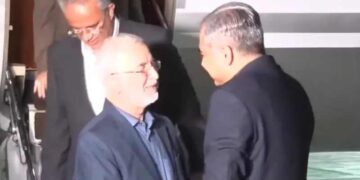
The US secretary of state held meetings in Abu Dhabi with UAE President Mohamed bin Zayed Al Nahyan, National Security Adviser Sheikh Tahnoun bin Zayed Al Nahyan and Foreign Minister Sheikh Abdullah bin Zayed Al Nahyan.
The discussions focused on the US-Iran memorandum of understanding, maritime security, safe passage through the Strait of Hormuz and broader regional stability.
Rubio later travelled to Kuwait, where he met Emir Sheikh Meshal Al-Ahmad Al-Sabah and discussed regional security cooperation and efforts to strengthen stability in the Gulf.
He also attended a flag-raising ceremony at the US Embassy in Kuwait City after diplomatic operations resumed following disruptions caused by drone attacks linked to the recent conflict.
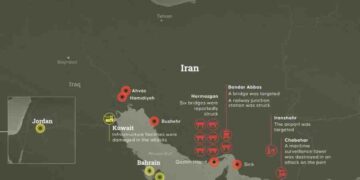
The UAE, Kuwait and Bahrain — Rubio’s next destination — all host key American military facilities and were targeted by Iranian missile and drone attacks during the war, resulting in civilian casualties and infrastructure damage.
Washington’s Gulf partners remain concerned that the proposed US-Iran agreement could provide Tehran with significant economic benefits without adequately addressing regional security concerns.
One major source of concern is a proposed $300 billion reconstruction fund that Gulf states fear could be used by Iran to rebuild and modernise its military capabilities.
The agreement also does not include restrictions on Iran’s ballistic missile programme, a long-standing concern for Gulf countries that were directly affected by missile and drone attacks during the conflict.
In recent weeks, Vice President JD Vance has taken a more visible role in negotiations with Iran, including talks held in Switzerland, while Rubio has focused on diplomatic engagement with regional allies.
Meanwhile, diplomatic sources said regional discussions regarding the future management of the Strait of Hormuz are continuing independently of the US-Iran peace process.
Qatari Prime Minister Mohammed bin Abdulrahman Al Thani visited Muscat on Wednesday for consultations with Omani officials regarding a possible regional dialogue involving Iran, Iraq and Gulf Arab states on maritime arrangements and security in the Strait of Hormuz.
Sources indicated that separate regional reconciliation talks involving Iran, Gulf Arab countries and other regional stakeholders may also be held in Saudi Arabia in the coming weeks.
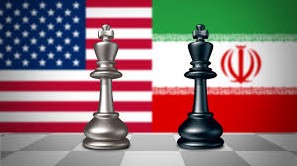
The United States and Iran signed a 14-point memorandum of understanding last week that established a framework for ending hostilities and launching a 60-day negotiation process aimed at resolving more complex issues, including Iran’s nuclear programme.
Among the key issues under discussion is the future of Iran’s stockpile of highly enriched uranium, including material enriched to 60 per cent purity, which is significantly closer to weapons-grade levels. Tehran continues to insist that its nuclear programme is intended solely for peaceful purposes.
Political observers say Rubio faces a delicate balancing act: defending an agreement strongly backed by President Donald Trump while simultaneously addressing the reservations of Gulf allies and scepticism from many Republicans in Congress who believe the deal offers excessive concessions to Iran.