








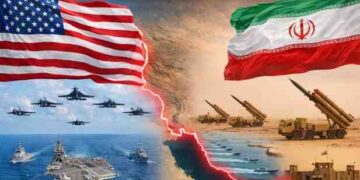



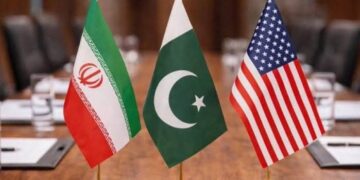


























Negotiators from the United States and Iran made significant progress during talks in Switzerland, with Washington temporarily suspending sanctions on Iranian oil exports after Tehran agreed to allow international nuclear inspectors back into the country.

Mediators Pakistan and Qatar announced that both sides had agreed on a “roadmap towards reaching a final deal within 60 days”, while also establishing mechanisms to address tensions in Lebanon and ensure freedom of navigation through the Strait of Hormuz.
The talks followed a turbulent start after Iran’s delegation briefly walked out in response to threats from US President Donald Trump over Tehran’s support for Hezbollah.
According to the mediators, the parties also agreed to establish a “de-confliction cell” involving Lebanese authorities to prevent renewed fighting in Lebanon. Technical discussions are expected to continue throughout the week in Buergenstock, Switzerland.
“Encouraging progress has been made,” the mediators said, noting the creation of a direct communication channel aimed at preventing misunderstandings and incidents in the Strait of Hormuz.
US suspends oil sanctions
US Treasury Secretary Scott Bessent said sanctions relief was linked to Iran’s commitment to maintaining “free and open transit” through the Strait of Hormuz and permitting inspectors from the International Atomic Energy Agency (IAEA) to return.
The Treasury Department issued a general licence allowing the sale of Iranian crude oil, petroleum products and petrochemicals through August 21. The licence also permits limited imports of Iranian oil into the United States when necessary to complete transactions.
US Vice President JD Vance described Iran’s willingness to readmit IAEA inspectors as “a major milestone… and the first step in permanently denuclearising” the country.
President Trump also said Iran had agreed to long-term inspections to ensure “nuclear honesty”.
However, he warned that Washington would act if Tehran failed to uphold its commitments.
“If Iran doesn’t live up to their agreement, or if they’re not behaving, I will do what I have to do,” he said.
Iran says progress made but nuclear negotiations not underway
Despite welcoming the outcome of the talks, Iranian officials maintained that formal negotiations over their nuclear programme had not yet begun.
Iranian Foreign Ministry spokesman Esmaeil Baqaei said “a very brief discussion took place regarding the nuclear issue, but there was no discussion of details” and insisted nuclear talks had not officially started.
Vance nonetheless described the discussions as a strong foundation for future agreements.
“We laid a very good foundation for a successful final deal,” he said, adding: “The final deal is the house… We haven’t built the house, but we’ve laid a successful foundation to get to a good place for the American people.”
Asset relief and reconstruction plans
One of the key incentives under discussion is sanctions relief and the gradual release of frozen Iranian assets.
Vance said no assets had yet been unfrozen and argued that any future funds would be tightly controlled and directed toward purchases of American agricultural products.
He called it “a classic Trump deal, where if Iranian assets are ever unfrozen, they’re going to go to make American farmers richer and to feed the Iranian people”.
Iranian Foreign Minister Abbas Araghchi presented a more optimistic assessment, writing on social media:
“Oil and petrochem exports are waived, blockade lifted, some frozen assets released, and major reconstruction & development plan launched for Iran.”
“Tireless Pakistani and Qatari mediation has delivered major progress to end Lebanon War,” he added.
Hormuz and Lebanon mechanisms agreed
Negotiators also agreed on new communication channels to manage security issues in both Lebanon and the Strait of Hormuz.
Iranian officials travelled to Muscat, Oman, following the talks to discuss “joint efforts to stabilise Iranian arrangements for managing the Strait of Hormuz”.
Meanwhile, commercial shipping through the strategic waterway continued at an accelerated pace despite earlier announcements by Tehran regarding restrictions.
Questions remain over $300 billion reconstruction fund
A major unresolved issue is a proposed $300 billion reconstruction and economic development fund for Iran.
The memorandum states that Washington, together with regional partners, will work toward creating a plan worth at least $300 billion for Iran’s reconstruction and economic development, with implementation details to be finalised within 60 days.
“The mechanism for the implementation of this plan will be finalized as part of a final deal within 60 days. All required licenses, waivers, and permissions needed for the relevant financial transactions will be granted by the United States of America,” the document states.
However, the agreement does not specify which countries or institutions would contribute to the fund. While the proposal has drawn criticism from US hardliners who argue it offers excessive concessions to Tehran, Gulf states have yet to publicly commit to financing the initiative.
Asked about the fund previously, Saudi Foreign Minister Prince Faisal bin Farhan declined to discuss its details.