














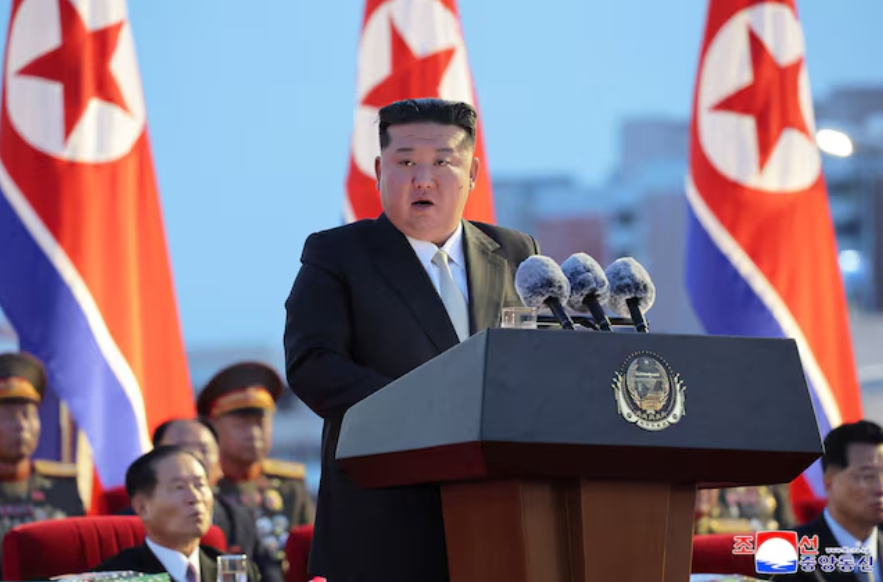
North Korean leader Kim Jong Un has reaffirmed that strengthening and exercising North Korea’s status as a nuclear power remains essential in response to what he described as an increasingly unstable global security environment, according to state media KCNA.

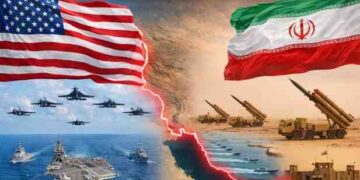
Speaking during a meeting of the ruling Workers’ Party of Korea held from Saturday to Monday, Kim said global tensions were intensifying due to the actions of dominant powers, accusing the United States of contributing to conflicts in Europe and the Middle East.
He described current global developments as “Unimaginable, astonishing incidents and events” caused by the “gangster-like” greed of hegemonic forces, which he said had made international confrontations more severe.
Kim also criticised the United States and South Korea, alleging that their growing military cooperation and nuclear deterrence measures were increasing tensions on the Korean Peninsula and were ultimately aimed at targeting North Korea.
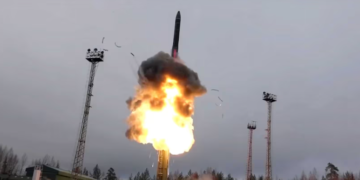
“To steadily expand and strengthen the nuclear forces … and to thoroughly exercise the position of a nuclear weapons state is the most correct and unique way to actively and confidently cope with the unpredictable international military and political situation getting complicated in multiple ways,” KCNA quoted him as saying.
The report did not specify any new measures related to North Korea’s nuclear programme. However, Kim reportedly directed officials to continue expanding conventional military capabilities and accelerate construction of a 10,000-ton strategic guided missile cruiser.
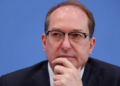
According to Yang Moo-jin of University of North Korean Studies, Kim’s remarks further demonstrate Pyongyang’s refusal to consider denuclearisation and its desire to be recognised as a legitimate nuclear power.
“North Korea is once again reaffirming that denuclearisation talks are off the table,” Yang said, adding that any future negotiations would likely take place only “as a nuclear weapons state on an equal footing,” with a focus on arms control rather than disarmament.
He noted that such a position would require international acceptance of North Korea’s minimum nuclear deterrent and could involve demands for sanctions relief, differing significantly from phased denuclearisation proposals previously discussed between South Korea and the United States.
Yang also said Pyongyang was using developments such as the US-South Korea Nuclear Consultative Group and Seoul’s interest in nuclear-powered submarines to justify further expansion of its nuclear capabilities.
Despite extensive sanctions imposed by the United Nations and the United States between 2006 and 2017, North Korea has continued advancing its nuclear and ballistic missile programmes. The country maintains that it is a nuclear weapons state and has repeatedly rejected calls to abandon its arsenal despite years of diplomatic efforts involving the US, China, and South Korea.
The party meeting also focused on economic priorities, including modernising the coal sector and revitalising mining regions. Kim described the industry as strategically important, while Yang noted that “Coal effectively remains North Korea’s main energy resource,” highlighting its role in addressing the country’s long-standing energy shortages.