













































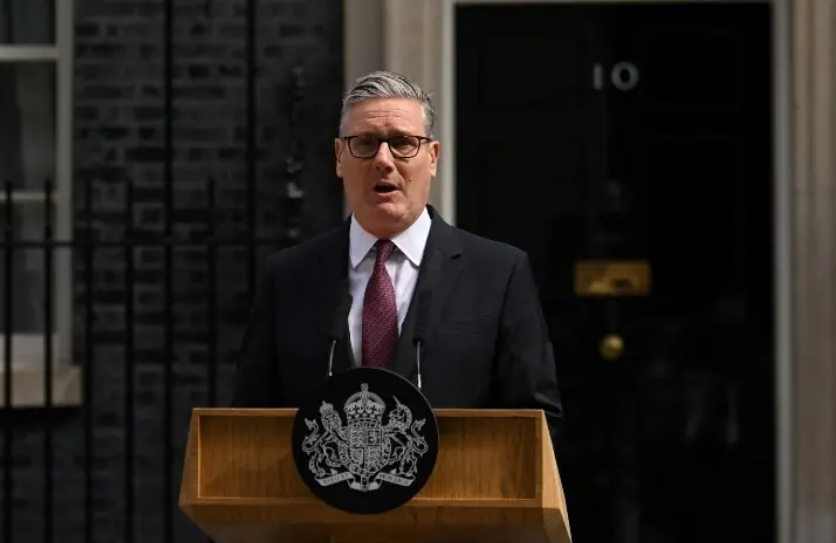
British Prime Minister Keir Starmer announced his resignation on Monday, saying he would step down as leader of the Labour Party and offer his successor his “full, unequivocal support”.

Speaking outside 10 Downing Street, Starmer said every decision he had made was guided by what he believed was best for the country.
“Every decision I have taken has been about putting the country I love first, and that is why I will resign as leader of the Labour Party.”
He confirmed that he had informed King Charles III of his decision and requested that Labour’s National Executive Committee begin the leadership selection process on July 9, with the aim of choosing a new leader before Parliament returns in September.
Starmer said he would remain prime minister until the leadership contest concludes and pledged to ensure an orderly transfer of power.
“I will do everything I can to ensure an orderly handover of power,” he said.
Reflecting on his tenure, Starmer described becoming prime minister in 2024 as the “proudest moment” of his life and defended his record in government. He highlighted achievements including economic growth, rising wages, reduced NHS waiting lists, increased defence spending, stronger workers’ and renters’ rights, a decline in small boat crossings, and measures aimed at reducing child poverty.
“Change promised by a Labour government, change fought for by a Labour government, and change delivered by a Labour government.”
Starmer also recalled rebuilding Labour after taking over a party he said was “politically, financially and morally bankrupt”, arguing that critics who had written off Labour were proven wrong by its landslide election victory.
“We changed our party, ripping out anti-semitism, restoring trust in the economy, defence, national security and becoming a party that once again stood proudly with, not against, our national flag,” he said.
Despite defending his achievements, Starmer acknowledged growing doubts within Labour over whether he remained the best person to lead the party into the next general election.
“I have heard the answer of my parliamentary party to that question, and I accept that answer with good grace,” he said.
The announcement comes after months of internal pressure and declining popularity. The pressure intensified following a decisive by-election victory by Andy Burnham, the Greater Manchester mayor and Starmer’s leading rival, which paved the way for Burnham’s return to Parliament and a potential leadership bid.
Burnham’s success has fuelled hopes among Labour lawmakers that he can revive the party’s fortunes after a period of falling support under Starmer. However, analysts note that any new leader will inherit significant economic challenges, including high borrowing costs, weak economic growth and pressure on public spending.
Until recently, Starmer had insisted he would remain in office despite calls to resign. His leadership was weakened by a series of controversies, including disputes over welfare reforms, criticism of defence spending plans and backlash over the appointment of Peter Mandelson as ambassador to Washington.
He also struggled to contain the rise of the anti-immigration Reform UK party, which has gained momentum in national polls and local elections.
Concluding his remarks, Starmer thanked his colleagues, supporters and family, saying he looked forward to spending more time with his wife and children.
“When I leave the biggest job in the country, I shall spend more time on the most important job: being the best husband I can to my fantastic wife […] and being the best dad I can to my beautiful children who are my pride and my joy.”