















































TEL AVIV/BEIRUT: Israeli Prime Minister Benjamin Netanyahu visited Israeli-controlled territory in southern Lebanon on Tuesday, declaring that Israeli troops would remain there until the threat posed by Hezbollah is eliminated.

The visit was Netanyahu’s first to occupied Lebanese territory since Israel and Lebanon reached a US-mediated security agreement last week under which Israeli forces are expected to withdraw from two designated areas and transfer control to the Lebanese army.
Addressing Israeli soldiers, Netanyahu said, “Our insistence is that we will not leave southern Lebanon until the threat is removed.”
“And as long as Hezbollah remains here, armed and threatening us, we will remain here as well,” he added.
Netanyahu was accompanied by Defence Minister Israel Katz and senior military officials during the visit.
Under the US-backed agreement, Israeli troops are expected to withdraw from two “pilot zones”, allowing the Lebanese armed forces to assume control. However, authorities have released few details on how the arrangement will be implemented.
Israel launched its military operation in Lebanon on March 2, leading to a broader regional conflict. Israeli forces have since established what they describe as a roughly 10-kilometre-deep buffer zone along the Lebanese border, saying it is necessary to protect northern Israeli communities from Hezbollah attacks.
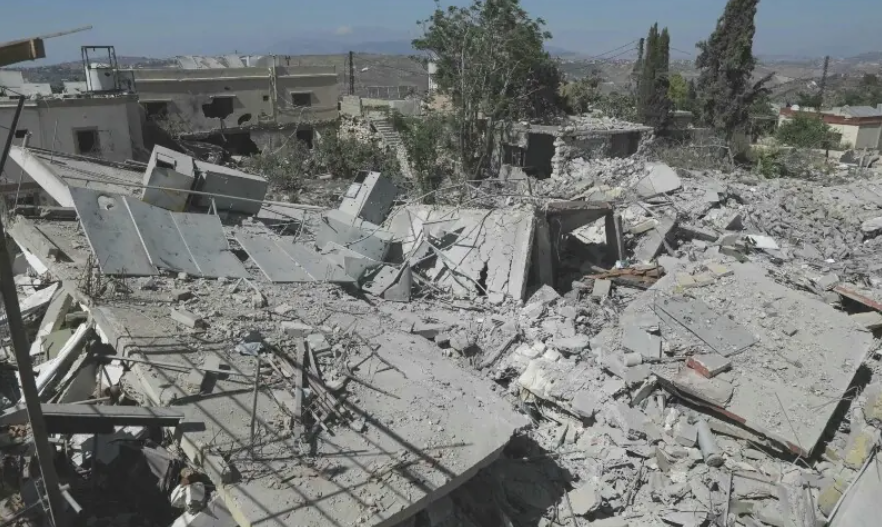
The Israeli military says it has targeted Hezbollah infrastructure, including underground tunnels, while conducting operations in southern Lebanon. Lebanese residents have been displaced from affected border areas, with widespread destruction reported in several villages.
According to Lebanese authorities, more than 4,000 people have been killed and over one million displaced during Israel’s military campaign since March. Israeli officials say at least 32 soldiers and four civilians have been killed in Hezbollah attacks during the same period.
Netanyahu told troops that Hezbollah still possesses around 12,000 rockets and missiles and claimed the Israeli military has killed 9,000 militants in Lebanon since the conflict began, though he did not provide evidence for the figures.
Meanwhile, Lebanese Social Affairs Minister Hanine El Sayed said around 400,000 displaced Lebanese have returned to southern Lebanon as fighting has eased, with more expected to return in the coming days.
She said approximately 40 per cent of those displaced have now gone back to their towns and villages, while many others remain in shelters or temporary accommodation because their homes have been destroyed or are uninhabitable.
“These are families that are able to return to something, at least the basic minimum,” El Sayed said.
“The fact that the others have not returned means they have a much harder situation.”
She added that authorities expect to have a clearer picture within a week of how many families are unable to return because their homes have been completely destroyed.
Despite ongoing challenges, including damaged infrastructure, limited access to electricity and water, and the loss of livelihoods, many displaced families continue returning to southern Lebanon as the government expands emergency assistance and recovery efforts.