














































BEIRUT/WASHINGTON: Fighting between Israel and Hezbollah persisted on Tuesday despite US President Donald Trump’s announcement that he had secured an agreement to reduce hostilities between the two sides.

The renewed violence unfolded as Israeli and Lebanese representatives held a fourth round of direct negotiations in Washington. Lebanese Prime Minister Nawaf Salam described diplomacy as “the least costly choice for Lebanon”.
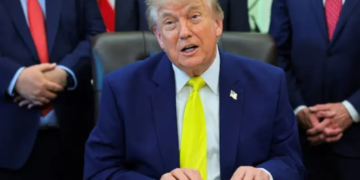
However, public attention was largely drawn to reports of a tense phone conversation between Trump and Israeli Prime Minister Benjamin Netanyahu. According to American news outlet Axios, the discussion escalated into a heated exchange over Israel’s military campaign in Lebanon.
Axios reported that Trump criticized Netanyahu for intensifying operations in Lebanon, reportedly calling him “crazy” and accusing him of failing to appreciate US support.
According to the report, Trump warned Netanyahu that carrying out threats to bomb Beirut would further damage Israel’s standing internationally. The US president also reportedly reminded Netanyahu of his backing during the Israeli leader’s corruption trial.
“You’re f****** crazy. You’d be in prison if it weren’t for me. I’m saving your a**. Everybody hates you now. Everybody hates Israel because of this,” Axios quoted Trump as saying.
The report further stated that Trump shouted, “What the f*** are you doing?” during the conversation.
Axios added that US officials said Trump was troubled by the civilian death toll in Lebanon and opposed Israeli tactics that involved destroying buildings to eliminate individual Hezbollah commanders.
“One official said this was one of Trump’s worst calls with Netanyahu since he returned to office,” the report noted.
Meanwhile, Netanyahu’s office said the Israeli premier told Trump that Israel would strike Beirut if Hezbollah “does not stop firing at our cities and citizens”.
Netanyahu also maintained that Israeli military operations in southern Lebanon would continue, with troops advancing toward the Zaharani River, marking Israel’s deepest ground penetration into Lebanon in a quarter century.
Violence Persists Despite Proposed Arrangement
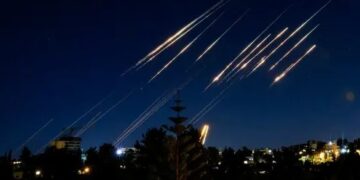
Although Trump claimed Hezbollah had assured him it would halt attacks on Israel, both sides continued exchanging fire on Tuesday.
Trump announced a limited agreement on Monday aimed at curbing attacks, but neither Israel nor Hezbollah has formally endorsed it. Israel’s defence minister also indicated that Beirut’s southern suburbs could still be targeted.
According to the Lebanese embassy in Washington, the proposed arrangement would initially suspend Israeli strikes on Beirut and Hezbollah attacks on Israeli territory.
Senior Hezbollah official Mahmud Qomati rejected the idea, stating the group “will not accept a partial ceasefire”.
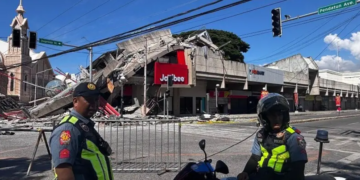
Near Sidon, rescue teams recovered the bodies of six relatives, including two children and a woman, after an Israeli strike.
In Tyre, the Jabal Amel hospital resumed services a day after suffering extensive damage from a nearby Israeli attack that injured 39 staff members.
Many businesses remained shut in Beirut’s southern suburbs, where residents had fled following evacuation warnings. An AFP correspondent reported continued surveillance by military drones over the area.
Lebanon’s health ministry said Israeli attacks have killed at least 3,468 people since March 2, with 35 additional deaths recorded since Monday.
Diplomatic Efforts Continue in Washington
At the same time, Israeli and Lebanese ambassadors met at the US State Department for another round of direct discussions.
The talks included Israeli Ambassador Yechiel Leiter, Lebanese Ambassador Nada Hamadeh Moawad, and Daniel Holler, a senior adviser to Secretary of State Marco Rubio.
Addressing the US Senate Foreign Relations Committee, Rubio argued that Hezbollah remained the primary obstacle to a peace agreement.
“Israel and Lebanon can do a peace deal tomorrow,” Rubio said.
He also stressed that Washington wanted the Lebanon-Israel talks to remain separate from negotiations involving Iran and the broader regional conflict that began after US and Israeli military action against Tehran on February 28.