

























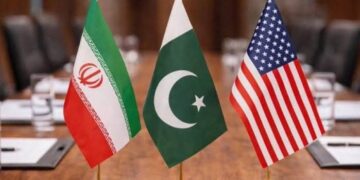






















Iran has conveyed to Pakistan that the United States must take the first steps towards de-escalating tensions by honouring its commitments under the Islamabad Memorandum of Understanding (MoU), as Islamabad works to revive diplomatic efforts aimed at ending the US-Iran conflict.

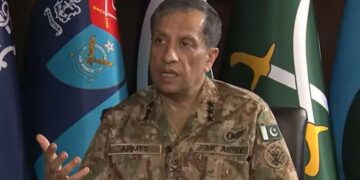
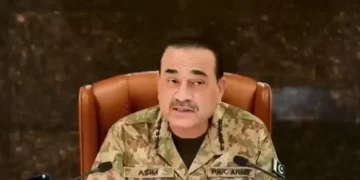
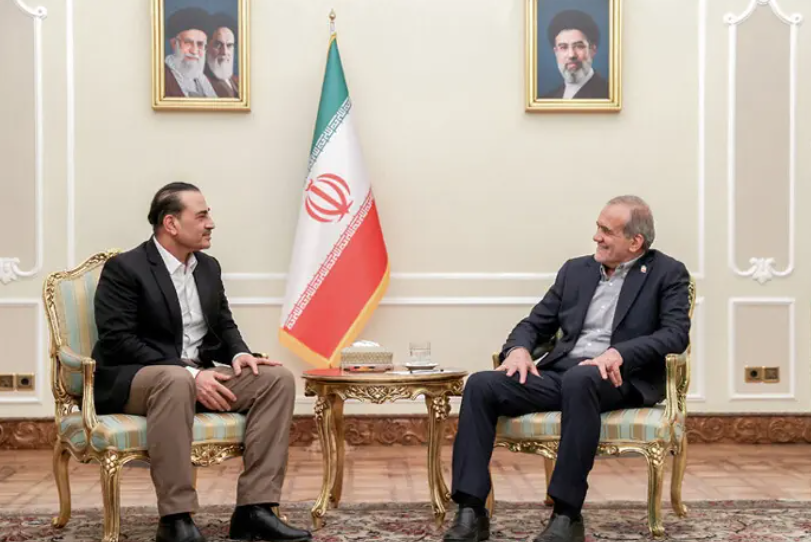
The message was delivered during Chief of Defence Forces and Chief of Army Staff Field Marshal Asim Munir’s meetings in Tehran with Iranian President Masoud Pezeshkian, Parliament Speaker and chief negotiator Bagher Ghalibaf, and Secretary of the Supreme National Security Council Gen Mohsen Rezaei.
“We are committed to implementing the terms of the Memorandum of Understanding. It is the United States that must adhere to its commitments based on the agreement,” Ghalibaf told Field Marshal Munir, according to an Iranian account of their meeting.
Gen Rezaei expressed similar concerns, stressing Tehran’s deep distrust of Washington.
“We distrust America and it must change its behaviour”.
According to reports, Field Marshal Munir said Pakistan would continue playing its role in efforts to restore peace and stability in the region.
Interior Minister Mohsin Naqvi accompanied the field marshal during the one-day visit, which also included meetings with Iranian Interior Minister Eskandar Momeni and Foreign Minister Abbas Araghchi.
According to the Inter-Services Public Relations (ISPR), the discussions covered measures to prevent further escalation, reopen the Strait of Hormuz and bring the conflict to an early end.
“Comprehensive discussions focused on measures to prevent further escalation, reopening of the Strait of Hormuz and expedited termination of the conflict. The two sides also exchanged views on regional peace and the ways to arrive at a negotiated settlement to the disputes,” ISPR said.
Iranian leaders appreciated Pakistan’s efforts to promote dialogue, reduce tensions and facilitate a peaceful settlement of the conflict.
Field Marshal Munir’s visit comes after the expiry of the 60-day armistice established under the Islamabad MoU, following which the US and Iran resumed hostilities. Pakistan continues to view the agreement as a viable basis for restarting negotiations, while Iran maintains that Washington must first address what it considers violations of the understanding.
The visit was particularly significant as Field Marshal Munir spoke with US President Donald Trump by telephone last week before travelling to Tehran. While details of their conversation were not made public, the call gave Pakistan a direct channel through which it could communicate the US position to Iran and assess Tehran’s willingness to resume engagement.
The trip also coincided with Washington’s announcement of a new economic pressure campaign against Iran, with further sanctions and restrictions on Iranian oil exports expected to form a key part of the measures.
Iran has warned that increased economic pressure by the US would intensify the confrontation rather than encourage negotiations.
Ghalibaf criticised Washington’s policies, saying they were “hinder[ing] regional stability and further erod[ing] trust in Washington”.
“Americans know that no one buys their bombast, the United States is not in an economic position to further restrict its relations with other countries,” he said in a post on X after meeting Field Marshal Munir.
The Strait of Hormuz remains a key point of disagreement. Iran insists that the US must first fulfil its commitments concerning the strategic waterway before Tehran considers fully reopening it and proceeding with the next phase of negotiations.
Field Marshal Munir’s meeting with Gen Rezaei was also seen as important given the latter’s recent appointment as secretary of Iran’s Supreme National Security Council, placing him at the heart of Tehran’s decision-making during its confrontation with Washington.
Rezaei emphasised Iran’s security concerns regarding the Strait of Hormuz and stressed that any potential agreement must address the military and economic pressure being exerted on Tehran.
Meanwhile, the Strait of Hormuz is being discussed through a separate diplomatic channel involving Iran and Oman. Omani Foreign Minister Badr Al Busaidi is expected in Tehran on Tuesday for another round of discussions on navigation arrangements, adding to ongoing diplomatic activity as Pakistan seeks to reassert its role in facilitating wider US-Iran negotiations.