




































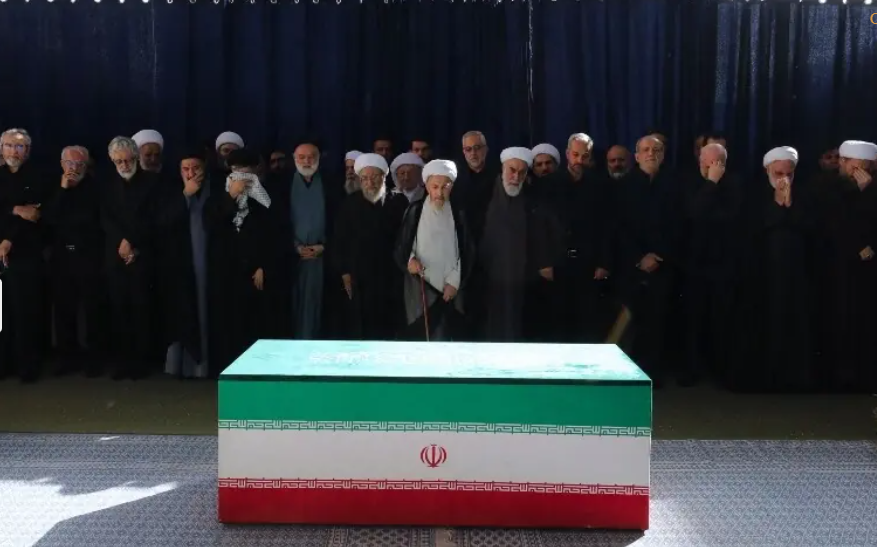
TEHRAN: The funeral procession for Iran’s assassinated supreme leader, Ayatollah Ali Khamenei, began in Tehran on Monday as authorities prepared for massive crowds expected to attend the ceremonies, state television reported.

Public attention has also remained focused on Khamenei’s successor, Ayatollah Mojtaba Khamenei, who has not appeared in public since assuming leadership.
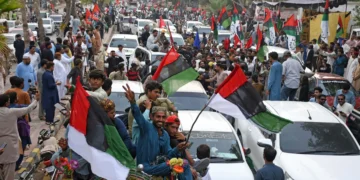
After lying in state for two days at Tehran’s Grand Mosalla religious complex, Khamenei’s body was taken through the capital in a procession attended by large numbers of mourners, according to state broadcaster IRIB.
State media reported that mourners gathered at Imam Hussein Square in eastern Tehran, where an effigy of US President Donald Trump was hanged.
Authorities are seeking to prevent a repeat of the disorder that occurred during the 1989 funeral of Ayatollah Ruhollah Khomeini, which drew an estimated 10 million mourners, according to state news agency IRNA. More than 10 people were killed and over 10,000 injured in crowd surges during that funeral.
Thousands of people visited the Grand Mosalla on Sunday to pay their respects to Khamenei and four members of his family, who were all killed in Israeli airstrikes on February 28 based on US intelligence, according to Iranian authorities.
Large concrete barriers were placed around the coffin to reduce the risk of stampedes.
Officials have not disclosed how closely mourners will be allowed to approach the coffin during the procession. During Khomeini’s funeral in 1989, authorities were forced to transport his body by helicopter after crowds overwhelmed the funeral vehicle, causing the burial shroud to tear and the body to fall to the ground.
Successor remains absent
Parliament Speaker and chief nuclear negotiator Mohammad Bagher Ghalibaf praised on X the way the “proud and invincible nation of Islamic Iran unanimously” honoured its “martyr”.
The funeral ceremonies will continue with processions in the religious city of Qom on Tuesday, followed by events in Iraq’s holy cities of Najaf and Karbala on Wednesday, before Khamenei is laid to rest in his hometown of Mashhad on Thursday.
Three of Khamenei’s sons made a rare public appearance during Sunday’s ceremonies, while Mojtaba Khamenei remained absent despite being named supreme leader after his father’s death.
Iranian officials have said Mojtaba was injured in the February 28 airstrikes, although the extent of his injuries has not been disclosed.
The newly appointed commander of the Islamic Revolutionary Guard Corps, Ahmad Vahidi, whose predecessor was killed in the strikes, attended the funeral publicly for the second consecutive day. Esmail Qaani, commander of the Guards’ Quds Force, also made a rare public appearance.
Several former Iranian presidents who had strained relations with Ali Khamenei have not been seen at the funeral events.
Calls for revenge
The Iranian government has highlighted the large turnout at the funeral as a sign of public support following nationwide protests earlier this year, which rights groups say were suppressed through a crackdown that killed thousands.
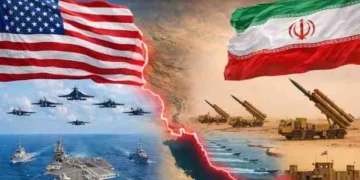
Although fighting in the Middle East has paused following a ceasefire and an initial agreement between Tehran and Washington, both sides have warned they are prepared to resume military action if necessary.
“The killers of Khamenei must face punishment,” a 38-year-old mourner identified only by the surname Miremadi told AFP.
“We back our revolution and our leader, and we demand revenge for the blood of our loved ones,” said a 39-year-old woman identified by the surname Bakand.
Throughout his leadership, Khamenei maintained a confrontational stance toward Western countries, while Iran continued to support armed groups opposed to the United States and Israel, including Hamas and Hezbollah, both of which sent delegations to the funeral ceremonies.