











































































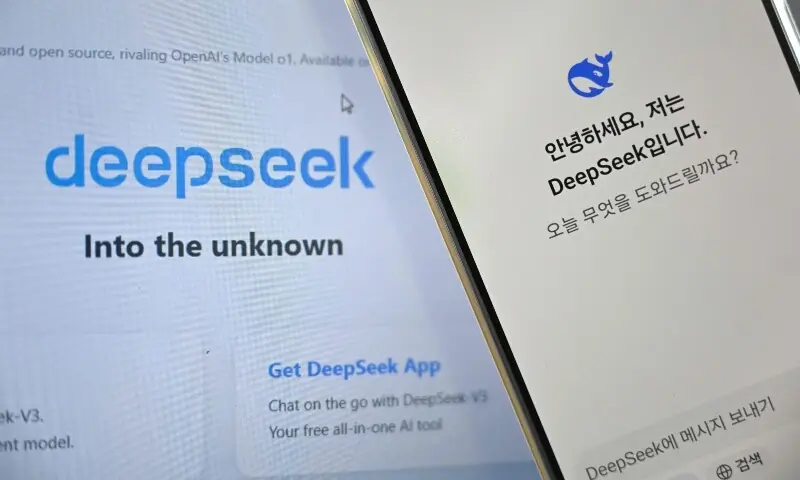
BEIJING: Chinese AI startup DeepSeek has released a preview of its highly anticipated V4 large language model, marking a significant step in the intensifying global artificial intelligence race.

The Hangzhou-based company introduced the V4 model more than a year after launching its breakthrough R1 reasoning model, which disrupted global markets with its strong performance and low development cost. Like its predecessors, the new model is open-source, allowing developers to download, modify, and deploy it locally.
DeepSeek said V4 will be available in “pro” and “flash” versions, offering flexibility based on size and performance needs. The company claims the model demonstrates strong capabilities in agent-based tasks, knowledge processing, and inference—while significantly reducing operational costs. Analysts view the release as a major advancement.
Research experts note that V4 delivers improved efficiency, particularly in inference costs—the computational expense required to generate AI outputs—making it more accessible for developers and businesses. The model has also been optimized to work with tools such as Claude Code, developed by Anthropic, enhancing its integration into modern AI workflows.
Founded in 2023, DeepSeek quickly rose to prominence with its V3 model and later the R1 model in early 2025, which rivaled top systems from global leaders like OpenAI and Google. Notably, R1 was reportedly built in just two months at a cost of under $6 million using less advanced chips from Nvidia—raising questions about the sustainability of massive AI spending by Western tech giants.
While experts believe V4 may not trigger the same market shock as R1, it highlights growing competition within China’s AI ecosystem. Companies such as Alibaba and ByteDance have also launched new AI models this year, intensifying domestic rivalry.
A key uncertainty surrounding V4 is the hardware used in its development. Huawei confirmed that its Ascend AI processors can support the model, signaling China’s push toward technological self-reliance amid U.S. export restrictions on advanced chips. Analysts say the ability to run advanced AI models on domestic hardware could strengthen China’s AI independence and accelerate global innovation in the sector.
Following the announcement, shares of Chinese chipmakers, including SMIC and Hua Hong Semiconductor, surged in Hong Kong trading, reflecting investor optimism about the country’s growing semiconductor capabilities.