














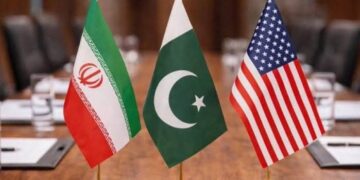























ISLAMABAD (MNN); The federal government has constituted a high-powered committee to explore a “mutually acceptable” solution to the long-standing dispute over the Pakistan-Iran gas pipeline, as Islamabad weighs potential financial liabilities against the country’s growing energy requirements.

Petroleum Minister Ali Pervaiz Malik informed the Senate that Prime Minister Shehbaz Sharif had formed the committee to examine the legal, financial and energy-related aspects of the project and recommend a future course of action in Pakistan’s national interest.
The development comes amid concerns that Pakistan could face substantial financial penalties under the Gas Sales Purchase Agreement signed with Iran in 2009.
During a Senate session, Senator Talha Mahmood raised questions about the two-decade delay in the project, noting that Iran had already completed its section of the pipeline up to the Pakistani border.
He asked whether Pakistan had made adequate preparations to receive Iranian gas if sanctions were lifted and how long it would take to make the pipeline operational.
“Can Pakistan immediately integrate Iranian gas into its national gas system, and what infrastructure has been completed on the Pakistani side?” the senator questioned.
Responding to the concerns, Petroleum Minister Ali Pervaiz Malik said the dispute had entered international arbitration in Paris under the 2009 Gas Sales Purchase Agreement between Pakistan and Iran.
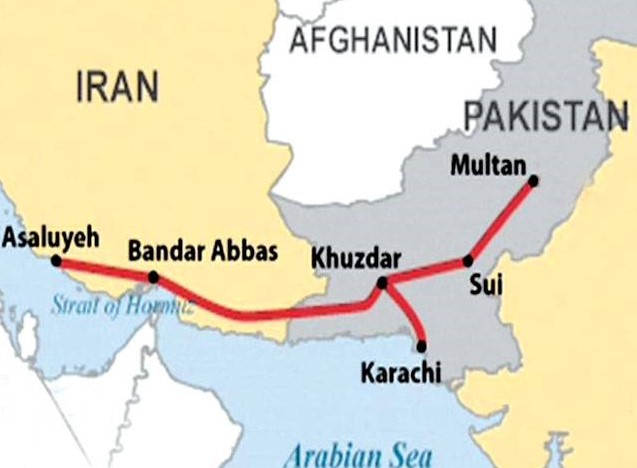
Under the agreement, Pakistan was required to construct approximately 781 kilometres of pipeline within its territory by December 2014. Although the deadline was subsequently extended, Pakistan could not begin major construction work due to concerns over US sanctions and difficulties in securing financing.
Iran, meanwhile, completed its section of the pipeline several years ago and has reportedly extended the gas network from the South Pars gas field to areas close to the Pakistani border.
In 2023, Iran formally served Pakistan with a notice seeking damages over delays in the implementation of the project. Reports have suggested that Pakistan could face claims running into billions of dollars if the dispute is decided against Islamabad.
The matter is currently being heard by an international arbitration tribunal in Paris.
Minister Malik told the Senate that the newly constituted committee was examining Pakistan’s potential legal and financial liabilities, the consequences of continued litigation and the country’s future energy requirements.
“These factors will help determine the future direction of the project,” he said, adding that the government wanted to avoid further legal complications and was therefore seeking a negotiated settlement with Tehran.
Describing Iran as a brotherly country, the petroleum minister said the leadership of Pakistan and Iran remained engaged in efforts to find an amicable and mutually acceptable resolution.
He said Iran had made substantial physical progress on its side of the project and had brought gas infrastructure from the South Pars field to a major area close to Pakistan’s border.
The minister also addressed concerns regarding gas supply issues in Balochistan, saying that the prime minister had directed him to engage with provincial stakeholders.
He added that another high-level committee, headed by Deputy Prime Minister and Foreign Minister Ishaq Dar, was examining Balochistan’s gas-related issues, including technical problems and payment-related matters.
Pakistan and Iran signed the Gas Sales Purchase Agreement in May 2009 for the supply of 750 million cubic feet of natural gas per day from Iran’s South Pars gas field for a period of 25 years.
Under the agreement, both countries were responsible for constructing the pipeline within their respective territories, with gas supplies originally scheduled to begin by January 2015.
However, more than a decade after the original deadline, the project remains incomplete on the Pakistani side. The newly formed committee is now expected to recommend whether Pakistan should pursue construction, seek a negotiated settlement, or adopt another legally and financially viable option while taking into account the country’s future energy needs.