





















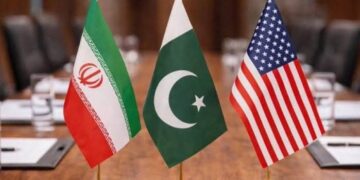























The United States has announced plans to expand its economic pressure on Iran and potentially impose sanctions on countries that continue doing business with Tehran, though no new penalties against specific countries have yet been introduced.

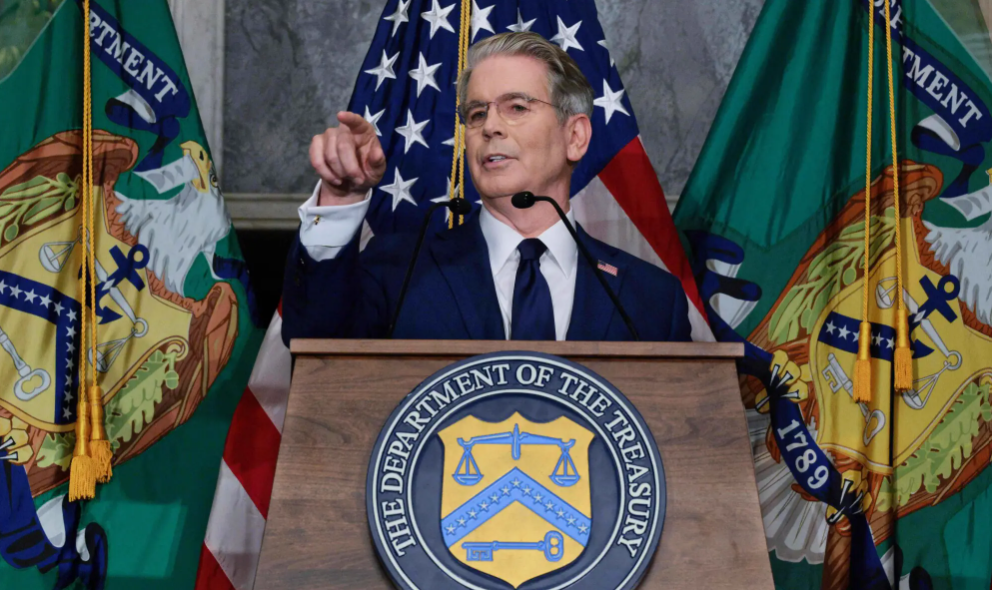
As the war with Iran approaches its sixth month, US Treasury Secretary Scott Bessent said Washington was preparing an “economic onslaught” targeting Iran’s financial networks worldwide. However, he did not disclose which countries could face penalties or provide a timeline for their implementation.
“Why would I want to blow up the global financial system? We believe that it is important to level set and give people a cure period, but they should know that that will move very quickly and that we are serious,” Bessent told reporters.
He also hinted at a “major announcement” involving sanctions against a financial institution later this week.
The Treasury Department announced sanctions against nearly 60 individuals, entities and vessels. The measures focus on five sectors that Washington says Iran uses to support its economy: digital assets, gold, technology, aviation and shipping.
The US has maintained wide-ranging sanctions against Iran for decades, targeting its oil revenues, aviation industry, cryptocurrency activities, weapons procurement and businesses linked to the Islamic Revolutionary Guard Corps (IRGC). While sanctions restrict designated entities from accessing the dollar-based financial system, Iran has repeatedly established new companies and vessel registrations to bypass the restrictions.
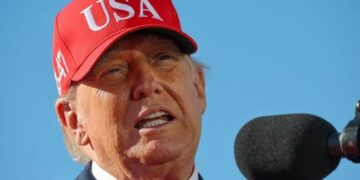
Before the announcement, President Donald Trump claimed that Iran was “collapsing”. Bessent had earlier warned in a Financial Times column that countries continuing to support Tehran risked becoming a “global pariah”.
Iran rejected Washington’s claims, arguing that the planned escalation in financial pressure contradicted assertions that US policies had already succeeded.
“Your narrative doesn’t add up,” Gharibabadi said, asking why, if Washington had achieved its goals, “there is a need for ‘the largest financial invasion in history’ and the mobilisation of all institutions and powers of the US!’’
China vows to protect interests
China, which has remained Iran’s largest oil customer for years, said it would closely monitor the situation and take necessary steps to safeguard its interests. The US has increased pressure over China’s purchases of Iranian oil but has so far avoided imposing sanctions on major Chinese banks.
A Chinese foreign ministry spokesperson called on all sides to act rationally and exercise restraint, saying sanctions and pressure would not help resolve the crisis.
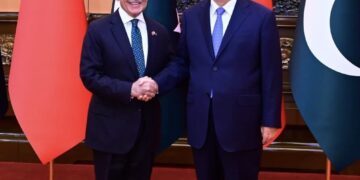
Meanwhile, Chinese President Xi Jinping called for a diplomatic solution to the Middle East crisis during talks with Jordan’s King Abdullah II in Beijing. Xi stressed the need to respect the sovereignty and security of countries in the region following the crisis triggered by US and Israeli attacks on Iran.
“China has always advocated for a comprehensive ceasefire (and) resolving disputes through political and diplomatic means,” Xi said.
“(China) believes the sovereignty and security of regional countries, including Jordan, should be respected,” he added.
Xi also called for a “comprehensive, just and lasting solution to the Palestinian issue” and reiterated China’s support for renewed Israeli-Palestinian peace talks based on the two-state solution.