

















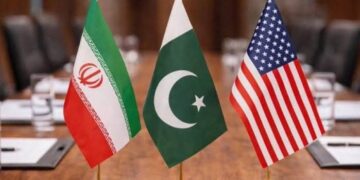

























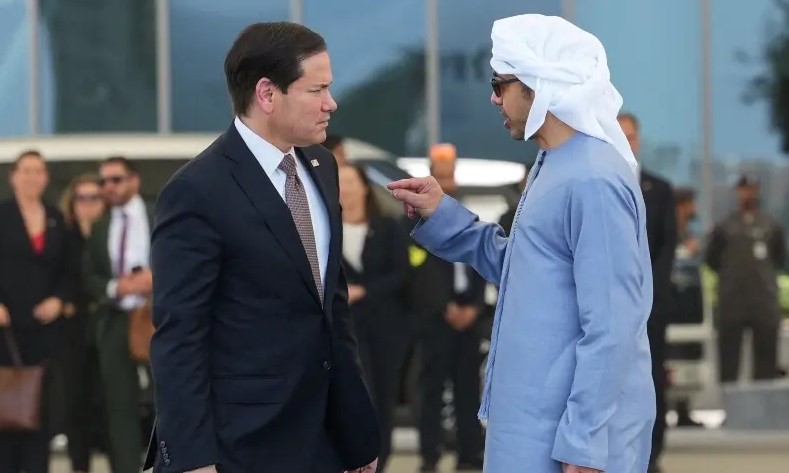
DUBAI (MNN); US Secretary of State Marco Rubio held talks with UAE President Mohamed bin Zayed Al Nahyan on Wednesday as Washington sought to reassure Gulf allies over its recent agreement with Iran and reaffirm its commitment to regional security.

The discussions came during Rubio’s Gulf tour, which aims to address concerns among US partners following last week’s memorandum of understanding (MoU) between Washington and Tehran. Several Gulf states have expressed reservations about the agreement, arguing that it does not adequately address Iran’s ballistic missile programme or broader regional security issues.
According to US State Department spokesperson Tommy Pigott, Rubio and the UAE president discussed President Donald Trump’s understanding with Iran, efforts to guarantee safe and uninterrupted navigation through the Strait of Hormuz, and the importance of maintaining peace and stability across the Middle East.
Pigott said Rubio thanked the UAE leadership for its support and praised the country’s resilience during Iranian missile attacks witnessed during the recent regional conflict. He also reiterated Washington’s commitment to the security and defence of the Emirates.
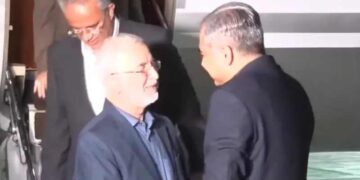
Rubio arrived in Abu Dhabi on Tuesday evening and held closed-door meetings with Sheikh Mohamed on Wednesday. He also met senior Emirati officials, including National Security Adviser Sheikh Tahnoun bin Zayed Al Nahyan and Foreign Minister Sheikh Abdullah bin Zayed Al Nahyan, before departing for Kuwait.
The US secretary of state is scheduled to continue his regional tour with visits to Kuwait and Bahrain, where he will attend a meeting of the Gulf Cooperation Council (GCC) on Thursday.
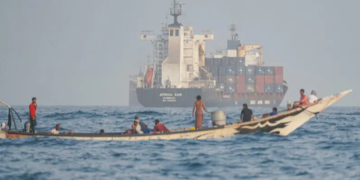
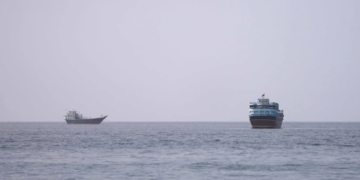
Speaking to reporters upon arrival in Abu Dhabi, Rubio stressed that no country had the authority under international law to impose tolls or fees on vessels using the Strait of Hormuz, one of the world’s most strategically important waterways for oil and gas shipments.
His comments followed suggestions by Iran and Oman, both of which border the strait, that costs could potentially be levied on ships transiting the route.
“The Strait of Hormuz is an international waterway, and no country can impose tolls or fees on international shipping passing through it,” Rubio said.
Asked whether he intended to discuss Gulf concerns over the US-Iran accord, Rubio replied that the issue would certainly be raised during his meetings and that broader regional concerns not covered by the memorandum would also be addressed.
In recent weeks, Rubio has played a less visible role in direct negotiations with Tehran, with US Vice President JD Vance leading the latest round of talks with Iranian officials in Switzerland.
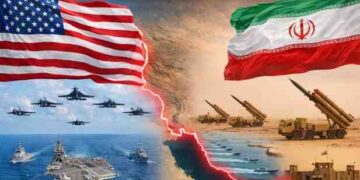
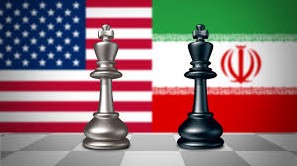
The United States and Iran signed a 14-point memorandum of understanding last week aimed at ending months of conflict and creating a framework for future negotiations. The interim agreement paved the way for a 60-day diplomatic process intended to resolve more complex issues, including Iran’s nuclear programme.
One of the most contentious topics remains the future of Iran’s stockpile of highly enriched uranium, including material enriched up to 60 per cent purity, which is technically close to weapons-grade levels. Tehran maintains that its nuclear activities are solely for peaceful and civilian purposes.
Despite welcoming efforts to end hostilities, Gulf governments have reportedly expressed disappointment with several aspects of the agreement. Regional leaders are particularly concerned that a proposed $300 billion reconstruction fund could indirectly enable Iran to rebuild and modernise its military capabilities.
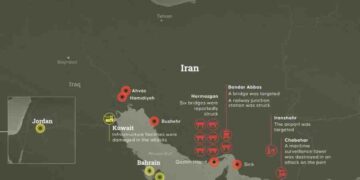
Another major concern is the absence of provisions addressing Iran’s ballistic missile programme. Gulf countries argue that missiles and drones were among the most significant threats they faced during the recent conflict, with several states reportedly struck by Iranian attacks.
Iran, meanwhile, has accused some Gulf countries of facilitating US military operations by hosting American military bases and providing logistical support during the conflict.
Rubio’s visit is being closely watched across the region and in Washington, where critics within the Republican Party have questioned whether the agreement grants too many concessions to Tehran. Once regarded as one of Iran’s strongest critics in US politics, Rubio now faces the challenge of defending an accord strongly backed by President Trump while addressing the security concerns of America’s Gulf partners.
Political observers have also noted that Rubio and Vice President JD Vance are increasingly viewed as potential contenders for the Republican presidential nomination after Trump, making their handling of foreign policy issues particularly significant.
As negotiations continue, Gulf leaders are expected to press Washington for stronger guarantees on regional security, maritime stability, and safeguards against any future expansion of Iran’s military capabilities.