













































WASHINGTON/TEHRAN/ISLAMABAD; The signing of the Islamabad Memorandum of Understanding (MoU) between the United States and Iran has triggered widespread international reactions, with leaders from both countries and the global community describing it as a major step toward peace and stability in the Middle East.

US President Donald Trump celebrated the agreement, claiming it had strengthened America’s global standing. In a post on Truth Social, Trump said the United States had become “strong, safe and respected like never before” following the accord. He highlighted falling oil prices, strong stock market performance and record employment figures, while reiterating that Iran would never be allowed to obtain a nuclear weapon.
Trump also dismissed critics who argued he had not taken a hard enough stance on Tehran, saying such accusations ignored the positive economic impact of the agreement.
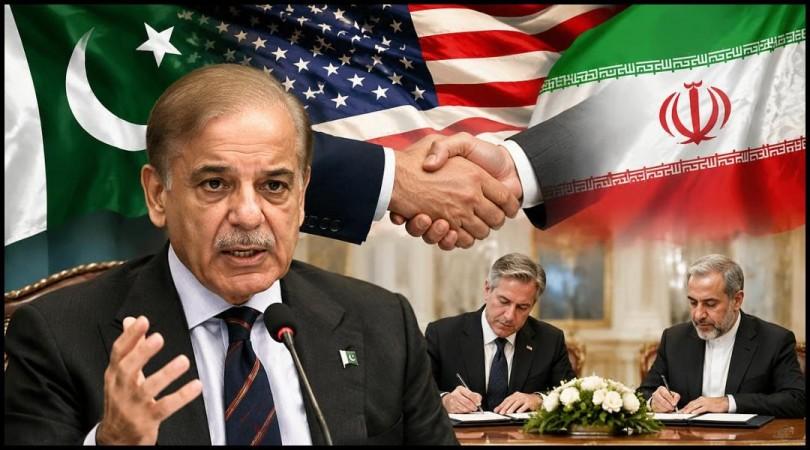
Iranian President Masoud Pezeshkian described the accord as a “historic document” that would help end hostilities and open the door to broader negotiations. Sharing an image of the signed document on social media, he said peace could only be achieved through mutual respect. The document bears the signatures of President Trump, President Pezeshkian and Prime Minister Shehbaz Sharif, who acted as a mediator.
Iranian Foreign Minister Abbas Araghchi discussed the agreement with Cyprus Foreign Minister Constantinos Kombos and expressed hope that the deal would usher in a new era of international engagement and economic cooperation.
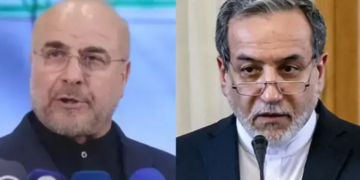
Meanwhile, Iran’s chief negotiator and Parliament Speaker Mohammad Bagher Ghalibaf stated that Tehran entered negotiations from a position of strength, arguing that Iran’s military successes had provided leverage in the talks. While supporting diplomatic engagement, he described the agreement as evidence of a strategic setback for Washington, claiming history would judge it as a failure for the United States.
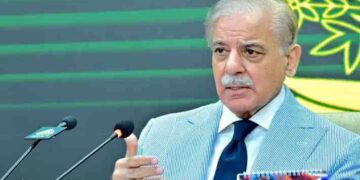
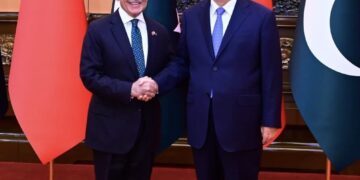
Pakistan played a central role in facilitating the breakthrough. Deputy Prime Minister and Foreign Minister Ishaq Dar confirmed that Prime Minister Shehbaz Sharif cancelled his planned visit to Switzerland after the agreement was signed remotely by the leaders of the United States and Iran, followed by Pakistan’s endorsement as mediator.
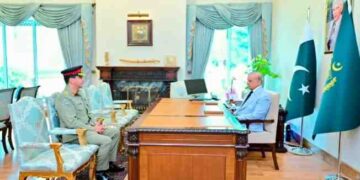
Following the signing ceremony, Prime Minister Shehbaz Sharif held a 30-minute telephone conversation with President Pezeshkian. The premier congratulated the Iranian leadership and people, saying the agreement would help restore regional peace, support Iran’s reconstruction and further strengthen Pakistan-Iran relations.
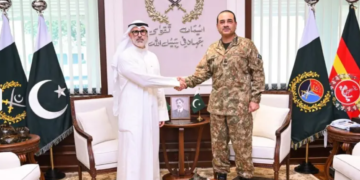
According to Pakistan’s Prime Minister’s Office, President Pezeshkian thanked Prime Minister Shehbaz Sharif and Field Marshal Asim Munir for their significant role in successfully guiding the mediation process, assuring that Iran would remember Pakistan’s support during difficult times.
The agreement also received support from several countries. Qatar welcomed the MoU as a reaffirmation of diplomacy and peaceful conflict resolution, praising Pakistan’s efforts to reduce tensions and bridge differences between Washington and Tehran.
Russian President Vladimir Putin described the accord as an important step toward ending the conflict permanently and suggested it could serve as a model for future peace initiatives. China also welcomed the development, urging both sides to honour their commitments and continue negotiations in good faith.
President Asif Ali Zardari termed the agreement a historic achievement for the region and the world. He praised Pakistan’s diplomatic leadership, including Prime Minister Shehbaz Sharif, Ishaq Dar, Field Marshal Asim Munir and Interior Minister Mohsin Naqvi, for their efforts in promoting dialogue and peace.
However, the agreement has faced criticism within the United States. Several American media outlets and commentators argued that the deal granted significant economic concessions to Iran without securing the complete dismantling of its nuclear programme. Critics claimed Washington had abandoned several of its original objectives.
Hezbollah leader Naim Qassem described the agreement as a major victory, claiming it had prevented broader regional escalation and frustrated attempts to weaken Iran. He also stressed that future negotiations involving Lebanon and Israel should focus solely on security arrangements and preserving Lebanese sovereignty.
The Islamabad Memorandum is now expected to serve as the foundation for a broader and more comprehensive settlement, with negotiators from both sides preparing for the next phase of talks aimed at achieving a lasting peace agreement.