

































































At least 72 people have died following the recent mass influx of migrants into Spain’s North African enclave of Ceuta, where tens of thousands of people, most of them swimming from Morocco, crossed into the territory over several days, local authorities said on Sunday.

Officials estimate that around 60,000 migrants entered Ceuta during what has become the enclave’s largest-ever mass crossing. Most have since voluntarily returned to Morocco.
“The latest figure that we have is 72,” the Spanish government’s delegate to Ceuta, Miguel Angel Perez Triano, told reporters when asked about the number of fatalities.
The updated figure marks an increase from the previously reported death toll of 67.
By Sunday, Spanish police and military personnel continued patrolling Ceuta as the enclave gradually returned to normal following the migrant influx between Wednesday and Friday.
Only small groups of migrants remained in the streets after the majority who crossed the border returned to Morocco within 48 hours.
AFP reporters observed unaccompanied migrant children gathered in an abandoned industrial area on Saturday, while others were seen sleeping on pavements.
“All the children here want to go to (mainland) Spain,” said Moroccan national Aziz Dabch, 41, one of the few adults present at the site.
The unprecedented migration surge has triggered a diplomatic dispute for Spain, with several European partners criticising Madrid’s handling of immigration.
Near Ceuta’s port, Spanish soldiers detained a group of nine exhausted migrants sitting on a pavement while an armoured vehicle stood nearby.
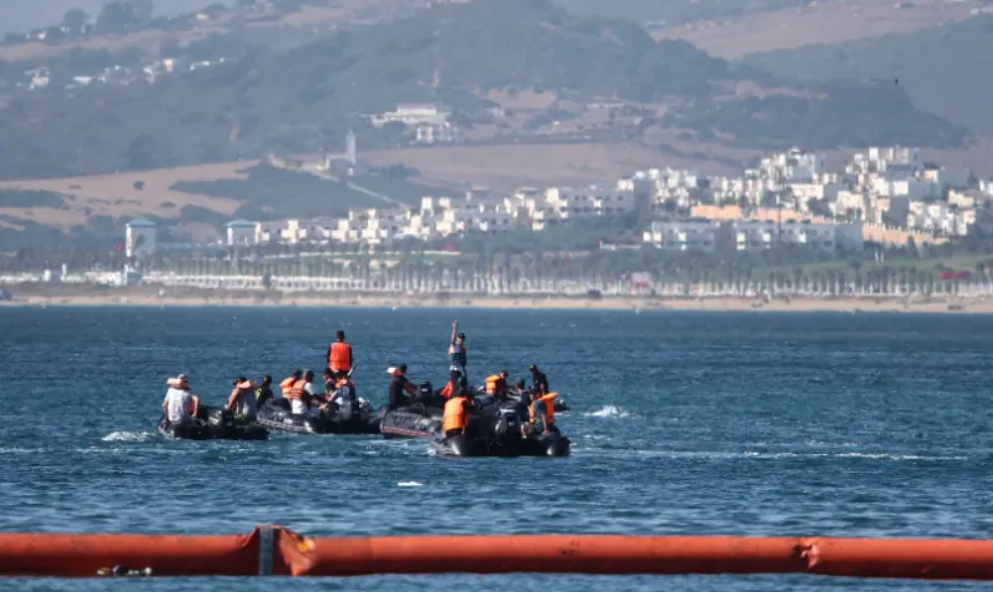
Rescue teams in inflatable boats continued searching waters around the border barrier extending into the Mediterranean, where Spain recently installed a new 500-metre floating barrier to strengthen security.
Members of Spain’s Civil Guard were also seen escorting migrants from buses back to the border crossing for their return to Morocco.
Meanwhile, cleanup crews worked around the border area, removing rubbish, clothing and other debris left behind during the mass crossing.
Rumours fuelled crossing
Spanish authorities have accused criminal networks of spreading false claims that a recent Spanish Supreme Court ruling on immigration would make it easier for migrants to enter the country.
Some analysts have also suggested Morocco may have allowed migrants to cross in an effort to increase diplomatic pressure on Spain following Madrid’s recent improvement in relations with Algeria, Rabat’s regional rival.
A similar situation occurred in 2021, when around 10,000 migrants entered Ceuta after Morocco temporarily relaxed border controls during a diplomatic dispute with Spain.
Moroccan authorities have not publicly commented on the latest crisis.
Several migrants who crossed into Ceuta said they had heard rumours that the border had been opened, with the claims rapidly spreading across social media.
The European Union announced it would hold a video conference on Tuesday after 22 member states signed a joint letter calling for an urgent meeting to coordinate a swift response and prevent additional uncontrolled crossings.
Italy has meanwhile suspended its participation in the Schengen free-movement arrangement with Spain for one month.
Spanish Prime Minister Pedro Sánchez criticised the response from some European countries, describing it in a letter to EU leaders as “selfish”.
Pope Leo XIV also addressed the situation during his Sunday prayers, saying he was following developments in Ceuta “with concern” and expressing hope for a solution based on “peace, stability and justice”.