


























































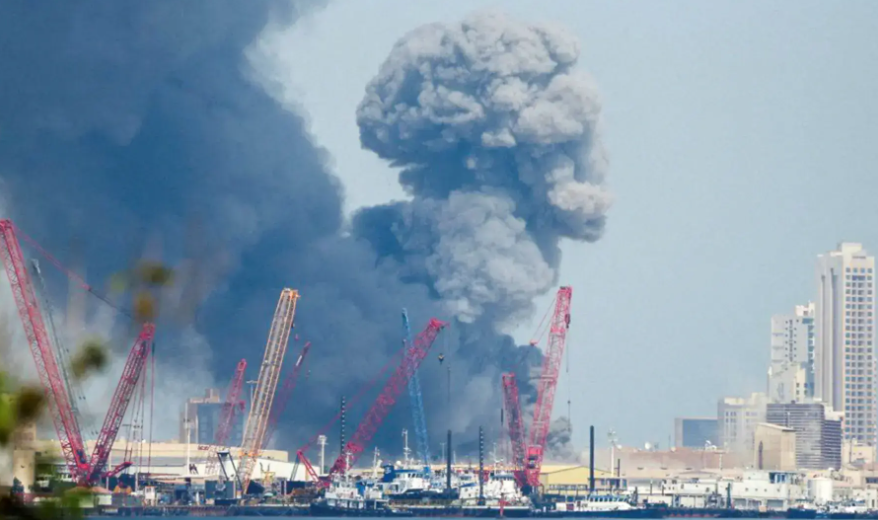
Iran launched attacks on a US military base in Jordan and 21 other targets across the Gulf on Wednesday, escalating tensions with Washington in one of the most significant exchanges of hostilities since the two countries agreed to a ceasefire in April.

The strikes were carried out by Iran’s Revolutionary Guards in retaliation for American attacks on Iranian military facilities near the Strait of Hormuz. The US military said it had targeted Iranian air defence systems, ground control stations and surveillance radar sites after Iran allegedly shot down a US Apache helicopter on Tuesday.
“I believe the response should be very strong, very powerful, and that’s what this one is,” US President Donald Trump told ABC News.
The renewed confrontation has cast fresh doubt on efforts to end the conflict that began on February 28 with joint US-Israeli strikes on Iran. Tehran responded to those attacks by targeting US assets in the Gulf and significantly disrupting traffic through the Strait of Hormuz, one of the world’s most important energy corridors.
According to a US official, nearly 20 Iranian targets were struck during the latest American operation, which lasted around four hours.
Iranian state media reported attacks on Qeshm Island and the port city of Sirik near the Strait of Hormuz. Explosions were also heard in Bandar Abbas and near Jask, close to the entrance of the strategic waterway.
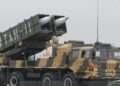
In response, Iran said it launched long-range missile attacks against US military facilities in Jordan.
Iran’s Revolutionary Guards claimed they had “targeted and destroyed four major targets” in Jordan, including F-35 fighter aircraft shelters at an air base and the US command centre in Al-Azraq.
However, Jordan’s military stated that it intercepted five Iranian missiles and reported no casualties or material damage.
The conflict quickly spread across the Gulf region. Air raid sirens sounded in Bahrain after Iran announced strikes on another US military installation there.
Meanwhile, Kuwait’s military said its air defence systems were engaging hostile aerial targets after Iran claimed to have targeted the Ali Al-Salem Air Base with drones.
Iran’s Revolutionary Guards also said they had attacked the US Fifth Fleet headquarters in Bahrain using drones and warned of “more severe responses” if hostilities continued.
Bahraini authorities confirmed that warning sirens had been activated and urged residents to seek shelter. A media adviser to Bahrain’s king later said the country’s air defence systems had successfully repelled the attacks.
Iranian Foreign Minister Abbas Araghchi had earlier warned that Tehran would respond forcefully to American military action.
“The US [has] opted to test our determination. Our Powerful Armed Forces will leave no attack or threat unanswered,” he wrote on X.
The latest escalation pushed oil prices approximately one per cent higher in early Asian trading as investors reacted to growing instability in the region.
The violence has also complicated diplomatic efforts aimed at ending the conflict. Earlier on Tuesday, Trump said negotiations were nearing completion and suggested a breakthrough could come within days.
Asked about the timeline for a deal, he said it could happen within “two or three days”.
However, following the downing of the Apache helicopter, Washington opted for military retaliation, raising concerns that diplomacy may once again be overshadowed by battlefield developments.
The fragile ceasefire had already come under strain over the weekend when Iran and Israel briefly resumed attacks before later announcing another halt in fighting.
Iran has maintained that any comprehensive settlement must also include a ceasefire in Lebanon, where hostilities intensified after Hezbollah launched rockets into Israel on March 2.
Israel responded with a large-scale air and ground campaign that has reportedly killed more than 3,600 people. Despite a nominal truce, exchanges of fire have continued.
Lebanese officials said 11 people were killed in Israeli airstrikes on the southern city of Tyre on Tuesday. Following evacuation warnings issued by the Israeli military, residents fled northward, creating heavy traffic and displacement toward cities including Sidon.
The renewed fighting has further delayed efforts to fully reopen the Strait of Hormuz, a critical route for global oil and gas shipments. Crude oil prices rose after hopes of a near-term agreement to restore normal shipping activity diminished.
On Tuesday, Araghchi urged foreign military forces to withdraw from the area surrounding the strait.
“The Strait of Hormuz is NOT international waters but shared between Iran and Oman,” he said. “Foreign forces in proximity to our territory are at constant risk… [the] best solution is for them to leave.”
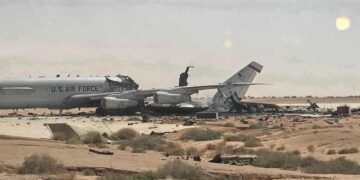
The downed Apache helicopter marks the second confirmed loss of a US crewed aircraft during the conflict, following the destruction of an F-15 fighter jet in April. US Central Command said both crew members aboard the helicopter were successfully rescued after it crashed near the coast of Oman.