

















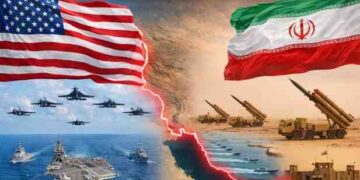








































TEHRAN (MNN); Iran has announced the suspension of its military operations against Israel, declaring that its recent actions were a decisive response to Israeli attacks. However, Tehran warned that any further aggression, particularly against southern Lebanon, would trigger a much harsher and more destructive retaliation.

According to Iran’s Islamic Revolutionary Guard Corps (IRGC), the decision to halt operations was taken after what it described as a successful military response against Israel. The IRGC’s Khatam al-Anbiya Central Headquarters stated that while operations have been paused, Iran remains prepared to react forcefully if hostilities continue.
Meanwhile, US President Donald Trump said efforts were underway to secure an immediate ceasefire between Israel and Iran. Writing on his Truth Social platform, Trump stated that final negotiations aimed at achieving peace were progressing, although he warned that misunderstandings or poor decisions could derail the process. He added that existing blockades would remain in place until a final agreement was reached.
The latest tensions come amid growing instability in Lebanon. Lebanese Prime Minister Nawaf Salam revealed that Israel has conducted nearly 3,500 air strikes and hundreds of controlled demolitions in Lebanon since a US-brokered ceasefire came into effect on April 16. According to official figures, Israel carried out 3,491 air strikes, 407 controlled demolitions, and six large-scale destruction operations between April 17 and June 7.
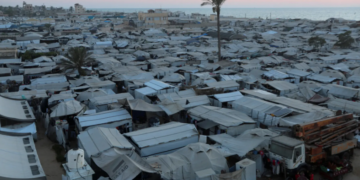
Salam said entire villages in southern Lebanon had been devastated and flattened by the attacks. He noted that Lebanon was attempting to maintain the ceasefire, but the renewed conflict between Iran and Israel had sparked additional displacement, putting further pressure on the country’s already strained resources.
President Trump also called directly on both sides to stop military actions, urging Israel and Iran to immediately cease firing.
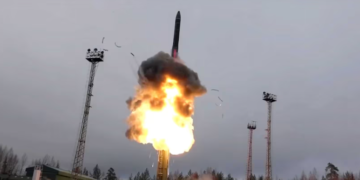
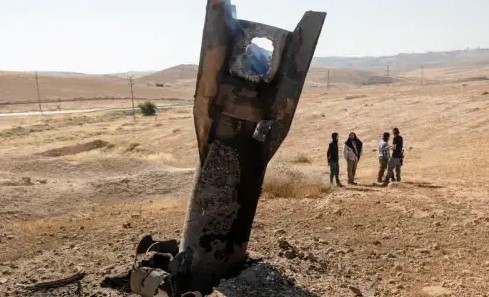
An Israeli military official reported that Iran launched nearly 30 ballistic missiles toward Israel overnight, marking the first major exchange of fire between the two countries since the truce reached in April. The official added that Yemen’s Houthi movement separately launched two missiles toward Israeli territory.
As regional tensions escalated, Iran suspended flights from Shiraz’s Shahid Ayatollah Dastgheib Airport due to security concerns. Authorities announced that flights would remain grounded until the evening while conditions were being assessed.
Iranian media further reported that air defense systems intercepted and destroyed a drone described as belonging to the “US-Zionist enemy” over Tehran. Explosions were also reported in the central city of Isfahan.
A powerful explosion shook central Tehran, including the vicinity of the Iranian Foreign Ministry, where journalists were attending a press conference. Iranian media suggested that several of the blasts were linked to the activation of air defense systems responding to potential aerial threats.
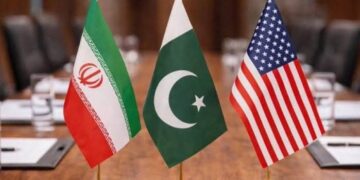
Iranian officials confirmed that diplomatic consultations aimed at ending the broader regional conflict were continuing. Foreign Ministry spokesman Esmaeil Baqaei said Pakistan’s mediation efforts remained active despite the renewed fighting.
The IRGC also announced that Iran had retaliated for attacks on one of its petrochemical facilities by striking similar industrial targets in Israel’s Haifa region with missiles.
Baqaei acknowledged that the latest escalation would inevitably affect ongoing diplomatic discussions with the United States aimed at securing peace in the region. He said recent events had deepened Iranian mistrust and complicated the diplomatic process.
He emphasized that Lebanon remained an integral part of any ceasefire arrangement and warned that Iran would not allow either Israel or the United States to undermine that aspect of the agreement.
On the military front, Israel claimed that its air force had conducted extensive operations against Iranian defense infrastructure. The Israeli military said dozens of fighter jets targeted and destroyed strategic air defense systems deployed across various parts of Iran. According to Israeli officials, the strikes were intended to weaken Iran’s ability to detect and respond to aerial threats.
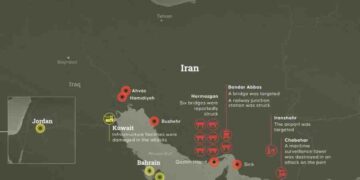
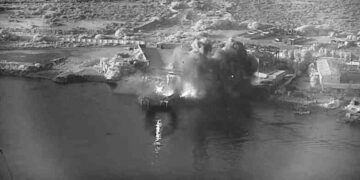
Meanwhile, Iran’s Mehr News Agency reported that two Israeli strikes targeted the Karun Petrochemical Plant in Mahshahr. While no casualties were reported, authorities said assessments were underway to determine the extent of the damage.
In response to the security situation, the Mahshahr Port administration announced a 30 percent reduction in staffing levels at government offices. Essential services, including emergency response, electricity, water, and gas facilities, will continue operating at full capacity.
The latest developments underscore the fragile security environment in the Middle East, where military confrontations, diplomatic negotiations, and regional mediation efforts continue simultaneously amid fears of a broader conflict.