













































































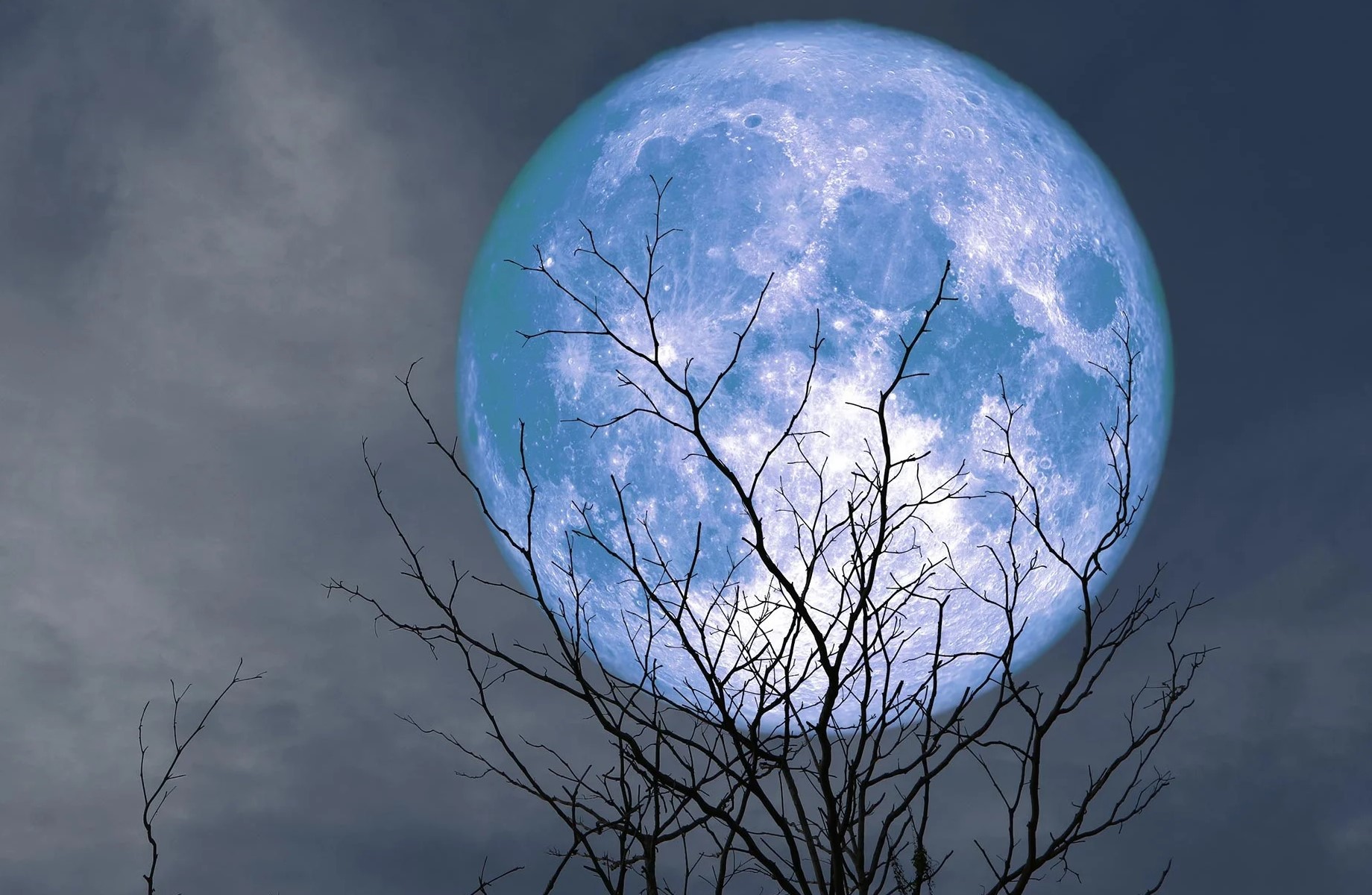
ISLAMABAD (MNN); Sky watchers witnessed a rare celestial event as a Blue Moon, which also coincided with a Micromoon, appeared in the night sky, creating one of the year’s most unusual lunar spectacles.

Despite its name, the Blue Moon did not appear blue. The term refers to the timing of the full moon rather than its colour.
This full moon qualified as a Blue Moon because it was the second full moon to occur during the month of May — a phenomenon that happens only once every two to three years due to the lunar cycle lasting around 29 and a half days.
The event also reflects the origin of the phrase “once in a blue moon,” commonly used to describe something rare or uncommon.
Astronomers noted that the previous Blue Moon occurred on August 19, 2024, while the next seasonal Blue Moon is expected on May 20, 2027.
Adding to the significance of the event, the full moon also appeared as a Micromoon.
A Micromoon occurs when a full moon takes place near the Moon’s farthest point from Earth in its orbit, known as apogee. Because of this greater distance, the Moon appeared slightly smaller and dimmer than a typical full moon.
Experts said the difference may have been difficult for casual observers to notice, but it remained a unique and fascinating astronomical phenomenon.
Scientists also said that while the Moon’s distance from Earth can slightly influence ocean tides, the effect during a Micromoon is minimal and usually not noticeable in everyday coastal conditions.
They also clarified that there is no scientific evidence linking lunar events such as Blue Moons or Micromoons with earthquakes, volcanic eruptions or extreme weather.
For centuries, full moons have inspired myths, calendars, navigation, poetry and scientific discovery across civilizations. The rare appearance of the Blue Moon once again drew the attention of skywatchers and astronomy enthusiasts around the world.