






























ISLAMABAD (MNN); Power Minister Awais Leghari said on Sunday that negotiations with Chinese power producers on electricity tariff reductions have yet to produce meaningful results, despite the government securing over Rs3.5 trillion in savings through revised agreements with other independent power producers (IPPs) and public-sector power plants.

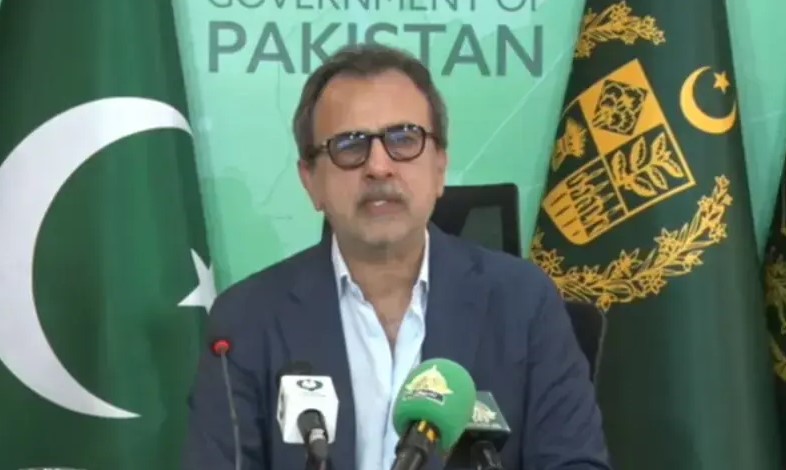
Speaking at a press conference in Islamabad, the minister said discussions with power plants established under the China-Pakistan Economic Corridor (CPEC) were ongoing, but no substantial breakthrough had been achieved so far.
He said the government had been seeking concessions through debt reprofiling under the existing government-to-government framework with China, but progress remained limited.
Leghari noted that the government remained committed to respecting the investments made by Chinese companies at a time when few international investors were willing to invest in Pakistan’s power sector.
He expressed hope that both sides would eventually reach an agreement that would help improve the power sector and provide further relief to consumers.
The minister recalled that the government had already secured approximately Rs3.5 trillion in savings by renegotiating power purchase agreements with 29 private and several state-owned plants, restructuring contracts and shutting down older inefficient plants. Those measures were aimed at reducing electricity prices across the country.
Leghari said reforms in the power sector, including reduced system losses, redeployment of old generation company staff to distribution companies, and better fiscal management, had helped lower the power subsidy burden.
According to him, the power sector subsidy was reduced to Rs890 billion this year from Rs1.287 trillion last year and is expected to decline further to Rs830bn in the next fiscal year.
He also highlighted a reduction in electricity tariffs across multiple consumer categories over the past two years.
He said the average domestic electricity tariff fell by 16 per cent between May 2024 and May 2026, while commercial tariffs declined by 8pc.
The industrial sector received the largest relief, with tariffs falling by 33pc, while tariffs for general services, bulk consumers and agriculture dropped by 10pc, 13pc and 14pc respectively.
Leghari said the national average electricity tariff declined by 20pc to Rs42.26 per unit in May 2026 compared to Rs53.04 per unit two years ago.
Discussing the Neelum-Jhelum Hydropower Project, the minister said the project had remained offline for nearly a year and a half due to design flaws.
He said repairs on the project, which cost over Rs500bn, were expected to take another year and a half.
Its continued closure, he said, was causing significant financial losses and forcing the government to rely on more expensive sources of electricity instead of cheaper hydropower generation.
Leghari also rejected reports suggesting the government planned to withdraw subsidies for low-income electricity consumers.
He called such claims “completely false” and said a QR code-based registration system had been launched to ensure that subsidies reach only eligible consumers.
He said around two million single-phase consumers had already registered under the system within a month.
The minister added that eligible consumers would continue to receive subsidies without interruption, but misuse of subsidised tariffs through multiple meters combined with solar power usage would not be allowed.
He further said solar self-generation in Pakistan was expected to grow rapidly, with installed capacity projected to rise to 50,000 megawatts over the next decade, compared with less than 20,000MW currently.
URDU