






































By Ishtiaq Ahmad
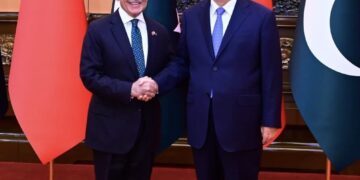
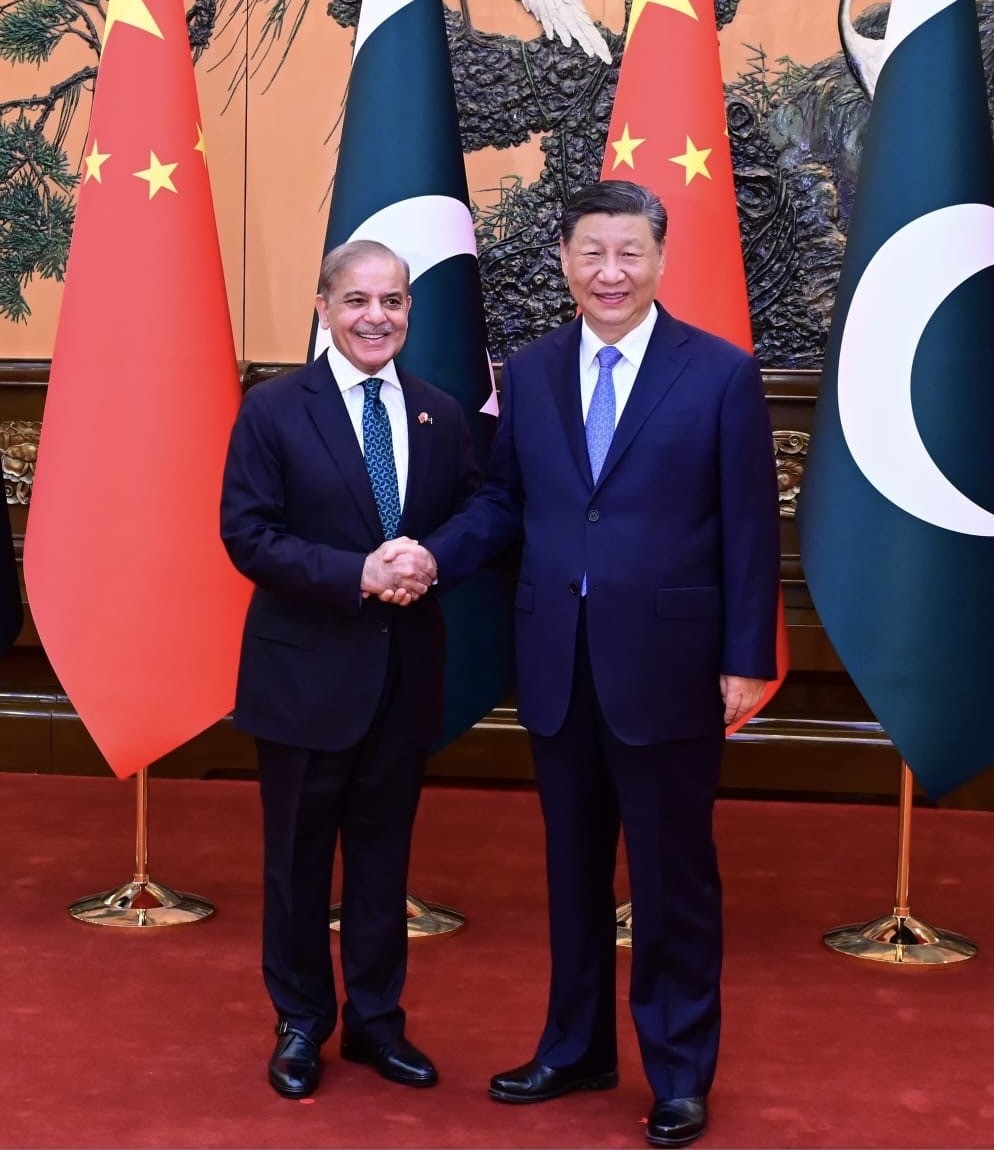
Prime Minister Shehbaz Sharif has concluded a critical visit to China at a time of exceptional regional uncertainty. The visit coincided with the 75th anniversary of diplomatic relations between Pakistan and China, but its significance extended well beyond commemorative symbolism. It took place amid the continuing Iran conflict, instability in the Gulf, global economic uncertainty, and rapidly shifting geopolitical alignments across Asia.

Against this backdrop, the meetings with President Xi Jinping and Premier Li Qiang carried unusual strategic importance. The discussions reaffirmed the depth of the China-Pakistan partnership, but they also reflected a broader attempt by both sides to redefine the relationship for a changing regional and global environment.
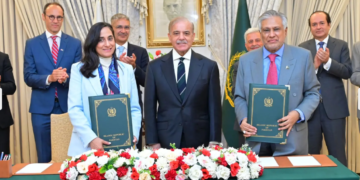
The joint statement issued after the meetings was comprehensive and strategically important. It reaffirmed support for each other’s core interests, pledged acceleration of China-Pakistan Economic Corridor 2.0, expanded cooperation in trade, industry, agriculture, clean energy, science and technology, digital transformation and security coordination, and stressed deeper strategic cooperation at a time of growing regional instability.
Yet the real significance of the statement was not simply diplomatic language. It reflected an important transition in the character of China-Pakistan relations.
For nearly a decade, the China-Pakistan Economic Corridor was associated mainly with highways, ports, energy projects and physical infrastructure. Those projects addressed critical shortages in Pakistan’s economy and gave China an expanded strategic presence in the region. However, they also generated criticism inside Pakistan that the relationship remained too dependent on infrastructure financing without producing sufficient industrial growth, export expansion or large-scale employment generation.
The discussions in Beijing appeared conscious of these concerns. The emphasis this time shifted noticeably towards industrial cooperation, manufacturing partnerships, technology transfer, renewable energy, electric mobility, artificial intelligence, battery storage systems and export-oriented investment. Pakistani and Chinese companies signed agreements and memorandums worth billions of dollars covering sectors that would have received far less attention during the earlier phase of the China-Pakistan Economic Corridor.
That shift reflects changing realities in both countries. China today is restructuring parts of its industrial economy. Rising labour costs are pushing many industries outward, while Beijing is also trying to secure supply chains, diversify production networks and strengthen regional economic connectivity. Pakistan, meanwhile, urgently needs investment, industrialisation, exports and employment generation.
The discussions increasingly reflected this convergence. Prime Minister Shehbaz Sharif repeatedly encouraged Chinese companies to relocate industries to Pakistan through joint ventures with local firms. The message coming from Islamabad was practical rather than rhetorical. Pakistan wants to position itself as a manufacturing and logistics partner connected to Chinese supply chains and regional markets rather than remain only a destination for infrastructure financing. If implemented seriously, this could gradually alter the economic structure of China-Pakistan cooperation.
The meetings with major Chinese companies such as CATL and StarCharge were particularly important in this regard. The focus was no longer confined to traditional construction projects. Discussions centred on battery technology, renewable energy systems, electric vehicles and energy storage infrastructure — sectors increasingly central to the future global economy.
Pakistan repeatedly stressed mechanisation, seed technology, agro-processing and agricultural exports to China. This reflected growing recognition inside Pakistan that agriculture may offer one of the most realistic opportunities for generating exports, employment and rural economic growth under the next phase of bilateral cooperation.
Agriculture also emerged as a major area of future cooperation. China’s massive agricultural import market remains largely underutilised by Pakistan despite decades of close political relations. Islamabad clearly sees this imbalance as both an economic challenge and an opportunity.
Gwadar again featured prominently in the discussions, but the language surrounding it is gradually evolving. Earlier debates focused heavily on Gwadar’s strategic symbolism and port infrastructure. Increasingly, however, both countries are discussing Gwadar within a wider framework of logistics, industrial zones, maritime trade and regional connectivity linking western China, Pakistan and the Gulf region. This reflects a broader geoeconomic shift in thinking.
The regional context surrounding the visit also shaped many of the discussions. The Middle East remains unstable because of the Iran conflict and continuing tensions across the Gulf region. Pakistan and China both stressed diplomacy, de-escalation and regional stability during the meetings.
Pakistan’s recent diplomatic engagement regarding the Iran crisis was acknowledged positively in Beijing. This reflected the growing overlap between China-Pakistan relations and wider regional strategic coordination extending from South Asia to the Middle East. At the same time, difficult realities surrounding the relationship cannot be ignored.
Inside Pakistan, criticism regarding rhetoric versus implementation has steadily grown over recent years. We remember the earlier promises attached to the China-Pakistan Economic Corridor — rapid industrialisation, export growth, large-scale employment and broad economic transformation. While major gains were achieved in infrastructure and energy, many expected economic spillovers remained slower and smaller than originally anticipated.
Chinese concerns have also evolved. Security threats to Chinese personnel, project delays, bureaucratic inefficiency, policy inconsistency and Pakistan’s broader economic instability have made Beijing increasingly cautious and commercially selective. China today appears less interested in symbolic announcements and more focused on economically sustainable, secure and commercially viable cooperation.
This perhaps explains why the current phase of the relationship appears more practical than before. Even Prime Minister Sharif repeatedly stressed during the visit that signed agreements and memorandums must now be converted into actual investments and operational projects. That acknowledgement itself reflected growing realism inside Pakistan’s policymaking circles.
The Beijing leadership compact, therefore, marks an important transition in China-Pakistan relations. The partnership remains strategically vital for both countries. China continues to provide Pakistan diplomatic support, defence cooperation and economic space. Pakistan remains important for China’s western connectivity strategy, regional access and broader geoeconomic calculations.
But the future trajectory of the relationship will increasingly depend on Pakistan’s own domestic performance. Investor confidence, governance reforms, industrial capacity, policy continuity and security now sit at the centre of the relationship. These factors will determine whether China-Pakistan Economic Corridor 2.0 becomes a genuine phase of economic transformation or remains another ambitious but only partially fulfilled promise.
The broader message emerging from Beijing is clear. China and Pakistan are not simply preserving an old strategic partnership. They are attempting to adapt it to a far more demanding regional and global environment where economic delivery matters as much as political trust. The relationship remains enduring. But its next phase will demand far greater implementation capacity, economic discipline and institutional seriousness from Pakistan than ever before.
Ishtiaq Ahmad
The author is a Professor Emeritus of International Relations at Quaid-e-Azam University, Islamabad. He can be reached on X @ahmadishtiaq.