












































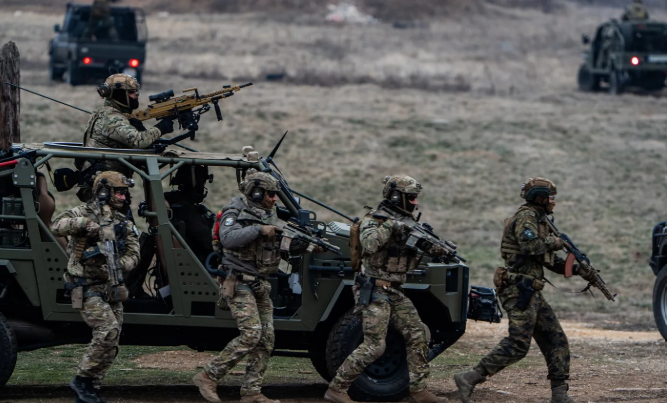
Global military expenditure rose to $2.887 trillion in 2025, marking a 2.9% increase from the previous year, according to new data from the Stockholm International Peace Research Institute (SIPRI). The rise reflects continued global tensions, ongoing wars, and intensified rearmament efforts.

The United States, China, and Russia together accounted for $1.48 trillion—about 51% of total global spending.
While U.S. military spending declined by 7.5% to $954 billion, largely due to the absence of new aid for Ukraine, European and Asian countries saw sharp increases. Europe’s spending rose 14%, while Asia and Oceania recorded an 8.1% increase.
SIPRI noted that despite the U.S. decline, future budgets could rise significantly, with projected spending potentially exceeding $1 trillion in 2026.
In Europe, military expenditure reached $864 billion, driven by the Russia-Ukraine war and NATO rearmament. Russia increased spending by 5.9% to $190 billion, while Ukraine boosted its military budget by 20% to $84.1 billion, equal to 40% of its GDP.
Germany recorded a 24% increase, reaching $114 billion and surpassing the NATO 2% GDP spending benchmark for the first time since 1990. Overall, European NATO members collectively spent $559 billion.
SIPRI researchers said European NATO countries are increasing defence budgets at the fastest rate since the Cold War, driven by both the Ukraine conflict and pressure from the United States to share security responsibilities more evenly.
In Asia and the Pacific, China continued its long-term military expansion, increasing spending by 7.4% to $336 billion. Japan raised its defence budget by 9.7%, its highest share of GDP since 1958, while Taiwan increased spending by 14% amid rising tensions with China.
Analysts noted that regional allies are boosting military budgets due to uncertainty over long-term U.S. support and growing security risks.
In the Middle East, spending remained relatively stable at $218 billion. Israel reduced its military expenditure slightly after a ceasefire in Gaza, while Turkiye and Saudi Arabia both recorded modest increases.
Iran’s military spending fell by 5.6% to $7.4 billion, though SIPRI cautioned that official figures may underestimate real spending due to off-budget funding sources, including oil revenues used for missile and drone development.
In South Asia, India’s military budget rose by 8.9% to $92.1 billion, making it the world’s fifth-largest spender. Pakistan increased its defence spending by 11% to $11.9 billion.
SIPRI researchers said global military growth reflects a broader pattern of rising insecurity, ongoing conflicts, and accelerated arms buildup, with military burden reaching its highest global level since 2009.