






































































WASHINGTON, April 24 (Reuters) – An internal Pentagon email outlines options for the United States to punish NATO allies it believes failed to support U.S. operations in the war with Iran, including suspending Spain from the alliance and reviewing the U.S. position on Britain’s claim to the Falkland Islands, a U.S. official told Reuters.

The policy options are detailed in a note expressing frustration at some allies’ perceived reluctance or refusal to grant the United States access, basing and overflight rights (ABO) for the Iran war, said the official, who spoke on condition of anonymity.
The email stated that ABO is “just the absolute baseline for NATO,” according to the official, who added that the options were circulating at high levels in the Pentagon. One option in the email envisions suspending “difficult” countries from important or prestigious positions at NATO, the official said.
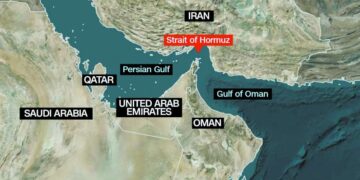
President Donald Trump has harshly criticized NATO allies for not sending their navies to help open the Strait of Hormuz, which was closed to global shipping following the start of the air war on February 28. He has also declared he is considering withdrawing from the alliance.”Wouldn’t you if you were me?” Trump asked Reuters in an April 1 interview, in response to a question about whether the U.S. pulling out of NATO was a possibility.
However, the email does not suggest that the United States withdraw from NATO, the official said. It also does not propose closing bases in Europe. The official declined to say whether the options included a widely expected U.S. drawdown of some forces from Europe.
Asked for comment, Pentagon Press Secretary Kingsley Wilson said:”As President Trump has said, despite everything that the United States has done for our NATO allies, they were not there for us. The War Department will ensure that the President has credible options to ensure that our allies are no longer a paper tiger and instead do their part. We have no further comment on any internal deliberations.”The U.S.-Israeli war with Iran has raised serious questions about the future of the 76-year-old alliance and provoked concern that the United States might not come to the aid of European allies if they were attacked, analysts and diplomats say.
Britain, France and others say that joining the U.S. naval blockade would amount to entering the war, but they would be willing to help keep the Strait open once there is a lasting ceasefire or the conflict ends. Trump administration officials have stressed that NATO cannot be a one-way street. They have expressed frustration with Spain, whose Socialist leadership said it would not allow its bases or airspace to be used to attack Iran. The United States operates two important military bases in Spain: Naval Station Rota and Morón Air Base.
The policy options outlined in the email are intended to send a strong signal to NATO allies and to decrease what officials describe as a European “sense of entitlement.”The option to suspend Spain from the alliance would have limited effect on U.S. military operations but significants symbolic impact, the email argues. The official did not disclose how the United States might pursue suspending Spain, and it remains unclear whether NATO has a mechanism for such action.
Spanish Prime Minister Sanchez responded:”We do not work off emails. We work off official documents and government positions, in this case of the United States.”The memo also includes an option to reassess U.S. diplomatic support for European “imperial possessions,” such as the Falkland Islands, which are administered by the United Kingdom but claimed by Argentina. Britain and Argentina fought a war in 1982 over the islands after Argentina attempted to seize them. Approximately 650 Argentine soldiers and 255 British troops were killed before Argentina surrendered.
Trump has repeatedly criticized British Prime Minister Keir Starmer for not joining the U.S. war with Iran, calling him “cowardly” and saying he was “No Winston Churchill,” while dismissing Britain’s aircraft carriers as “toys.”Britain initially refused a U.S. request to use its bases for strikes on Iran but later agreed to allow defensive missions aimed at protecting residents in the region, including British citizens.
Earlier this month, U.S. Defense Secretary Pete Hegseth said:”A lot has been laid bare by the war with Iran. Iran’s longer-range missiles cannot hit the United States but can reach Europe. You don’t have much of an alliance if countries are not willing to stand with you when you need them.”