

































US President Donald Trump’s growing disputes with long-time allies during the Iran conflict could leave lasting damage to Washington’s global relationships, with analysts warning that trust in the United States is increasingly eroding.

According to a Reuters report, Trump’s recent decisions including withdrawing some US troops from Germany, threatening troop reductions elsewhere in Europe, and downplaying Iran’s attacks on Gulf allies have intensified concerns among allies in Europe, the Middle East and Asia about America’s reliability during future crises.
Even as Washington and Tehran move toward a possible diplomatic off-ramp after 10 weeks of conflict, several US partners are reassessing their dependence on the United States, while rivals such as China and Russia are seen attempting to capitalise on widening divisions.
Analysts say Trump’s conduct since returning to office has further weakened confidence in the US-led global order and strained ties within NATO.
“Trump’s recklessness with respect to Iran is resulting in some dramatic shifts,” said Brett Bruen. “U.S. credibility is at stake.”
Tensions with European allies have particularly intensified since the US joined Israel in strikes on Iran on February 28, claiming Tehran was close to developing a nuclear weapon. Iran’s subsequent closure of the Strait of Hormuz triggered a major energy crisis that heavily impacted Europe.
The rift deepened after Trump announced the withdrawal of 5,000 troops from Germany following remarks by German Chancellor Friedrich Merz criticising US handling of the conflict. The Pentagon also cancelled a planned deployment of Tomahawk cruise missiles to Germany.
Trump additionally suggested he could reduce US military presence in Italy and Spain, whose governments have reportedly disagreed with his policies during the war.
The US president has repeatedly criticised NATO allies for not doing enough to support Washington and has questioned continued American commitment to the alliance’s Article 5 collective defence principle.
White House spokeswoman Anna Kelly said Trump believed some allies had failed to adequately support US operations against Iran.
“He will never allow the United States to be treated unfairly and taken advantage of by so-called ‘allies,’” she said.
Trump also clashed with British Prime Minister Keir Starmer earlier this year, threatening tariffs on British imports and criticising his leadership.
In response to growing uncertainty, European governments have stepped up efforts to strengthen defence cooperation, expand domestic military capabilities and reduce dependence on the United States.
Analysts say European leaders are increasingly recognising Trump’s negotiating tactics and are becoming more willing to challenge him publicly.
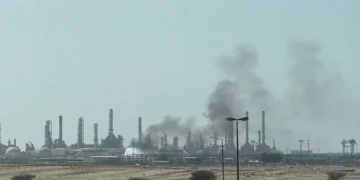
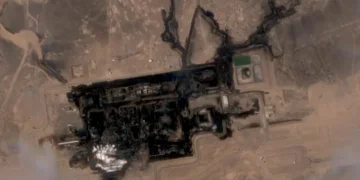
Meanwhile, concerns have spread beyond Europe. Gulf states reportedly grew uneasy after Iran launched missile and drone attacks against the United Arab Emirates, with Trump appearing to minimise the severity of the strikes despite damage to the Fujairah oil port.
Asian allies including Japan and South Korea are also said to be worried about Washington’s commitment to regional security, particularly amid tensions involving China and Taiwan.
“What worries us most is that trust in, respect for, and expectations toward the United States — the core partner in the alliance Japan values most — have been shrinking,” said Takeshi Iwaya.
Analysts further noted that Russia and China are closely monitoring the conflict and may seek strategic advantages from weakening US alliances and shifting global power dynamics.
While Russia has benefited from rising energy prices caused by the war, China is reportedly studying how the US military has been forced to redirect resources from the Indo-Pacific to the Middle East.
However, Victoria Coates argued that Beijing would struggle to portray Washington as uniquely destabilising, noting China itself had not strongly supported Iran during the conflict.